Portugal's Public Security Police (PSP) has abruptly ended its decade-long practice of publishing speed camera locations, a shift that leaves thousands of drivers navigating the country's roads without the monthly "heads-up" they'd grown accustomed to—and authorities insist this opacity is precisely the point.
Why This Matters
• No more advance warning: The Portugal Security Police (PSP) stopped publishing monthly radar schedules in May 2026, ending the "Quem o avisa..." campaign that drivers relied on to avoid fines.
• Strategic pivot: The government argues surprise enforcement will drive consistent compliance across all roads, not just where cameras are pre-announced.
• Wider crackdown: This change coincides with 12 new average-speed cameras rolling out by year-end and a pledge to cut road deaths and serious injuries by 50% by 2030.
• Legal uncertainty: While fixed radars remain signposted by law, mobile units now operate with zero advance disclosure—and that's entirely within PSP's authority.
The End of Predictable Policing
For years, residents and commuters structured their driving habits around a simple ritual: check the PSP's social media at the start of each month, note the radar locations, and adjust accordingly. That safety net vanished since May when the force confirmed it would no longer share schedules for mobile speed traps.
The Portugal Security Police justified the blackout as part of a broader "adjustment to road supervision strategy" ordered by the current administration. In a statement, the force emphasized that the move aims to "reinforce the preventive and deterrent effectiveness of speed enforcement," shifting the burden from location-specific caution to blanket rule compliance.
Translation: if you used to slow down only near published checkpoints, that loophole just closed.
The PSP clarified that enforcement operations will continue "regularly across all territories under its responsibility," meaning cameras haven't disappeared—they've simply gone dark. The agency will monitor and evaluate the impact of this policy shift as part of its operational review, though no timeline for public reporting has been announced.
What This Means for Drivers
The immediate consequence is straightforward: uncertainty replaces predictability. Drivers who previously adjusted speed only in known enforcement zones must now assume every stretch of road carries the risk of a fine. This represents a fundamental recalibration of how the Portuguese road network is policed.
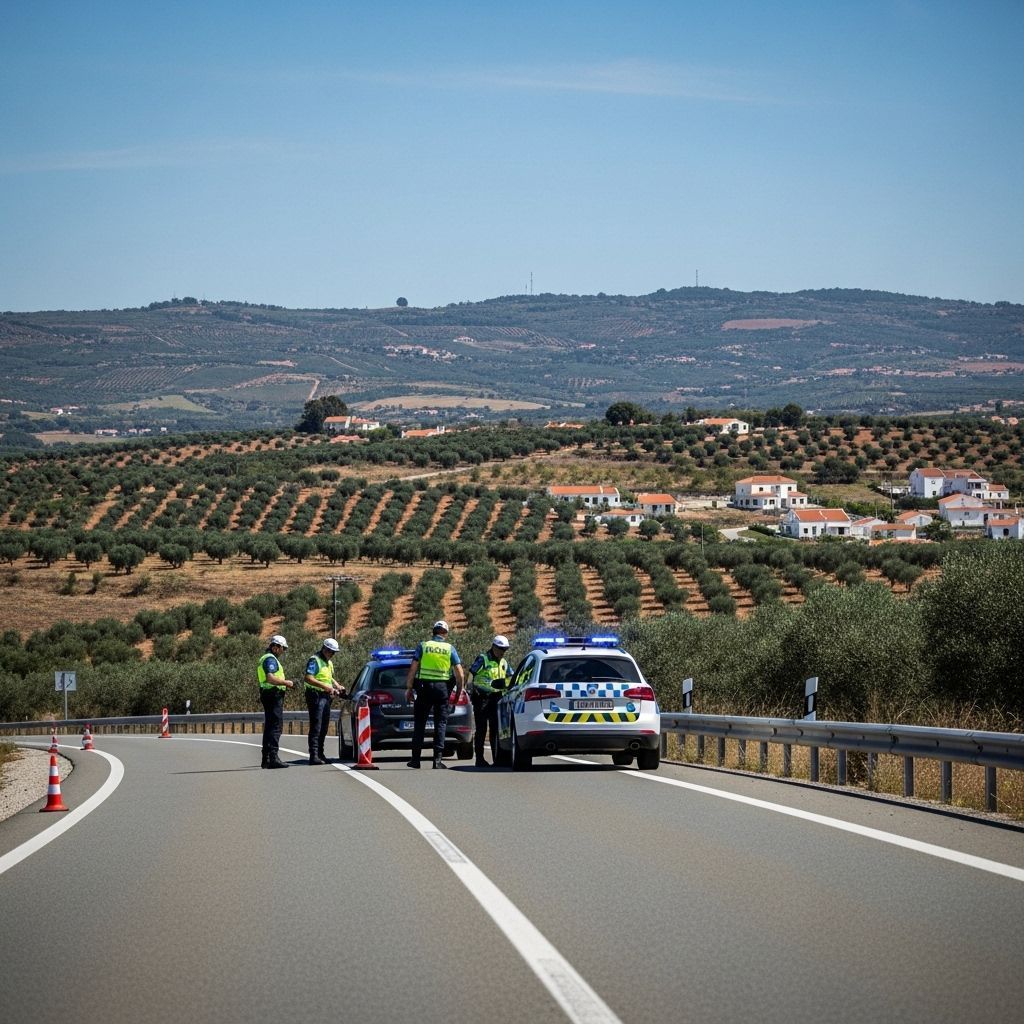
Mobile radars—unlike the fixed SINCRO cameras that remain signposted under national law—can now be deployed anywhere, anytime, without prior notice. The legal framework permits this; Portuguese courts consistently uphold evidence from undisclosed mobile units as admissible. What has changed is the PSP's communication posture, not the legality of surprise enforcement.
For foreign residents and long-term expats, this shift demands extra vigilance. Portugal's speed camera technology still applies statutory error margins—typically fixed values up to 100 km/h and percentage-based above that threshold—but these are technical calibrations, not permission to exceed posted limits. The tolerance exists to account for measurement uncertainty, not driver convenience.
Practical Implications for Foreign Residents
If you're living in Portugal on a foreign-registered vehicle or rental car, the enforcement changes carry specific consequences worth understanding.
How fines are processed: Most rental car companies register their vehicles in Portugal or internationally. When a speed camera capture is traced to a rental agreement, the rental company typically receives initial notification and then forwards details to the driver. For foreign-registered vehicles, the process is slower: the Portuguese authorities coordinate with your home country's equivalent enforcement agency to locate the registered owner. This can take weeks or even months.
Typical fine amounts: Exceeding the speed limit by 1-20 km/h incurs a fine starting around €60. Violations of 21-40 km/h begin around €300. Above 40 km/h over the limit, fines can exceed €1,000, and penalties escalate further for repeat offences. These figures apply regardless of your residency status.
Payment procedures: If you receive a citation, you'll typically have 30 days to pay. You can settle fines online through the Portuguese government's e-Payment platform (using a Portuguese tax identification number, or NIF) or by postal transfer to the court issuing the fine. Many foreign residents engage a Portuguese accountant or legal advisor to handle the administrative process, particularly if the communication arrives in Portuguese.
Leaving Portugal before paying: This is a critical consideration. If you leave Portugal without settling a fine, the debt remains on record. You could face legal action or complications if you return to Portugal or travel within the EU, as enforcement cooperation agreements exist across member states. If you plan to relocate, it's essential to address any outstanding traffic fines before departure.
Language and clarification: Not all citations clearly explain the violation, especially for foreign drivers. If you receive a notice you don't understand, contact the issuing authority (typically the PSP or a municipal police force) directly or seek assistance from a Portuguese traffic law specialist. Many expat communities maintain online resources or connect members with bilingual legal advisors accustomed to helping foreign residents navigate these issues.
Behind the Policy Reversal
The decision traces back to a deadly Easter period earlier this year, when a spike in traffic fatalities prompted Minister of Internal Administration Luís Neves to promise an "implacable" response. Speaking in April, Neves warned that the government would no longer tolerate risky driving behaviors and that enforcement changes were imminent.
The radar publication ban appears to be the first concrete measure from that pledge. Neves framed the issue as requiring both state action and civic responsibility, signaling that the administration views transparent enforcement schedules as counterproductive to genuine behavioral change.
This aligns with broader European enforcement philosophy. Countries including France, Germany, and Switzerland either prohibit radar-warning apps outright or restrict advance disclosures, arguing that predictable enforcement incentivizes compliance only in narrow zones rather than system-wide adherence. Portugal's policy now mirrors that approach for mobile units, even as fixed cameras remain marked.
The Bigger Picture: Vision Zero 2030
The radar blackout is one component of Portugal's "National Road Safety Strategy – Vision Zero 2030," which the government aims to finalize this year. The strategy targets a 50% reduction in road deaths and serious injuries by the end of the decade, focusing on the three leading causes of crashes: alcohol consumption, excessive speed, and driver distraction.
Supporting measures already in motion include:
• 12 additional average-speed cameras to be installed by December 2026, with locations still under assessment by the National Road Safety Authority (ANSR).
• A revised Highway Code that extends the statute of limitations for traffic fines and tightens penalties for driving under the influence of narcotics.
• Escalating penalties for repeat offenders, particularly those caught multiple times for dangerous driving, drunk driving, or severe speeding violations.
• Mandatory municipal road safety plans, requiring every city council to develop localized accident-reduction strategies.
A memorandum of understanding signed between the ANSR, the PSP, and the National Republican Guard (GNR) formalizes data-sharing and coordinated enforcement efforts. The goal is to create a seamless, intelligence-led approach to identifying crash hotspots and deploying resources where risk is highest.
Does Secrecy Actually Work?
Evidence from Portugal's existing fixed-camera network suggests targeted enforcement does reduce harm. Between 2019 and 2023, Lisbon recorded a 25% drop in accidents with injuries on roads equipped with speed cameras. After 37 new SINCRO units went live, zones within their influence saw zero deaths, zero serious injuries, and an 80% reduction in speeding violations.
International data supports this. Studies indicate that a single speed camera can cut fatalities by up to 39% within a 500-meter radius of its location. However, the question remains whether unpredictable enforcement delivers superior outcomes compared to transparent, high-visibility policing.
France's experience offers a parallel case. The country prohibits radar-warning apps and operates unmarked "car radars"—civilian vehicles equipped with speed-detection equipment. French authorities argue this unpredictability fosters continuous compliance, though debates persist over whether revenue generation or safety drives the policy.
Germany takes a harder line, banning apps that actively alert drivers to camera locations and mandating that such features be disabled during trips. In both countries, enforcement philosophy prioritizes perception of omnipresent risk over advance cooperation.
Portugal now occupies a middle ground: fixed cameras remain visible, mobile ones do not. Whether this hybrid model achieves the desired behavioral shift—or simply breeds resentment among motorists—will depend on how the PSP implements and communicates the policy over the coming months.
What Happens Next
The Portugal Security Police has committed to evaluating the policy's impact "within the scope of operational activity," but has released no specifics on timing, metrics, or public disclosure. Drivers, advocacy groups, and municipal authorities are left to wait for data that may take quarters—or years—to materialize.
In the interim, the calculus for anyone behind the wheel in Portugal has shifted. The monthly ritual of consulting the PSP's social feeds is obsolete. The new reality is simpler, if less forgiving: assume enforcement is everywhere, act accordingly, and hope the government's gamble on unpredictability pays dividends in lives saved rather than fines collected.