

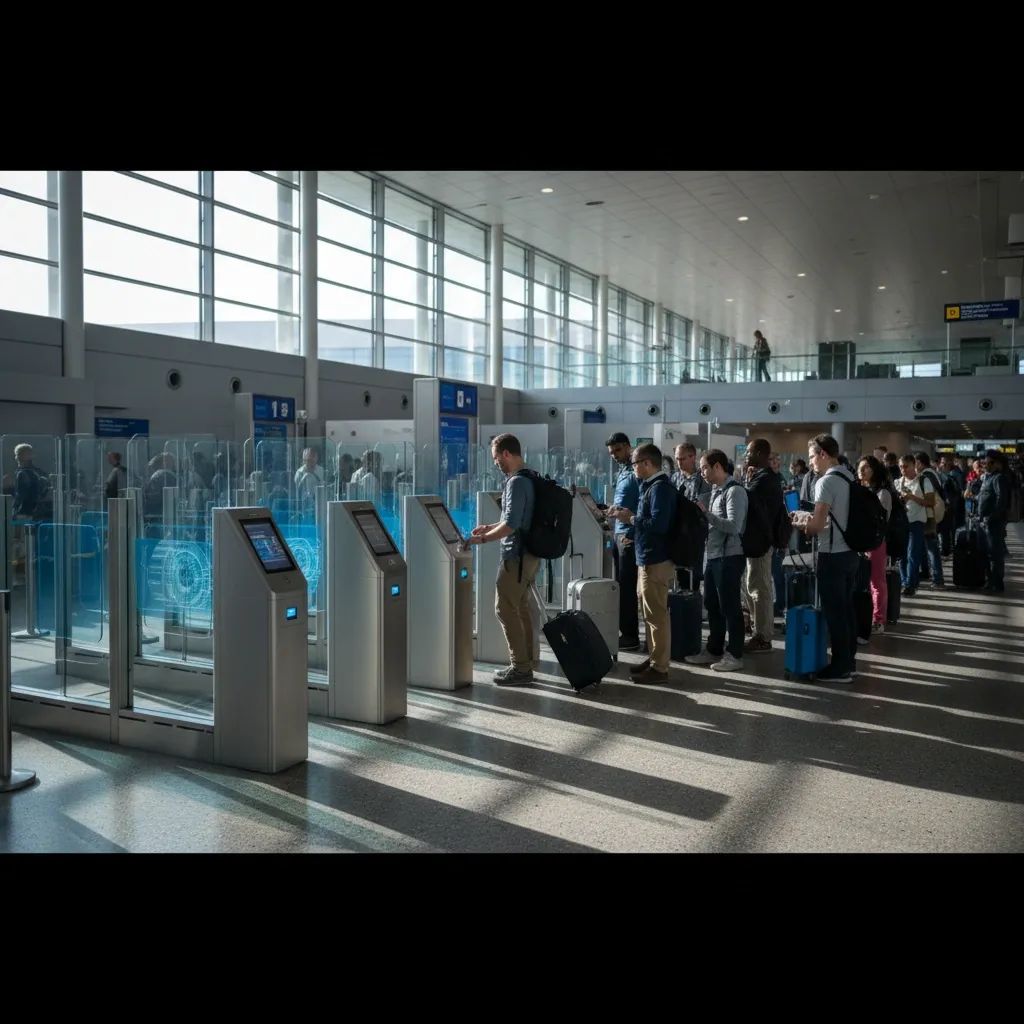
Portugal's Interior Ministry is leading a coordinated push to keep emergency border flexibility beyond September 6, as Europe's digital Entry/Exit System continues to overwhelm airports. The move could determine whether travelers face manageable queues or airport gridlock during peak tourist season.
Why This Matters:
• The current emergency suspension clause expires September 6, leaving no fallback if biometric systems crash at border checkpoints.
• Portugal and 8 other nations formally requested the European Commission extend manual processing options through the summer travel surge.
• Lisbon and Faro airports have seen wait times stretch to 8 hours under the new regime, forcing temporary system shutdowns in late 2025 and early 2026.
• Tourism industry representatives warn that operational chaos at borders could significantly impact Portugal's €45 billion annual tourism sector, which accounts for roughly 10% of GDP.
Coalition Seeks Written Guarantees from Brussels
Interior Minister Luís Neves joined counterparts from Belgium, France, Germany, Greece, Italy, Malta, the Netherlands, and Switzerland in drafting a formal appeal to EU Commissioner for Home Affairs Magnus Brunner. The letter, obtained by Lusa news agency, frames the September 6 deadline as a "serious and legitimate concern" shared across member states regardless of their readiness levels.
The officials are requesting written assurances before the September cutoff that airports can revert to manual passport stamps and paper forms when the biometric scanners fail or queues spiral out of control. This limited fallback—intended only for exceptional circumstances and technical breakdowns—represents a middle ground between full system rollback and rigid enforcement.
"We remain fully committed to the comprehensive implementation of the Entry/Exit System, which is essential for improving border management and reinforcing Schengen security," the ministers wrote, before adding a crucial caveat. "The experience acquired to date has demonstrated that significant difficulties can arise under exceptional circumstances, and these risks must not be underestimated."
Who This Affects: What Residents Need to Know
If you hold a Portuguese passport or an EU residence card, you are NOT subject to the Entry/Exit System (EES) processing. The biometric requirements apply only to non-EU nationals entering the Schengen Area for the first time.
For residents living in Portugal hosting international guests or non-EU family members, the implications are significant. Non-EU visitors and third-country nationals entering through Portuguese airports face extended processing times. The biometric enrollment process requires fingerprint scans and facial imaging for first-time registrants, a procedure that can add 5-10 minutes per traveler and compounds exponentially during high-volume periods.
Portugal's government has deployed additional Polícia de Segurança Pública (PSP) officers to border control desks and installed new e-gate lanes at Lisbon, Porto, and Faro airports. However, all non-EU travelers still require verification processing, creating bottlenecks at the border, particularly during summer months.
The economic stakes are considerable. Portugal's tourism sector accounts for roughly 10% of GDP, and the 2026 summer season represents the highest-earning window of the year. Extended airport delays risk deterring repeat visitors and damaging the country's reputation for seamless travel infrastructure—an asset carefully cultivated over the past decade.
The Technical Reality Behind the Delays
The Entry/Exit System (EES), launched in October 2025 and fully operational since April 2026, replaces manual passport stamps with a centralized database tracking non-EU nationals' movements across the Schengen Area's 27 member states. Every entry and exit triggers a biometric record, theoretically enhancing security and curbing visa overstays.
In practice, the rollout has exposed critical vulnerabilities. EU Commission President Ursula von der Leyen acknowledged "considerable work remains" to resolve technical glitches at external borders. The Frontex border agency warned that delays could persist for months as the system processes first-time enrollments for millions of regular visitors.
Portugal suspended the EES at Lisbon Airport in December 2025 after wait times hit 8 hours, reverting to traditional stamps until March 2026. Similar emergency halts occurred at Paris Charles de Gaulle and other major hubs. Current regulations permit suspension for up to 90 days when queues become unmanageable, but this escape hatch vanishes on September 6 without an extension.
Industry Pressure and Brussels' Response
Trade groups representing European airlines and airport operators have escalated their demands, calling for extended flexibility at borders during peak summer months. They cite "unsustainable pressure" and operational concerns at border crossings during July and August, when passenger volumes peak.
Commissioner Brunner has acknowledged challenges at major border crossing points but stressed the importance of system implementation. Instead, the Commission convened technical meetings with aviation industry representatives to troubleshoot implementation challenges and pledged to assist struggling member states.
The nine-nation coalition led by Portugal is not seeking a full rollback—just the preservation of emergency manual procedures as a safety valve. Their letter emphasizes that any extension would be "limited in time, exceptional in nature, and deployed only when necessary and duly justified."
Portugal's Infrastructure Response
Beyond diplomatic lobbying, Portugal has invested in border infrastructure upgrades. The government announced new document control stations and additional e-gate units at major airports, aiming to reduce processing time per non-EU passenger. The PSP border police received budgetary reinforcements to hire and train additional personnel, though recruitment continues as passenger numbers grow.
Official tourism forecasts project international arrivals in Portugal to increase 7.1% in 2026, compounding the strain on border infrastructure.
For residents hosting international guests or traveling with non-EU family members, the practical advice remains: ensure your guests arrive at the airport at least 3 hours before departure, confirm their passports are biometric-compliant, and allow extra buffer time for connections, particularly at Lisbon, where processing concentrates.
The September 6 Inflection Point
If Brussels declines to extend the emergency suspension mechanism, airports will face a binary choice: operate the EES flawlessly under peak load or confront operational challenges during peak tourist season. The political calculus is delicate. Hard-line enforcement might vindicate the infrastructure investment in EES across the Schengen Zone, but it could also trigger operational disruptions during the critical summer tourism period.
Portugal's diplomatic gambit reflects a broader European tension between regulatory ambition and operational reality. The nine signatories represent major tourism gateways—collectively accounting for a significant share of Schengen's external border crossings—giving their request substantial weight. Whether the Commission grants written guarantees before the September 6 cutoff will signal how Brussels balances border security objectives against the pragmatic needs of member states navigating a turbulent transition.
For now, residents are advised to monitor announcements from the Portuguese Interior Ministry and PSP regarding queue times and system status at major airports. The next several weeks will determine whether Europe's digital border system functions smoothly during summer travel peak—or faces operational strain that requires further accommodations.


