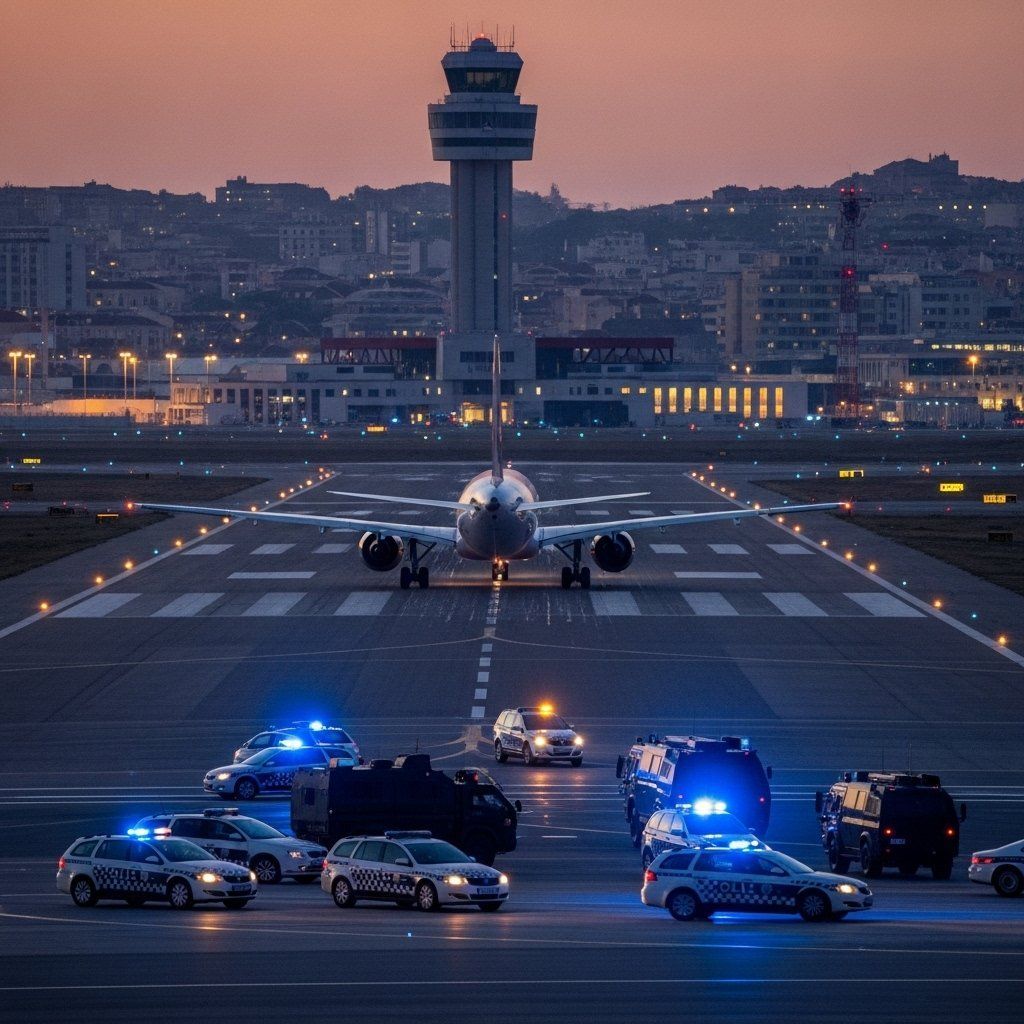
A Jet2 flight carrying 220 passengers made an emergency landing at Porto's Francisco Sá Carneiro Airport early Friday morning after the pilot suffered a suspected heart attack mid-flight. The co-pilot successfully landed the aircraft at 02:11, but passengers were left stranded for 13 hours without accommodation—a situation that has reignited debate over airline obligations during medical emergencies.
Why This Matters:
• Emergency protocols worked: The co-pilot executed a safe landing after the captain collapsed at 9,000 meters altitude, highlighting the importance of two-pilot crew requirements.
• Passenger care gaps: 220 travelers spent over half a day at Porto airport without hotel support, despite EU consumer protections.
• Medical outcome unknown: The incapacitated pilot was rushed to hospital, but no update on his condition has been released.
How the Emergency Unfolded
Flight LS1266 was en route from Tenerife, Spain, to Birmingham, UK, cruising at approximately 30,000 feet when the captain experienced a medical crisis. According to passenger accounts shared with British tabloid The Sun, cabin crew rushed through the aisles in visible distress, asking if any doctors were aboard due to an "emergency in the cockpit."
The aircraft then lost altitude rapidly as the co-pilot diverted to the nearest suitable airport—Porto, Portugal's second-largest city. Emergency services were already positioned on the runway when the plane touched down just after 2 a.m. Paramedics boarded immediately to stabilize the pilot before transporting him to a local hospital. His current condition remains undisclosed.
One passenger described the chaos: "My partner and I woke to flashing lights and visibly shaken crew members searching for a doctor. My two-year-old son started crying, along with many other children on board, because the aircraft was descending so fast." Another traveler confirmed that Jet2 informed passengers the pilot had suffered a heart attack in the cockpit, adding: "Naturally, our solidarity is with him."
The 13-Hour Standoff at Porto Airport
After the medical evacuation, the 220 passengers faced a different ordeal: prolonged confinement without adequate support. They were kept aboard the aircraft for roughly an hour before being released into the terminal, where they remained for the rest of the night and much of the following day.
"We were stranded in Portugal for over 13 hours with no accommodation," one passenger told The Sun. "They said putting us up would be too expensive, so we were left to fend for ourselves." A replacement crew and aircraft eventually arrived, flying the group onward to the UK.
Under EU Regulation 261/2004, passengers are entitled to meals, communication access, and hotel accommodation when delays exceed certain thresholds—typically 2 to 4 hours depending on distance. The regulation also mandates transport between airport and hotel. While medical emergencies qualify as "extraordinary circumstances" that exempt airlines from paying financial compensation (€250–€600 per passenger), they do not waive the duty to provide care, including lodging during overnight delays.
Jet2's apparent failure to arrange hotels may violate these consumer protections, though the airline has not publicly addressed the accommodation lapse. The company did confirm the diversion was due to "one of the pilots feeling unwell" and later offered affected passengers a free rebooking to any of its 14 UK destinations.
What This Means for Travelers Through Portugal
For anyone flying through or connecting via Portuguese airports, this incident underscores both the strength and gaps in aviation safety nets:
Operational safety remains robust. Modern commercial jets like the Airbus A321 flown by Jet2 operate with a mandatory two-pilot crew under European Union Aviation Safety Agency (EASA) Part-ORO regulations. When one pilot becomes incapacitated, the co-pilot assumes full control, declares a Squawk 7700 emergency code to air traffic control, and receives priority landing clearance. These procedures are drilled in simulator training and functioned exactly as designed in Porto.
Ground-level passenger care lags. Despite strict EU rules on passenger rights, enforcement is inconsistent. Travelers stranded by diversions should keep all receipts for meals, transport, or emergency accommodation they pay for out-of-pocket—airlines are legally required to reimburse reasonable expenses if they fail to provide assistance directly. Claims can be escalated to Portugal's National Civil Aviation Authority (ANAC) or the EU's consumer enforcement network.
Medical crises are not rare. Aviation experts estimate that in-flight medical emergencies occur on roughly 1 in every 600 flights globally. Heart attacks, strokes, and fainting spells are among the most serious conditions that can affect crew members during flight operations.
Airline Responsibility in Emergency Diversions
Jet2's handling of the Porto incident contrasts with industry norms. Leading carriers typically arrange hotel blocks near major airports precisely for diversion scenarios. When a recent EasyJet emergency diversion occurred, passengers were placed in hotels or, in some cases, allowed to rest in terminal lounges with meal vouchers.
The legal framework is clear: Regulation 261/2004 distinguishes between compensation (cash payments for delays) and care (immediate material support). While airlines are exempt from compensation when "extraordinary circumstances" like medical emergencies occur, they must still provide:
• Meals and refreshments proportional to waiting time.
• Hotel accommodation when an overnight stay becomes necessary.
• Transport between airport and hotel.
• Two phone calls, emails, or fax messages.
Failure to provide these services triggers a reimbursement obligation—passengers who arrange their own care can claim costs back, provided they are "necessary, reasonable, and proportionate." In Portugal, complaints should be filed with the Autoridade Nacional de Aviação Civil (ANAC), which has enforcement powers over airlines operating in Portuguese airspace.
Lessons and Outlook
The Porto emergency landing itself was a textbook example of aviation safety protocols working. The co-pilot's successful landing, coordinated emergency response, and rapid medical intervention likely saved the captain's life. The incident validates the EASA two-pilot rule and demonstrates why single-pilot commercial operations remain prohibited in Europe.
The ground handling, however, reveals persistent weaknesses in airline customer service during irregular operations. Jet2's offer of free rebooking is a goodwill gesture, but it does not replace the legal duty to provide immediate material assistance. Passengers who suffered out-of-pocket costs should document expenses and submit claims through Jet2's customer service channels—or escalate to Portugal's ANAC if rebuffed.
For residents and frequent travelers in Portugal, this case is a reminder to know your rights and carry emergency contact information for consumer protection agencies. The Francisco Sá Carneiro Airport in Porto handled the medical emergency efficiently, but passengers remain vulnerable when airlines cut corners on post-landing care.
As of now, Jet2 has not released a statement on the pilot's condition or addressed the accommodation complaints. The airline continues to operate its full schedule across 14 UK destinations and multiple European routes, including regular service through Porto.