
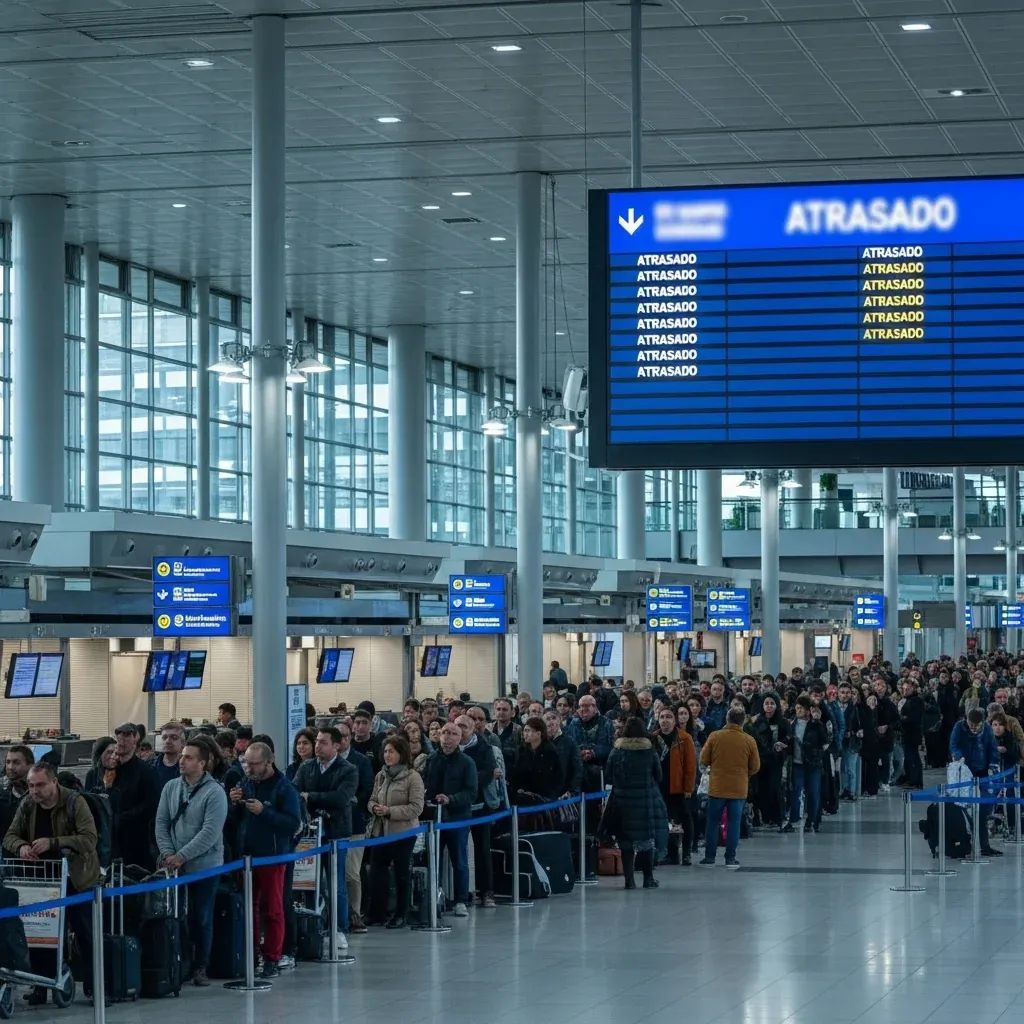
The European Parliament has delivered what amounts to a €600 insurance policy for airline passengers across the continent—one that will reach travelers flying from Portugal sometime in late 2027, once the European Council rubber-stamps the package by August 20.
After 13 years of deadlocked negotiations, lawmakers voted 546 to 12 on July 7, 2026 to codify a package of protections that compels airlines to compensate flyers stuck by delays and cancellations, bans punitive "no-show" clauses, and even guarantees free overhead space for a personal bag. The Council's formal signoff remains the final hurdle, though a political agreement struck in June leaves few obstacles.
Why This Matters
• Compensation remains cash: Delay of 3+ hours still triggers €250–€600 payouts depending on distance, with airlines now barred from calling routine mechanical failures "extraordinary circumstances."
• No-show clauses vanish: Missing your Lisbon–London outbound no longer cancels your return leg or triggers surcharges.
• Mandatory free item: A 40×30×15 cm mochila or handbag travels free—discounts apply only if you opt for zero bags.
• Child seating: Kids under 14 and mobility-impaired companions sit together at no extra charge.
What Changed—And What Stayed the Same
The new rules extend and clarify the 2004 Regulation (CE) No 261, which for two decades has formed the backbone of European passenger rights but left gray areas airlines exploited. Under the updated framework, mechanical breakdowns revert from "act of God" status to airline liability, eliminating a favorite insurer dodge. Natural disasters, war, severe weather, unruly passengers, and airport or air-traffic-control strikes remain valid exemptions.
Compensation thresholds hold at 3 hours for medium-haul flights and €250 to €600 depending on stage length—figures the Council pushed in 2025 to lift to 4 and 6 hours but which the Parliament rejected after consumer groups protested the rollback. Airlines now have 30 days to pay or justify refusal, and passengers gain 9 months to file claims.
Crucially, passengers stuck for 2 hours receive free drinks, those delayed 3 hours get a meal, and anyone facing an overnight stay secures hotel accommodation and transfers. The threshold for meals then extends to every 5 hours, with internet access and two phone calls included.
Impact on Portugal-Based Travelers
For anyone departing Lisbon Humberto Delgado, Porto Francisco Sá Carneiro, or Faro airports, the package translates into tangible financial security. A missed connection in Frankfurt or a summer strike at Charles de Gaulle that adds 4 hours to your trip to the Algarve now comes with a statutory payout, not a voucher that expires in six months.
The no-show ban carries particular weight for cost-conscious Portuguese families booking European city breaks: carriers can no longer void your return ticket because a sick child forced you to skip the outbound. Low-cost operators that thrived on forfeiture fees and ancillary charges face a revenue pinch—Airlines for Europe (A4E), ERA, and IATA jointly estimate the new regime will lift industry costs by at least 40%, building on the €8 billion annual compliance bill already attributed to the 2004 rules.
Whether those costs flow through to ticket prices remains the central question. TAP Air Portugal, Ryanair, and other carriers serving the country may absorb some expense through efficiency gains, but fare hikes on popular summer routes—Lisbon–Paris, Porto–Amsterdam—are probable once the rules take effect.
The Baggage Battleground
Guaranteeing free carriage of a personal item marks a direct assault on the low-cost model. Carriers such as Ryanair and Wizz Air pioneered charging for anything beyond a credit-card-sized purse; now a 40×30×15 cm backpack—large enough for a weekend's essentials—travels gratis. Airlines may offer discounts to travelers who check in with nothing at all, but the default shifts to inclusion rather than exclusion.
The measure also bans fees for correcting typos in passenger names and for printing boarding passes at the airport if online check-in was already completed—micro-fees that generated tens of millions annually but infuriated travelers facing €50 surcharges for transposed letters.
Who Fought This—And Why It Took 13 Years
Industry associations frame the package as economic self-harm. IATA has called the original 2004 framework "Robin Hood in reverse," arguing that the majority of fare-paying passengers subsidize payouts to a minority delayed by factors airlines cannot control. The 40% cost-increase forecast feeds warnings that marginal routes—Faro–Stockholm in winter, for instance—may vanish, and that southern European hubs reliant on point-to-point leisure traffic will suffer disproportionately.
Member states held the revision hostage for over a decade, with northern capitals pushing for higher delay thresholds and tighter compensation caps, while southern and western delegations—including Portugal—leaned toward stronger consumer protections. The June 15 compromise landed closer to the passenger-rights camp, a result Portuguese MEP Sérgio Humberto described as "historically necessary" despite imperfections, adding that "throwing away 12 years of demanding negotiations would be the real failure."
Europe Versus the Rest of the World
The updated EU framework cements the continent's position as the gold standard for passenger rights. In the United States, no federal law mandates compensation for delays or cancellations beyond involuntary denied boarding due to overbooking; carriers set their own policies, and passengers negotiate on a case-by-case basis. Tarmac-delay rules exist, but monetary relief does not.
China is drafting amendments to its civil-aviation law to address delays, yet enforcement remains patchy. India publishes a "Passenger Charter" that sets service expectations but offers limited statutory compensation. Japan focuses regulatory energy on pre-travel authorization systems rather than in-flight disruptions.
For Portugal-based travelers, this disparity means robust protections when flying within or departing the EU—compensation kicks in for a Lisbon–Boston flight operated by TAP if the departure is delayed in Portugal—but scant recourse on a San Francisco–Tokyo leg with a non-EU carrier unless the ticket was purchased as part of an EU-originating itinerary.
The Entry-Exit System Wrinkle
Coinciding with the passenger-rights overhaul, ACI Europe, A4E, and IATA have petitioned European Commission President Ursula von der Leyen to suspend or delay the EU's new Entry-Exit System (EES). The biometric-border regime, scheduled for full implementation in April 2026, is expected to generate extended wait times at Schengen entry points during peak periods, the groups claim.
The EES—originally slated for implementation no later than November 2025 but postponed to April 2026—requires automated capture of fingerprints and facial images for all third-country nationals entering the Schengen Area, including popular beach destinations like the Algarve. Airlines and airports argue that during testing and rollout phases, the system risks clogging immigration halls and compounding flight delays, indirectly triggering more compensation claims under the very regulation they oppose.
For Portuguese airports hosting millions of UK and Brazilian visitors, the anticipated friction is tangible: families from London or São Paulo already endure lengthy queues at borders; adding further delays to the front-end of a trip risks missed connections and elevated cancellation rates, feeding the compensation machine the industry sought to limit.
Timeline and Next Steps
The Council of the European Union must validate the text by August 20, 2026. Twenty days after publication in the Official Journal, the regulation enters into force, granting airlines and member states a one-year transition to align systems, train staff, and update IT platforms. Practical application begins in the second half of 2027.
Portugal's civil-aviation authority and consumer-protection agencies will need to publish guidance in Portuguese, establish streamlined complaint channels, and coordinate with carriers operating from national airports. Travelers should bookmark enforcement portals and keep meticulous records—boarding passes, delay notifications, meal vouchers—since the 9-month filing window begins the day disruption occurs.
What Passengers Should Do Now
Until the rules go live, the 2004 Regulation remains in effect, offering similar—if less explicit—protections. File claims promptly for any delay exceeding 3 hours or cancellation within 14 days, citing Regulation (CE) No 261/2004. Airlines often settle to avoid escalation.
Once the 2027 framework activates, expect clearer online claim forms, faster processing, and fewer denials based on vague "technical issues." Carry a tape measure for your personal item if flying budget carriers prone to gate disputes, and photograph any denied-boarding notice or written delay explanation—evidence that may secure a payout worth a month's groceries in Lisbon or a weekend in the Douro Valley.


