
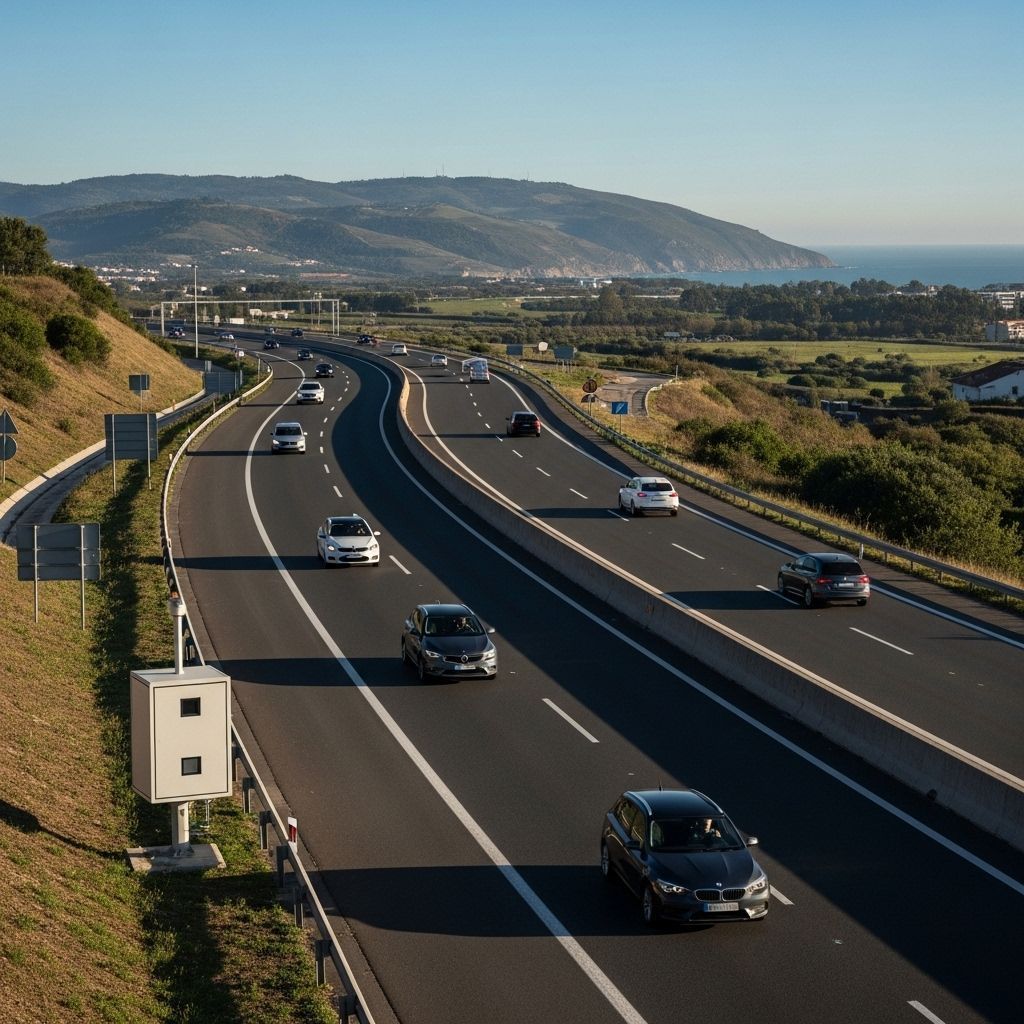
Flashing Brake Lights Are Now Mandatory on Portuguese Roads—What You Should Know
The Portugal automotive market is entering a new safety era. Starting July 7, 2026, every newly registered passenger and light commercial vehicle must come equipped with an Emergency Stop Signal—a system that transforms rear brake lights into a rapid-flashing pattern when drivers execute hard emergency stops. While the technology itself is straightforward, its arrival marks a significant shift in how European road safety is being engineered at the regulatory level.
Why This Matters
• All new cars from July 7, 2026 onward: Every first-time registration in Portugal after this date includes the system by default; older vehicles remain unaffected and require no retrofit.
• Flashing triggers only in genuine emergencies: The system activates exclusively when traveling above 50 km/h with deceleration exceeding 6 meters per second squared—not during routine braking.
• Measurable safety benefit: Research indicates trailing drivers gain approximately 4.5 additional meters of stopping distance during emergency braking scenarios, potentially converting minor incidents into avoided collisions.
• Broader regulatory context: This requirement is part of the European Union's General Safety Regulation (2019/2144), rolling out across all 27 member states simultaneously with identical technical specifications.
Understanding the Technology
The Emergency Stop Signal integrates multiple vehicle systems—ABS, electronic stability control, brake-pressure sensors, and speed monitoring—working in concert through onboard electronics. When conditions align—speed above 50 km/h combined with deceleration faster than 6 meters per second squared—the system overrides standard brake-light illumination and switches to rapid flashing.
The technology relies on neuroscience principles well-established in safety research: the human brain responds faster to intermittent light stimuli than to constant illumination. At 100 km/h, a 0.2-second reaction-time improvement equals approximately 5.5 meters of additional braking distance. This fractional speed advantage in perception translates into real-world stopping distance when traveling at highway speeds.
The Problem on Portuguese Roads
Rear-end collisions constitute one of Europe's most persistent traffic hazards. Portugal experiences particular vulnerability on the high-speed A1 motorway corridor connecting Lisbon and Porto during peak travel periods, where aggressive tailgating and minimal following distances are routine.
Portuguese drivers typically maintain following distances well below European safety recommendations—research indicates average spacing of 1.5 to 2 seconds on busy motorways, versus the recommended 3-second minimum. This aggressive driving culture, combined with the congestion patterns on the A1, A2, and IC19, creates conditions where reaction-time improvements directly save lives.
For residents and expats unfamiliar with local driving norms, the Emergency Stop Signal provides practical safety enhancement. When an emergency stop occurs from a newer vehicle, the visual contrast between flashing and steady illumination becomes unmistakable and immediately captures attention in ways conventional brake lights cannot.
What Changes for Current Vehicle Owners
Existing vehicles are entirely unaffected. Cars registered before July 7, 2026 remain legal and unchanged. The Portugal National Road Safety Authority (ANSR) and enforcement agencies will not require retrofitting, issue penalties for older vehicles, or mandate inspections of the Emergency Stop Signal during routine traffic stops.
The regulation applies exclusively to first-time registrations from July 7, 2026 forward. Portugal's aging vehicle fleet—averaging approximately 13 years old—will transition gradually. A vehicle purchased on this date will likely remain on roads for a decade or more, meaning full safety benefits will materialize over an extended timeline.
What This Means for Your Daily Drive
When you encounter flashing brake lights ahead on the A1 or busy urban routes, the system is signaling a genuine emergency stop—not routine braking. Respond by: immediately increasing vigilance, reducing speed, and increasing your following distance if circumstances allow. The flashing pattern is distinctive enough to be unmistakable even in daylight or poor visibility conditions.
ANSR guidance for drivers remains consistent: maintain a minimum 3-second following distance during normal conditions, extending to 5-6 seconds in poor weather or high-speed scenarios. The Emergency Stop Signal enhances safety but does not eliminate the need for defensive driving. If you're driving an older vehicle without this system, be aware that drivers behind you won't receive the enhanced warning signal—maintain extra caution during emergency braking scenarios.
For drivers transitioning to new vehicles with the system, no special action is required—the technology activates automatically and requires no driver input.
Implications for New Car Buyers
The Emergency Stop Signal arrives as part of mandatory ADAS (Advanced Driver Assistance Systems) packages, not as an isolated feature. For buyers purchasing new vehicles from July 7, 2026 onward, the system comes factory-installed with no separate line-item charge visible on dealership paperwork.
The actual cost burden distributes across comprehensive mandatory systems: intelligent speed limiters using GPS and traffic-sign recognition, driver drowsiness monitoring, lane-keeping systems, reversing detection aids, and automotive event data recorders. Industry estimates place total ADAS cost contribution at several hundred euros per vehicle, though exact consumer price impact varies by manufacturer.
Portuguese insurance implications: Major Portuguese insurers including Fidelidade, Tranquilidade, and AXA are implementing discount structures for vehicles equipped with comprehensive ADAS suites. Initial reports suggest discounts ranging from 5-10% on comprehensive coverage for vehicles with multiple advanced safety systems. As claims data accumulates, these incentive structures will likely expand. Drivers should contact their insurers directly to confirm eligibility for safety-system discounts when registering new vehicles after July 7, 2026.
For mechanics and service centers, integration with brake and stability systems necessitates updated diagnostic equipment and technician training. Brake service involving these systems will become more technically complex, potentially increasing labor costs as technicians navigate new electronic architectures.
Integration with Portugal's Vehicle Inspection System
Portugal's mandatory periodic inspection (Inspeção Periódica Obrigatória) regime will eventually incorporate Emergency Stop Signal verification for newly registered vehicles. Current inspection protocols focus on emission standards, brake performance, and lighting function, but do not yet verify ADAS system operation. As the regulation matures and inspection infrastructure updates, future vehicle inspections will likely include diagnostic verification of Emergency Stop Signal functionality—particularly following accidents or warranty claims.
Vehicle owners should retain maintenance records for all ADAS-related service, as documentation will become increasingly relevant to insurance claims and resale value assessments as the technology matures in the Portuguese fleet.
The Gradual Adoption Reality
A critical question faces Portuguese road users: How long before meaningful safety improvements materialize fleet-wide? The answer is: considerably longer than immediate.
Portugal's average vehicle age of 13 years means the full benefit of mandatory Emergency Stop Signals will develop over an extended timeline. Even after regulatory transition completes, a substantial percentage of drivers will encounter older vehicles without flashing brake lights during emergency scenarios for many years. That reality demands drivers maintain realistic following distances and exercise vigilance regardless of vehicle age.
Policymakers view this regulation as a long-term investment. Safety benefits compound gradually as older, less-equipped vehicles retire and newer models populate the fleet.
Key Takeaways for Portuguese Residents
The mandatory Emergency Stop Signal represents a meaningful evolution in European road safety rather than a revolutionary shift. For most Portuguese drivers, the impact will materialize gradually over the next decade as new vehicles populate the roads. The immediate practical implication is straightforward: when you encounter flashing brake lights ahead, recognize it as a genuine emergency signal, respond defensively, and maintain safe following distances. For those purchasing new vehicles from July 7, 2026 forward, this technology arrives automatically—offering a measurable safety advantage for you and drivers around you on the A1, Porto routes, and congested secondary roads where rear-end collisions remain a persistent hazard. Confirm with your insurer whether safety-system discounts apply to your new vehicle, as meaningful savings may be available.


