

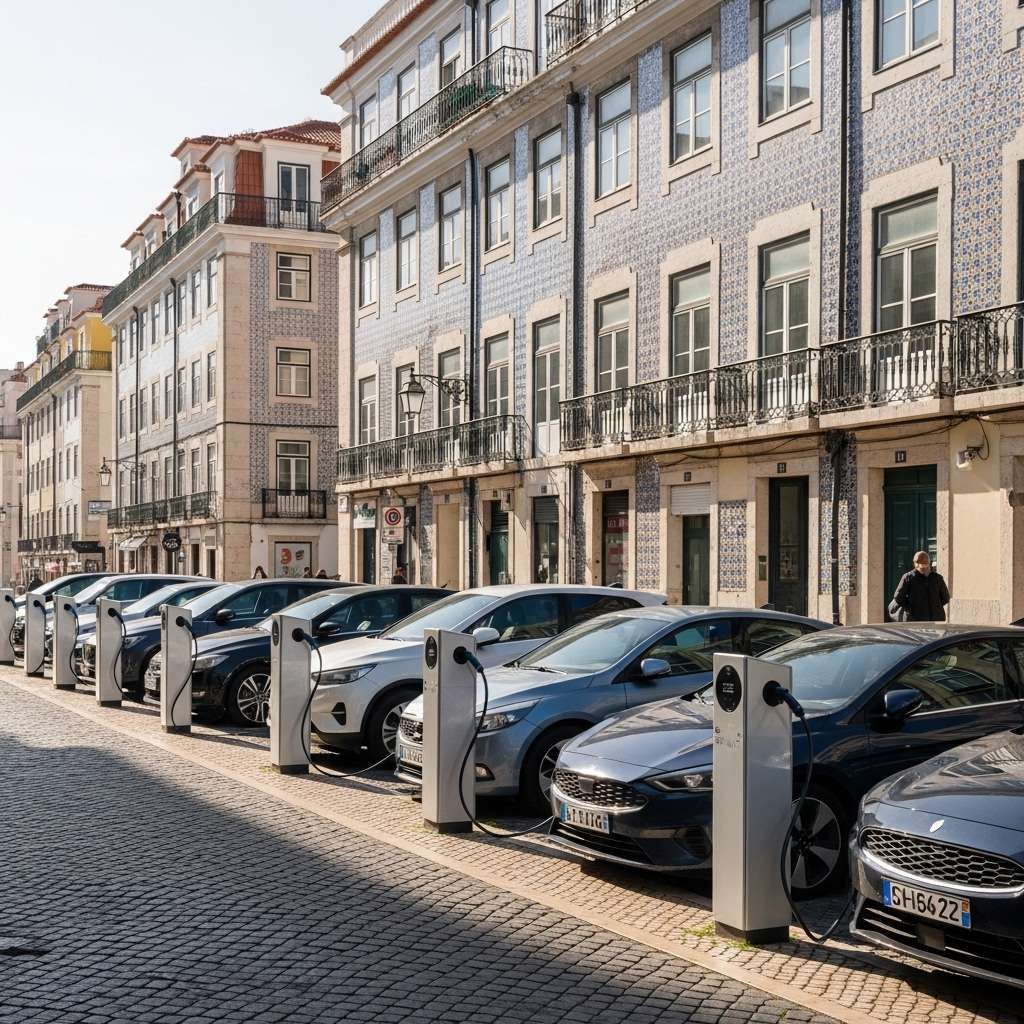
The Portugal auto market is experiencing cautious optimism as European car sales remain subdued, but one bright spot stands out: battery-electric vehicles and plug-in hybrids are reshaping the continent's automotive landscape. For Portuguese residents considering a vehicle purchase or fleet renewal in 2026, understanding both the market dynamics and the incentives available is essential.
Portugal's EV Incentives: What You Need to Know
If you're a Portugal-based buyer, the national incentive structure offers genuine financial advantages:
• €4,000 grant toward a new 100% battery-electric vehicle when scrapping a fossil-fuel car older than 10 years
• Exemptions from the Imposto Único de Circulação (IUC) and Imposto Sobre Veículos (ISV)
• Retroactive eligibility for purchases made from 1 January 2025
• Institutions qualify for up to €5,000
• Total fiscal support can approach €8,000 over a vehicle's first five years, bridging much of the price gap between a compact EV and an equivalent petrol hatchback
These benefits make Portugal one of the more attractive jurisdictions in the EU for first-time EV buyers, particularly urban households seeking to reduce fuel and tax burdens.
How to Access the Incentive:
The €4,000 purchase grant is administered through the Fundo Ambiental (Environmental Fund). To apply, you must submit documentation proving the scrapping of your vehicle (older than 10 years) along with your purchase invoice for the new EV. Applications are processed on a rolling basis, though budgets typically claim close before calendar year-end, so timing matters. Processing typically takes 4-8 weeks after submission.
The Broader European Context
European car sales totaled 1.66 million units in the first two months of 2026—a 1.2% decline versus the same period in 2025, signaling continued affordability pressures. However, electrification is accelerating: battery-electric vehicles posted a 20.6% year-on-year increase in February EU registrations, while plug-in hybrids surged 32.1%. This shift is driven by the EU Alternative Fuels Infrastructure Regulation (AFIR), which mandates fast-charging stations every 60 km along major corridors by year-end 2026, and expanded national subsidy schemes across Germany, Italy, and beyond.
Chinese manufacturers—BYD, Changan, Geely—have also flooded the market with competitively priced models, forcing legacy European brands to slash sticker prices. For Portuguese buyers, this competitive pressure translates to improved dealer incentives, longer warranty terms, and more aggressive trade-in valuations, especially when upgrading from older diesel or petrol models.
Timing Your Purchase
With cumulative sales trailing 2025 and inventory levels adequate but not excessive, dealers are unlikely to offer steep discounts until the third quarter—unless a specific nameplate underperforms monthly targets. Buyers targeting electric or plug-in hybrid models should act before subsidy budgets exhaust; the Portugal Fundo Ambiental allocation is finite.
Resale and Depreciation
Used-car prices remain elevated due to pandemic-era production shortages, but off-lease battery-electric models are beginning to flood the secondary market, exerting downward pressure on EV resale values. If you plan to sell an electric vehicle within 24–36 months, factor in potential depreciation acceleration.
Charging Infrastructure: Portugal's Reality
Portugal's public charging network has grown, but remains concentrated in coastal urban centers. The MOBI.E network, Portugal's primary public charging operator, currently maintains approximately 2,500 charging points nationwide, with expansion ongoing. However, rural and interior regions lag significantly. The AFIR mandate will force highway rest-area operators to install fast chargers by December 2026, yet charging availability varies dramatically by region. Long-distance commuters or those in less-connected municipalities should verify charging infrastructure before abandoning combustion entirely. Confirm coverage on the MOBI.E app or website before committing to a fully electric vehicle.
Market Competition and Your Options
The Volkswagen Group (VW, Skoda, Seat/Cupra, Audi) continues to dominate European sales with 449,294 units across the first two months of 2026, underscoring its geographic reach and brand portfolio depth. Parts availability and service-network density remain concentrated around VW Group, Stellantis, and Renault–Nissan franchises. For residents outside Lisbon and Porto, verify local workshop capacity before committing to niche or emerging brands. A robust after-sales network is crucial for warranty and recall work, particularly as electric vehicles become mainstream.
Outlook for 2026
The EU market is projected to grow approximately 2% in full-year 2026 to around 13.5 million units—still below pre-pandemic norms. The growth is concentrated in electrified powertrains; combustion-only models face accelerating obsolescence as the bloc's 2035 ban on new internal-combustion sales approaches. For Portugal, this dual pressure of EU regulation and Chinese competition means dealership consolidation is likely: smaller, single-brand outlets will struggle to finance the training and tooling required for electric-vehicle service.
The Bottom Line
Portuguese households weighing a vehicle purchase in 2026 face a market simultaneously more electrified, more competitive, and more constrained than at any point in the past decade. However, the combination of €4,000 purchase grants, tax exemptions, and expanding charging networks makes this an opportune moment for buyers ready to transition to electric. Act soon to secure subsidy eligibility, verify local charging infrastructure, and prioritize dealerships with proven after-sales expertise.


