

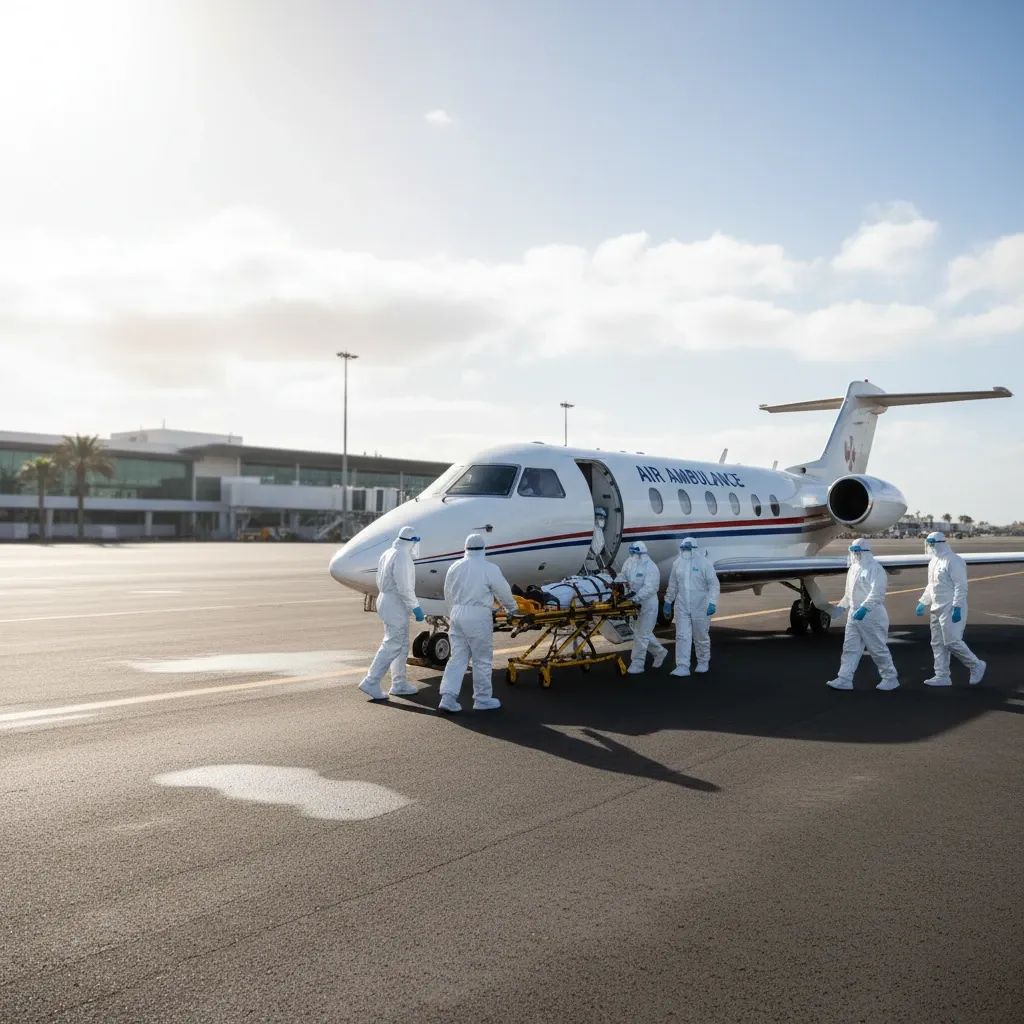
Spain's merchant marine authority has overridden regional resistance to authorize entry of the MV Hondius cruise ship into Tenerife's Granadilla port, setting in motion a multi-day international repatriation operation affecting over 100 passengers and crew exposed to a rare, human-transmissible strain of hantavirus. The vessel anchored offshore early Sunday morning, triggering a coordinated health evacuation involving Spain's Ministry of Health, the World Health Organization (WHO), and government aircraft from at least eight nations.
Why This Matters
• One Portuguese citizen is aboard—a crew member who will remain on the ship and sail to the Netherlands rather than disembark in the Canaries.
• All 147 people on board are considered "high-risk contacts" and face 42 days of mandatory health monitoring by WHO guidelines.
• The hantavirus Andes strain is the only known hantavirus variant capable of person-to-person transmission, requiring close, prolonged contact—making the confined cruise ship environment a potential amplification setting.
• The operation underscores the legal and logistical complexity of managing infectious disease outbreaks in international waters, with implications for future maritime health protocols.
Emergency Authorization After Regional Pushback
The Spanish Directorate-General of Merchant Marine, led by Ana Núñez Velasco, issued a resolution Saturday night forcing entry of the MV Hondius into Granadilla port after the Canary Islands regional government and local port authority initially refused docking. Regional president Fernando Clavijo had publicly stated he would not permit the vessel to berth unless all passengers could be evacuated within 12 hours—a timeline health authorities deemed impossible.
The central government invoked Article 299 of Spain's Ports and Merchant Marine Law, citing "combined maritime safety risk" and the "need for medical assistance aboard." The decision mandated that the Granadilla Port Authority provide pilotage, towing, and mooring services, with the option of controlled anchorage or direct docking depending on the needs of the sanitary operation.
The ship entered Tenerife waters at 06:00 local time Sunday, guided by a pilot boat and tugboat. Rather than docking at the pier—a deliberate measure to minimize contamination risk on land—the vessel anchored offshore. Passengers are being ferried in small groups of five via tenders to the isolated industrial section of the port, then transported approximately 10 kilometers in military convoys along a secured corridor to Tenerife South Airport.
Staggered Repatriation Through Monday Afternoon
Spanish citizens were the first to disembark Sunday morning—14 nationals flown by military aircraft to Madrid's Hospital Gómez Ulla, a defense ministry facility, where they will undergo quarantine and observation. Spain's Health Minister Mónica García confirmed on-site that the evacuation would proceed by nationality in tightly choreographed waves, with passengers only leaving the ship once their designated repatriation aircraft is ready for immediate takeoff.
Following the Spanish cohort, flights organized by the Netherlands government will carry Dutch residents and nationals from Germany, Belgium, and Greece. Separate charter and military flights are scheduled for passengers from Canada, Turkey, France, the United Kingdom, Ireland, and the United States—most departing Sunday. The final repatriation flight is slated for Monday afternoon, carrying individuals of various nationalities.
Each evacuee is permitted to carry only a small bag with essentials—documents, mobile phone, charger—while main luggage remains aboard. Medical teams from Spain's Foreign Health Service boarded the vessel Sunday morning at 07:45 to conduct final health screenings. According to García, all individuals aboard currently show no symptoms of hantavirus infection, a reassurance echoed by the WHO.
Once passenger evacuations conclude, 43 crew members—including the lone Portuguese national—will remain aboard for the onward voyage to the Netherlands, where the MV Hondius is registered and operated by the Dutch company Oceanwide Expeditions. The vessel is scheduled to depart Tenerife Monday for the Netherlands for comprehensive disinfection.
What This Means for Portuguese Nationals and Travelers
The single Portuguese citizen aboard the MV Hondius is a crew member who does not reside in Portugal, according to Portugal's Directorate-General of Health (DGS). Portuguese health authorities confirmed Friday that no occupant of the cruise liner had requested repatriation to Portugal, and the crew member in question will continue with the ship to the Netherlands as part of the skeleton crew.
This distinction is important: Portugal has no active public health obligation to evacuate or quarantine this individual domestically, as repatriation is being handled according to country of residence, not citizenship. However, the DGS is monitoring the situation and has coordinated with European health networks to ensure the crew member receives appropriate follow-up care and surveillance.
For Portuguese travelers and expatriates, the incident serves as a reminder of the risks inherent in remote expedition cruises—particularly those involving wildlife observation in regions where zoonotic diseases are endemic. The MV Hondius had embarked from Ushuaia, Argentina, on April 1, carrying birdwatchers and scientists on a South Atlantic voyage. The outbreak is believed to have originated from exposure to infected rodent droppings during a shore excursion near Ushuaia.
Understanding the Hantavirus Andes Threat
The hantavirus Andes strain, confirmed in six of eight suspected cases linked to the MV Hondius, is uniquely concerning because it is the only documented hantavirus capable of human-to-human transmission. Most hantavirus infections occur through inhalation of aerosolized particles from rodent excreta, but the Andes variant can spread between people via prolonged close contact—typically in enclosed spaces such as households or, in this case, a cruise ship.
The virus causes Hantavirus Cardiopulmonary Syndrome (HCPS), which begins with flu-like symptoms—fever, headache, joint pain, abdominal discomfort—before rapidly progressing to severe pulmonary edema, respiratory failure, and in some cases, death. Three fatalities have been reported among the MV Hondius passengers. The incubation period for hantavirus can range from one to eight weeks, meaning additional cases could still emerge among the evacuated passengers. This is why WHO Director-General Tedros Adhanom Ghebreyesus personally traveled to Tenerife to oversee the operation and deliver a direct message to local residents: "This is not another COVID."
In a public statement, Tedros acknowledged the trauma of 2020 and the anxiety triggered by the word "outbreak," but stressed that the current public health risk remains low. Unlike SARS-CoV-2, which spreads easily through respiratory droplets in casual encounters, hantavirus Andes requires sustained, intimate contact for transmission. Passengers are being monitored under strict protocols, and the WHO has classified all aboard as high-risk contacts requiring 42 days of surveillance—but not general quarantine isolation.
Logistical Precision and International Coordination
The repatriation operation represents what Spanish Health Minister Mónica García described as "an unprecedented operation of international scale." Coordination involves Spain's Ministry of Interior, the Netherlands government (as the ship's flag state and operator home base), the WHO, and the European Centre for Disease Prevention and Control (ECDC).
The 10-kilometer transfer route between Granadilla port and Tenerife South Airport has been sealed off from public access. Passengers are moved in military buses escorted by health personnel in full protective equipment. At the airport, a dedicated isolated zone on the tarmac allows direct boarding without entering the terminal, ensuring zero contact with the general public.
Spanish Prime Minister Pedro Sánchez defended the decision to accept the vessel, posting on social media: "Accepting the WHO's request and offering a safe port is a moral and legal duty to our citizens, Europe, and international law. Spain will always stand by those who need help. Some decisions define who we are as a society."
Practical Guidance for Portuguese Travelers
For Portuguese nationals considering expedition cruises, the hantavirus outbreak is a prompt to review travel health insurance policies carefully. Standard cruise insurance may not cover evacuation costs, extended quarantine stays, or medical treatment for rare zoonotic diseases. Policies should explicitly include pandemic and epidemic coverage, as well as medical repatriation to Portugal if needed.
The incident illustrates the importance of pre-travel health consultations. While no vaccine exists for hantavirus, travelers to remote regions—especially those engaging in outdoor activities, wildlife observation, or visiting unfamiliar environments—should be briefed on rodent avoidance strategies: sealing food, avoiding contact with animal droppings, and steering clear of abandoned structures or waste sites where rodents congregate. The Portuguese National Institute of Health and private travel medicine clinics offer such consultations.
What Happens Next
The MV Hondius is expected to sail for the Netherlands by Tuesday, where it will undergo a full sanitary decontamination before resuming operations. The 43 crew members remaining aboard—including the Portuguese national—will be under continuous medical observation during the voyage, with telemedicine support from WHO and ECDC specialists.
Repatriated passengers face six weeks of health surveillance in their home countries, with instructions to self-monitor for fever, respiratory symptoms, or signs of cardiovascular distress. The WHO has emphasized that the risk of onward community transmission is minimal, given the specific transmission requirements of the Andes strain, but national health agencies are treating all contacts with heightened caution.


