

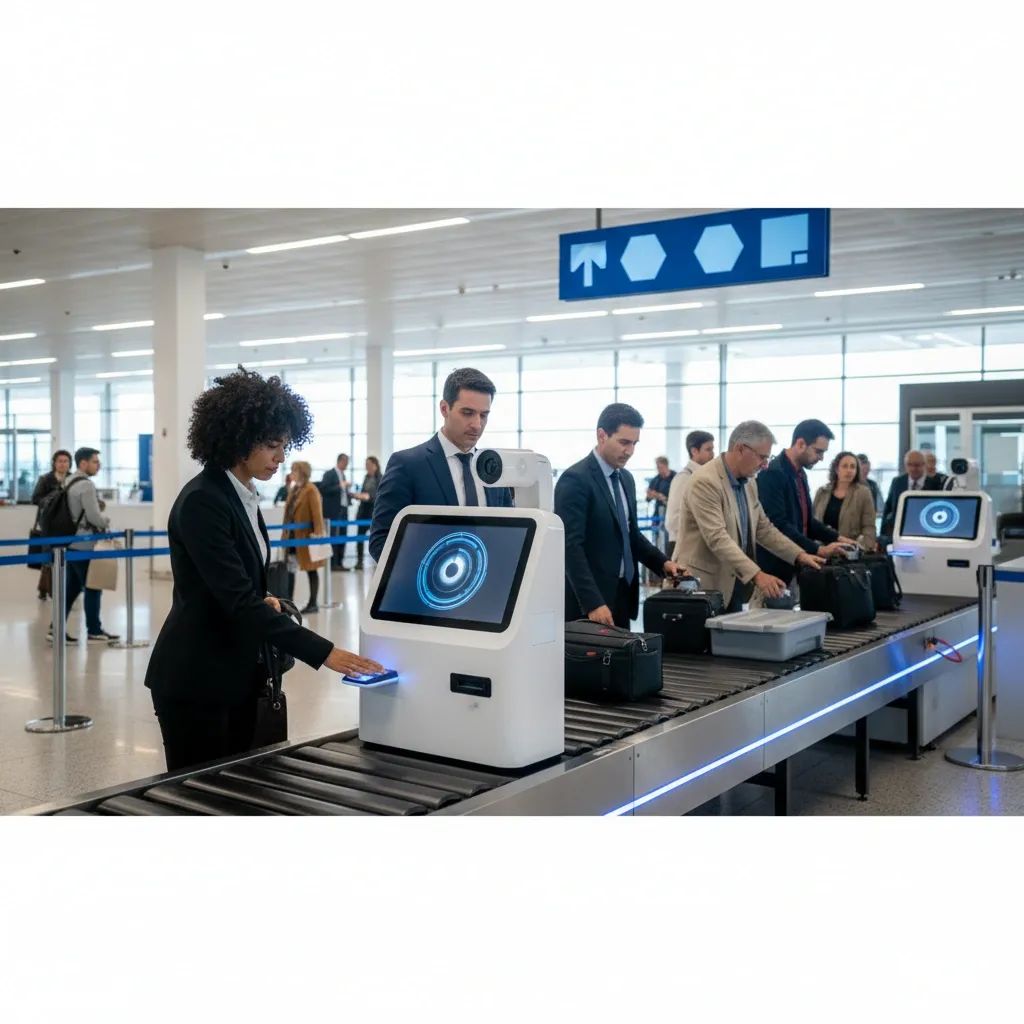
The Portugal Public Security Police (PSP) has tightened enforcement at national airports during the first half of 2026, leading to a dramatic surge in border interdictions, passenger interceptions, and entry refusals. The shift reflects both rising passenger volumes and a more stringent application of immigration protocols, following criticism from Brussels over lax border security.
What Portugal Residents Should Know
If you're a Portuguese resident or EU/EEA citizen traveling through Portugal's airports, here's what to expect:
• Longer wait times: Arrivals processing has slowed significantly. During peak travel periods (summer months, holiday weeks), expect queues of 30 minutes to over an hour at passport control.
• Document requirements for EU/EEA citizens: Even though free movement applies, always carry a valid passport or ID card. The new biometric Entry/Exit System (EES) scans your document and records your entry/exit electronically.
• Third-country nationals face stricter scrutiny: If you're returning with non-EU family members or colleagues, they'll face enhanced questioning about accommodation, return plans, and available funds. Have these documents ready.
• When improvements take effect: The 340 newly deployed officers are already arriving at major terminals (as of early July 2026). Queues should begin normalizing by late 2026, though peak periods will remain busy through 2027.
Why This Matters
• Arrivals face tougher scrutiny: Entry denials jumped 15.5%, with 1,309 foreign nationals turned away at Portugal's air borders.
• Enforcement tripled: Formal interdictions—when travelers are barred for legal violations or security flags—more than tripled from 39 to 118 cases.
• Record interceptions: Officers conducted 21,132 passenger stops to verify documents and legality, a 48% increase year-on-year.
• 340 new border officers are being deployed to Lisbon, Porto, Faro, Funchal, and Ponta Delgada starting this month to address staffing gaps flagged by the European Commission.
Arrests and Refusals Climb Amid Rising Traffic
The National Unit for Foreigners and Borders (UNEF), the PSP division responsible for airport security and immigration control, arrested 245 individuals at Portugal's air frontiers in the first six months of the year—a 28.9% increase compared to the same period in 2025. These arrests stem from outstanding warrants, fraudulent documentation, and violations of immigration law.
Meanwhile, the unit processed nearly 11 million passengers, a 17.2% rise that mirrors the broader rebound in European air travel. Of that total, 5.6 million were inbound arrivals (up 6.3%) and 5.2 million were outbound departures (up 31.8%). The spike in outbound checks reflects a new emphasis on exit controls, a procedure that had been simplified—and in some cases omitted—at Lisbon's Humberto Delgado Airport until a December 2025 audit by the European Commission exposed the gap.
What Triggers an Entry Ban
Interdictions occur when a traveler is formally barred from entering Portuguese territory. The 118 interdictions recorded in the first half of 2026 represent a threefold increase from the 39 cases logged in the equivalent period of 2025. The most common triggers include:
• Lack of justification for entry: Travelers arriving on tourist visas but intending to work or reside without proper authorization.
• Invalid or expired visas: Presenting documentation that does not match the stated purpose or duration of stay.
• Insufficient financial means: Inability to demonstrate adequate funds for the intended visit and return journey.
• Schengen Information System (SIS) flags: Individuals previously expelled, subject to readmission agreements, or flagged as security risks.
• Fraudulent documents: Use of forged or altered passports, visas, or identity papers.
Brazilians Bear the Brunt
Brazilian nationals continue to account for the overwhelming majority of entry refusals. In 2024, they represented 85% of air border denials, with 1,470 cases—a 721% surge from 2023. By 2025, Portugal had become the European Union country with the highest rate of refusal for Brazilian arrivals, recording 750 denials.
Nationality-specific data for the first half of 2026 has not yet been released by Portuguese authorities, though trends suggest Brazilian citizens remain the most affected group. Angolans were the second most affected in 2024, with 274 refusals, followed by citizens of the United Kingdom (108), India (83), Guinea-Bissau (72), Timor-Leste (70), and Senegal (68).
The trend reflects the end of Portugal's "manifestation of interest" pathway, which allowed certain foreign nationals to apply for residency from within the country. That route was closed in June 2024, requiring all would-be residents to secure a visa from their country of origin before arrival. The policy shift has hardened enforcement at airports, with officers scrutinizing travelers more closely for signs they intend to overstay tourist permits.
Document Fraud Holds Steady
UNEF officers detected 330 cases of document fraud at airports in the first half of 2026, virtually unchanged from the 327 cases identified in the same period of 2025. Fraud cases range from altered travel documents to entirely counterfeit passports. Senegal and Morocco have historically been focal points for fraudulent papers, though the problem spans multiple nationalities.
The near-flat fraud detection rate, despite the surge in interceptions, suggests either improved screening technology or a shift in the profile of attempted entries. Authorities have been investing in advanced document scanners and training for frontline staff to identify sophisticated forgeries.
Brussels Audit Prompts Overhaul
The enforcement surge follows a December 2025 surprise audit by the European Commission, which found "grave deficiencies" in border controls at Lisbon and Porto airports. Auditors cited poor-quality first- and second-line checks, wait times exceeding seven hours in some instances, and unauthorized procedural shortcuts—including the complete absence of exit controls at Lisbon's main terminal.
The Commission deemed these lapses a risk to the wider Schengen Area, prompting Portugal's Interior Ministry to pledge immediate corrective measures. These include:
• 340 additional PSP officers trained specifically in border operations, with 140 assigned to Lisbon, 100 to Porto, and the remainder split among Faro, Funchal, and Ponta Delgada.
• New control booths and technology infrastructure to reduce bottlenecks and improve verification speed.
• Automated exit checks at all major terminals, ensuring every departure is logged in centralized European databases.
• Quarterly reporting to Brussels on compliance and operational metrics.
The reinforcements, announced in late June, began arriving at their posts in early July. The Interior Ministry has also committed to resolving digital connectivity issues that slowed cross-referencing with the Schengen Information System and other EU databases.
What This Means for Residents and Travelers
For residents of Portugal, the stepped-up enforcement translates to longer queues at arrivals halls, particularly during peak travel seasons. The Entry/Exit System (EES), implemented in October 2025, replaced manual passport stamps with biometric scans and electronic records, but its rollout was marred by technical glitches and staffing shortages. The new wave of officers is intended to smooth those bottlenecks.
For foreign nationals visiting or returning to Portugal, the message is unambiguous: arrive with documentation that precisely matches your stated purpose. Travelers entering on tourist waivers or short-stay visas should expect questions about accommodation bookings, return tickets, and available funds. Those planning to work or study must present the appropriate visa category secured before departure.
Investors and businesses bringing clients or partners to Portugal should advise them to carry evidence of the business relationship—invitation letters, conference registrations, or company correspondence—to avoid delays or refusals. The PSP has discretion to detain travelers for extended questioning if their stated purpose and documentation appear inconsistent.
Asylum Requests Edge Lower
Applications for international protection at Portuguese airports declined modestly, from 152 in the first half of 2025 to 144 in the equivalent period of 2026, a 5.3% drop. The slight decrease may reflect stricter pre-boarding checks by airlines and embassies, which reduce the number of asylum seekers reaching Portuguese soil. It may also indicate shifting migration routes, with more protection seekers entering via land borders in southern or eastern Europe.
Regional Performance Varies
Not all Portuguese airports face the same pressure. According to the AirHelp Score 2026 rankings, which assessed punctuality, passenger experience, and facilities from May 2025 to April 2026, Faro Airport ranked 125th globally and led the country. Porto's Francisco Sá Carneiro Airport came in 192nd. By contrast, Lisbon's Humberto Delgado was consistently rated the worst-performing airport in Portugal and near the bottom of the global list, ranking among 279 airports in 76 countries.
A separate Google Maps-based ranking from mid-2025 praised Porto's well-planned terminals, short wait times, self-service check-in, and fast security lanes. Lisbon's poor showing is attributed to chronic understaffing, aging infrastructure, and the procedural shortcuts that drew the Commission's ire.
Broader European Context
Portugal's enforcement surge aligns with a wider European trend toward tighter border management. The European Union Agency for Aviation Safety (EASA) reaffirmed in its 2025 Annual Safety Review that Europe remains one of the safest aviation regions globally, but emphasized continuous risk monitoring and learning from incidents. EUROCONTROL data for 2025 showed robust growth in European air traffic, with improved on-time performance and reduced air traffic management delays compared to 2024.
Still, the Commission's audit underscored that national implementation of EU-wide systems like the EES and SIS varies significantly. Portugal's experience illustrates the operational friction that can arise when digital infrastructure and staffing lag behind passenger growth and regulatory expectations.
Looking Ahead
The PSP has indicated that the first-half 2026 figures remain provisional and are still being consolidated. Final data, expected later this year, may show further adjustments. What is clear, however, is that Portugal's air borders are under closer scrutiny—both from Brussels and from domestic authorities responding to political pressure to demonstrate control over irregular migration.
For travelers, the practical takeaway is straightforward: expect more questions, longer waits, and zero tolerance for incomplete or inconsistent documentation. For residents, the hope is that the influx of trained personnel and upgraded technology will eventually translate into smoother operations, balancing security with the passenger experience that tourism-dependent Portugal relies upon.


