

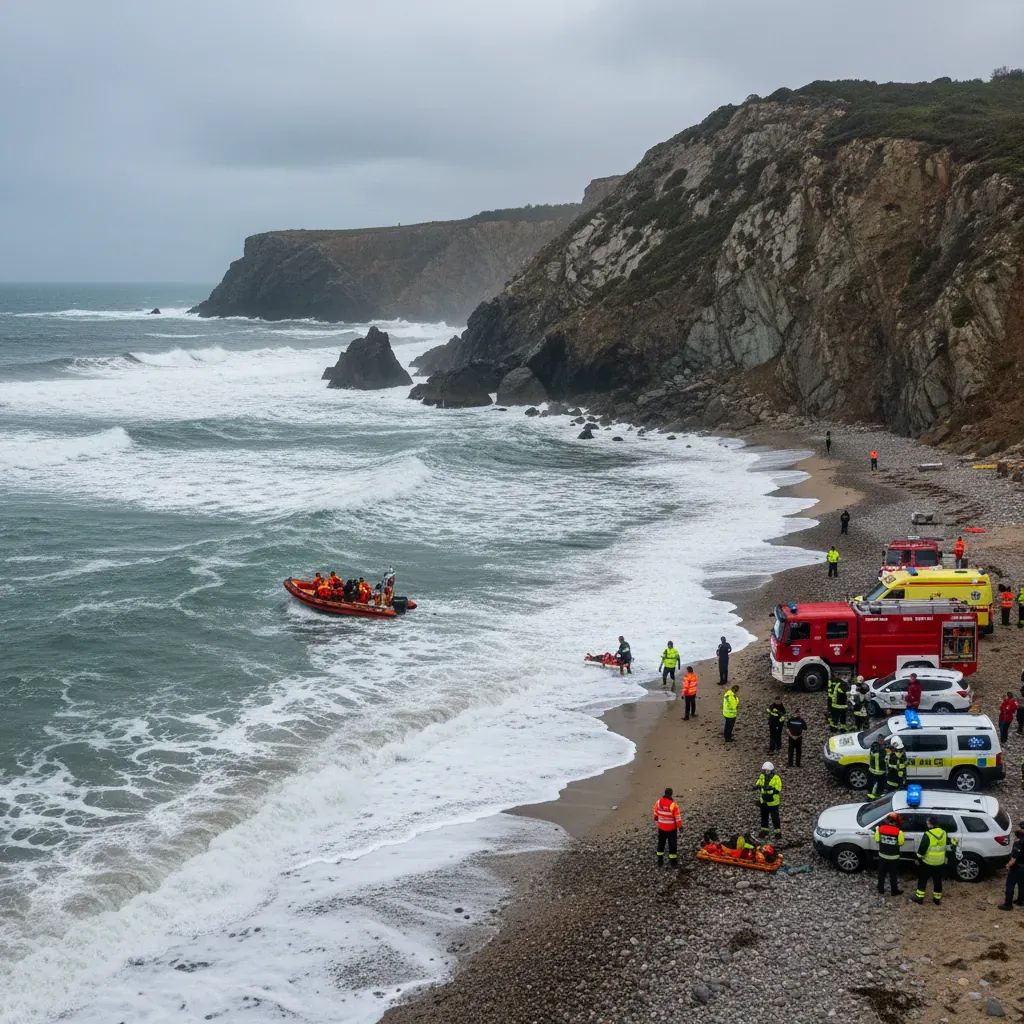
The Portugal Maritime Authority (AMN) conducted a rescue operation at Peralta Beach in Lourinhã on Saturday afternoon, pulling three foreign nationals from the water after they encountered difficulties during recreational water sports activities.
The Rescue Operation
The emergency call reached the Lisbon Maritime Search and Rescue Coordination Center (MRCC Lisboa) at 3:05 PM, reporting three individuals struggling in the water during what was described as recreational nautical sport practice. The precise activity—whether surfing, windsurfing, paddleboarding, or another discipline—was not specified in official communications.
Response teams mobilized rapidly from multiple agencies. The Peniche Maritime Police Local Command dispatched officers alongside personnel from the Lifeguard Station. Volunteer firefighter units from both Lourinhã and Peniche Humanitarian Associations joined the operation, creating a multi-agency rescue effort typical of Portugal's coastal emergency protocols.
Rescuers extracted two men—a 36-year-old French national and a 39-year-old Dutch citizen—along with a 22-year-old Belgian woman. While the two men appeared uninjured, the woman showed signs of a joint injury serious enough to warrant immediate medical evacuation. Firefighters transported her to a regional hospital unit for evaluation and treatment of a suspected dislocated limb.
Why This Matters for Beachgoers
This incident highlights important safety considerations for anyone planning water activities at Portugal's beaches, particularly during spring months when conditions can be unpredictable. Peralta Beach in the Lourinhã municipality north of Lisbon is a popular destination for water sports enthusiasts. However, beachgoers should be aware of several key safety principles:
Understand seasonal coverage: Many Portuguese beaches operate lifeguard surveillance only during designated summer seasons. During off-season months, beachgoers assume full responsibility for their safety.
Respect water conditions: Atlantic waters present real challenges including cold temperatures, strong currents, and tidal variations. Even experienced water sports practitioners can encounter difficulties when conditions shift unexpectedly.
Signal for help immediately: Anyone experiencing difficulty in the water should signal for help promptly rather than attempting to swim against currents or overcome fatigue alone.
Use proper equipment and protection: Water sports should only be undertaken with appropriate safety gear and thermal protection suited to current ocean conditions.
Regional Emergency Response
Portugal's coastal rescue network relies on coordinated cooperation between maritime police, lifeguard stations, volunteer fire brigades, and civil protection services. The Peniche Maritime Police Local Command oversees this section of coastline, coordinating with the broader MRCC Lisboa network that manages maritime emergencies across the region.
The Peniche Maritime Police assumed control of the incident investigation following the rescue. Standard procedure involves determining the circumstances that led to the emergency, helping authorities refine safety messaging and resource allocation for coastal areas.
This rescue represents one of many interventions Portugal's maritime authorities conduct annually along the country's Atlantic coastline. For the three individuals involved in Saturday's incident, the experience underscores that Portugal's Atlantic waters demand respect and caution, regardless of personal experience level or season.


