

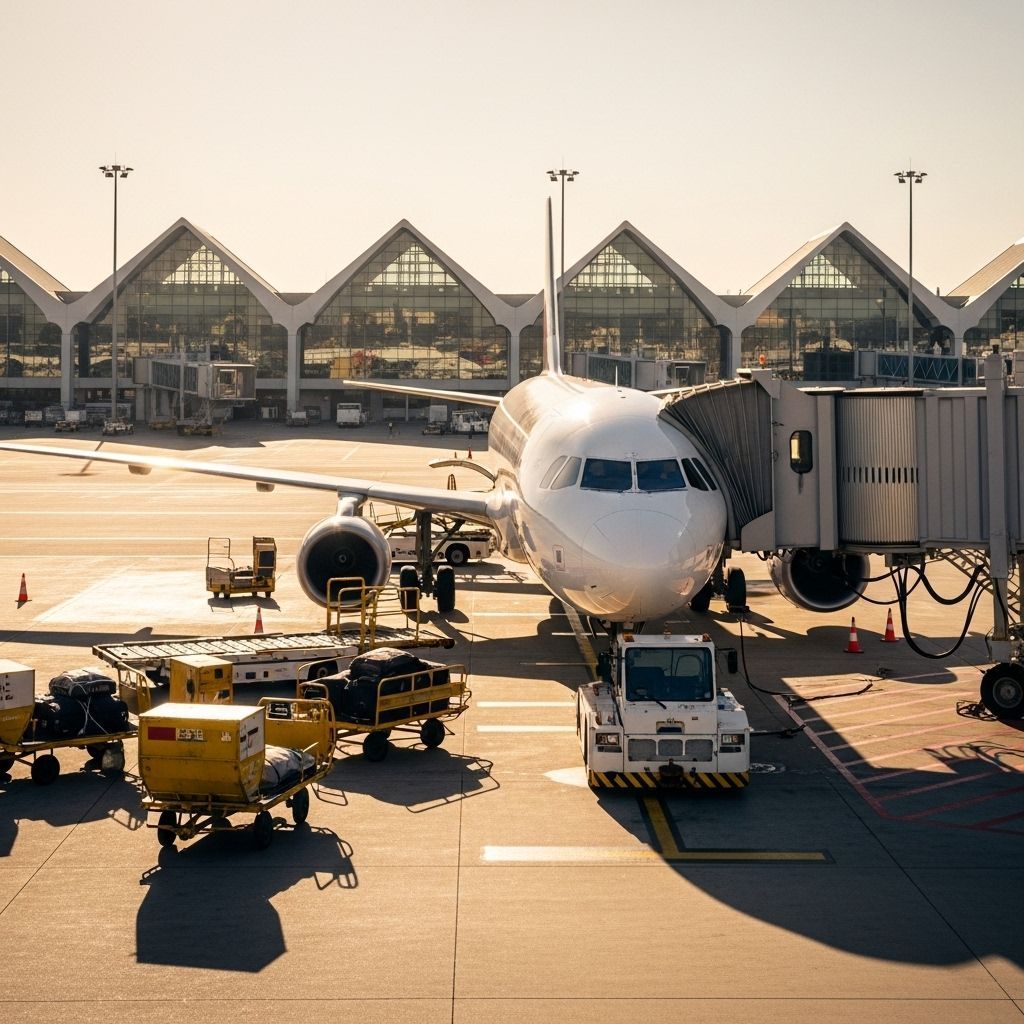
TAP Air Portugal has finalized an agreement to sell its remaining 49.9% stake in ground handling operator SPdH to Menzies Aviation. The deal, pending regulatory approval, completes a key requirement of the airline's €3.2 billion state bailout restructuring plan approved by the European Commission five years ago.
The sale arrives with weeks to spare before the June 30, 2026 deadline set by Brussels for TAP to exit non-core assets. It locks in ground handling services for TAP at Lisbon, Porto, Faro, and Funchal/Porto Santo airports, protecting operations amid an ongoing license dispute that could otherwise disrupt services.
Menzies Aviation already controlled a 50.1% majority stake in SPdH after securing it in 2023. This transaction consolidates full ownership of the ground handling company and extends its role as TAP's primary services partner across five Portuguese airports. The airline has committed to long-term service contracts with Menzies to shield itself from volatility in Portugal's competitive ground handling market.
The agreement includes a key protection for workers. If Menzies loses future operating permits, TAP will adopt a self-handling model using SPdH staff exclusively, bypassing any rival operator that wins contested tenders. This commitment follows strikes by SPdH workers in late 2025 and early 2026, when employees worried that regulatory changes could endanger their jobs.
A regulatory battle has complicated the backdrop. Portugal's National Civil Aviation Authority (ANAC) ran a public tender for ground handling licenses at Lisbon, Porto, and Faro. The Spanish consortium Clece/South emerged as the provisional winner, with Menzies in second place. Menzies filed a legal challenge that suspended the award.
To prevent disruption during peak summer travel, the Portuguese government extended Menzies' existing licenses through October 25, 2026, allowing the courts to settle the dispute. The TAP-Menzies contracts are designed to survive whatever the outcome: even if a rival wins the licenses, Menzies can still service TAP under a captive arrangement, preserving continuity and employment.
For passengers using Portugal's airports, the immediate implication is operational certainty. Ground services—check-in desks, baggage handling, and ramp services—will continue uninterrupted regardless of the license tender's final result. Workers at SPdH face a more uncertain outlook. The government's October license extension and TAP's self-handling pledge offer short-term job protection, but the eventual ANAC decision will determine whether employees remain under Menzies or transition to a new operator.
For taxpayers, the handling sale represents progress toward recovering the €3.2 billion rescue package. The European Commission's restructuring conditions were designed to prevent state-subsidized TAP from undercutting private competitors, and exiting non-core businesses is central to that framework. A partial privatization expected by August or September 2026 should bring fresh capital and reduce government exposure, though the state will retain at least 50.1%.
TAP has announced an expansion plan for the second half of 2026. A direct Lisbon–Orlando service will launch October 29, targeting American leisure travelers. New routes to Brazilian cities Curitiba (July 2) and São Luís do Maranhão (October 26) are also planned. The airline will introduce a premium-economy cabin on Airbus A330 and A321LR aircraft by summer, offering priority boarding and enhanced service at a price point below business class.
The handling sale is one element of a broader transition. TAP must also exit its stake in Cateringpor, the in-flight catering subsidiary, before the June 30 deadline. Failure to meet these obligations would trigger scrutiny from the European Commission and potentially delay the privatization schedule.
Beyond domestic restructuring, TAP faces external pressures. Jet fuel costs have risen sharply amid the Middle East crisis, adding cost pressure across the industry. European carriers have responded by increasing fares, and TAP is expected to continue adjusting ticket prices if geopolitical conditions persist.
Lufthansa and Air France-KLM are competing for a stake of up to 49.9% in TAP. The German and French airline groups have remained engaged in the process, with the government expecting binding offers and a final decision by late summer. A sale to either buyer could bring operational synergies and changes to service standards and pricing on European routes.


