

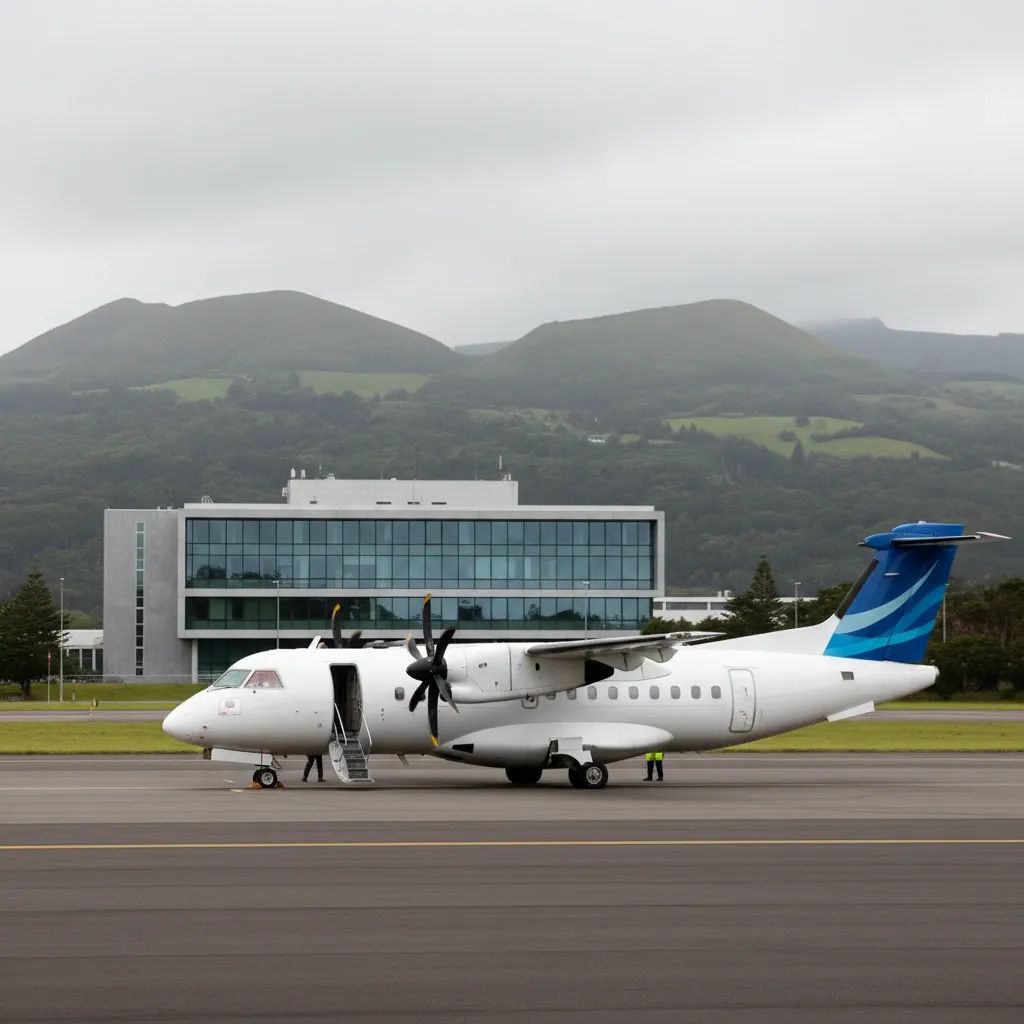
International Airlines Group (IAG), the aviation conglomerate that controls British Airways and Iberia, is signaling serious reservations about pursuing a stake in TAP Air Portugal, creating uncertainty around one of the most closely watched privatization processes in Europe. The hesitation centers on Lisbon's insistence on selling only a minority holding of 44.9%, a structure that clashes with IAG's traditional appetite for majority control.
Why This Matters:
• April 2 deadline looms for non-binding offers—IAG hasn't ruled out submitting a last-minute bid.
• €700M revenue target for the Portugal Treasury depends on attracting a credible buyer with deep pockets.
• Air France-KLM and Lufthansa remain active bidders, positioning the race as a battle for South American and African routes.
• Workers get 5% reserved equity, with any unclaimed shares triggering a right of first refusal for the eventual buyer.
Sources close to the transaction, cited by Portuguese news outlets, confirm that IAG executives view the minority-stake framework as incompatible with the group's operational philosophy. Unlike its rivals, IAG historically pursues full or near-total ownership to drive margin expansion and fleet rationalization—strategies difficult to execute without board control. Despite the misgivings, the London-based airline giant has not formally withdrawn, leaving the door ajar for a tactical bid ahead of the April cutoff.
Lisbon's Non-Negotiable Terms
The Portuguese Infrastructure Ministry, led by Miguel Pinto Luz, has erected a series of policy guardrails designed to prevent TAP from becoming a footnote in a larger European network. The government's tender documents require any buyer to submit industrial and strategic plans demonstrating how they will expand operations across all Portuguese airports—Porto, Faro, and the autonomous island regions of Madeira and the Azores—not just the Lisbon hub.
Prime Minister Luís Montenegro has described this multi-airport commitment as a "fundamental cornerstone" of the sale. The administration is equally adamant about preserving TAP's EU air operator certificate, its brand identity, and strategic routes to Brazil, Portuguese-speaking African nations, and North America. Pinto Luz told lawmakers this week that both the airline sale and the parallel new Lisbon airport project are advancing at "cruising speed" without major turbulence.
The 44.9% equity package on offer represents the maximum foreign ownership permitted while keeping the state in majority control. Workers will collectively receive an additional 5%, a politically sensitive allocation meant to soften labor opposition. Any shares employees decline to purchase automatically become available to the winning bidder under a preferential purchase clause.
Competing Visions from Air France-KLM and Lufthansa
While IAG deliberates, two rival European networks have made their ambitions explicit. Air France-KLM, the Franco-Dutch alliance, views TAP's route map as "highly complementary" to its own, particularly the dense connections to São Paulo, Rio de Janeiro, and Luanda. CEO Ben Smith has publicly stated the group invests only in carriers where it can reliably achieve an 8% operating margin, a threshold TAP met in both 2023 and 2024 following post-pandemic restructuring. Air France-KLM executives want private-sector management handed over immediately, arguing that government oversight stifles the agility needed to compete with Gulf carriers and low-cost disruptors.
Lufthansa Group, which already operates a Lufthansa Technik maintenance facility near Porto slated to employ 1,000 technicians by 2030, has called TAP a "perfect match." CEO Carsten Spohr points to the airline's existing membership in the Star Alliance—Lufthansa's own global partnership—as natural connective tissue. The German carrier is also exploring a pilot training academy in Portugal, signaling a broader industrial commitment beyond mere equity acquisition. Spohr has emphasized that any deal must generate shareholder returns, framing the bid as conditional on cost discipline and realistic pricing.
Both competitors share a common strategic calculus: TAP's transatlantic and Lusophone network offers a rare foothold in markets where slots and bilateral air treaties remain tightly controlled. For Lufthansa, TAP would reinforce its presence in Latin America alongside existing partnerships. For Air France-KLM, it would allow the group to challenge IAG's Iberia subsidiary, which has long dominated Spanish-speaking routes to the Americas.
The IAG Dilemma
IAG's hesitation is rooted in precedent. The group's playbook—demonstrated with Aer Lingus, Vueling, and LEVEL—typically involves acquiring full operational control, then imposing group-wide procurement contracts, IT systems, and fleet rationalization to lift margins from single digits to the 12–15% band IAG targets. Analysts note that TAP's current 8% operating margin leaves meaningful upside, but unlocking it requires governance authority a minority stake cannot provide.
From a regulatory standpoint, IAG benefits from lighter Brazilian exposure than its peers, potentially smoothing antitrust clearance. Yet the company has no other major integrations in progress, freeing management bandwidth to absorb TAP—if the ownership structure permits. The conglomerate also faces a strategic defensive consideration: allowing Lufthansa or Air France-KLM to secure TAP would cede control of the Iberian Peninsula's southern aviation gateway, a corridor IAG has dominated through Iberia.
Industry observers suggest IAG may submit a conditional non-binding offer by April 2, outlining a higher valuation contingent on Lisbon agreeing to a phased pathway to majority ownership. Such a structure would mirror arrangements seen in other European airline privatizations, where governments retain golden shares or board seats while transferring operational control.
What This Means for Residents
For passengers, employees, and the broader Portuguese economy, the outcome will shape connectivity, ticket pricing, and job security for the next decade. A Lufthansa acquisition would likely integrate TAP into the Star Alliance ecosystem, offering seamless connections through Frankfurt and Munich but potentially reducing the frequency of competing routes. An Air France-KLM deal would pivot TAP toward Paris-Charles de Gaulle as a secondary hub, which could dilute Lisbon's centrality in the network. If IAG ultimately withdraws, the field narrows to two bidders, reducing competitive tension and potentially lowering the final sale price below the government's €700M minimum target.
The worker equity tranche—while symbolically significant—carries financial risk. Employees must decide whether to invest personal capital in an airline that, despite recent profitability, carries the scars of a €3.2B state bailout during COVID-19. The preferential purchase clause means any worker shares not subscribed could consolidate in the hands of the foreign buyer, diluting collective labor influence on the board.
For the broader travel market, the government's insistence on regional airport expansion aims to prevent TAP from becoming a Lisbon-only carrier, a concern in cities like Porto and Faro where tourism and business travel depend on direct international links. Whether foreign operators will honor these commitments—or treat them as bureaucratic box-checking—remains the central question for local stakeholders.
Timeline and Next Steps
The April 2 deadline for non-binding offers is the first formal checkpoint in a process Lisbon hopes to conclude by early summer 2026, with contracts signed before the traditional August vacation shutdown. Following the initial submissions, the Parpública state holding company will invite shortlisted bidders to conduct due diligence and submit binding offers, likely in May. Final negotiations, including labor consultations and European Commission antitrust review, would follow.
Infrastructure Minister Pinto Luz's assurance of a "no incidents" process reflects the political sensitivity surrounding TAP. The airline remains a symbol of national identity, and any perception of a fire-sale to foreign interests could provoke backlash, particularly from left-wing opposition parties. The government's strategy—offering meaningful but not controlling equity—attempts to balance fiscal responsibility with sovereignty concerns, though it risks alienating buyers seeking transformational control.
Whether IAG ultimately decides to compete or sit out will become clear within the next two weeks. For now, the Portuguese government's gamble is that three credible bidders, even if one withdraws, generate enough competitive tension to secure both financial return and operational commitments. The alternative—a failed auction—would force Lisbon back to the drawing board, with state ownership extending indefinitely and taxpayers bearing the risk of future industry downturns.


