The Portugal Government has condemned "unacceptable behavior" by a minority of demonstrators following violent clashes outside the nation's parliament building, while acknowledging that a general strike organized by the CGTP union confederation proceeded on the same day.
Why This Matters:
• Parliament area disruptions: Residents and workers near the Assembleia da República faced street closures, burning trash bins, and heavy police presence through the evening hours.
• Strike participation disputed: Government officials claim the "overwhelming majority" of Portuguese worked normally, while CGTP union leaders report significant participation in their protest against labor reforms.
• Labor law battle escalates: The proposed Trabalho XXI reform package, containing more than 100 changes to Portugal's Labor Code, now faces steeper parliamentary resistance following the major mobilization.
What Happened at the Parliament
Confrontations erupted near the Assembleia da República after the official CGTP demonstration concluded around 4:15 PM. A contingent of protesters remained in the area, and tensions escalated as police moved to reopen streets to traffic around 6 PM.
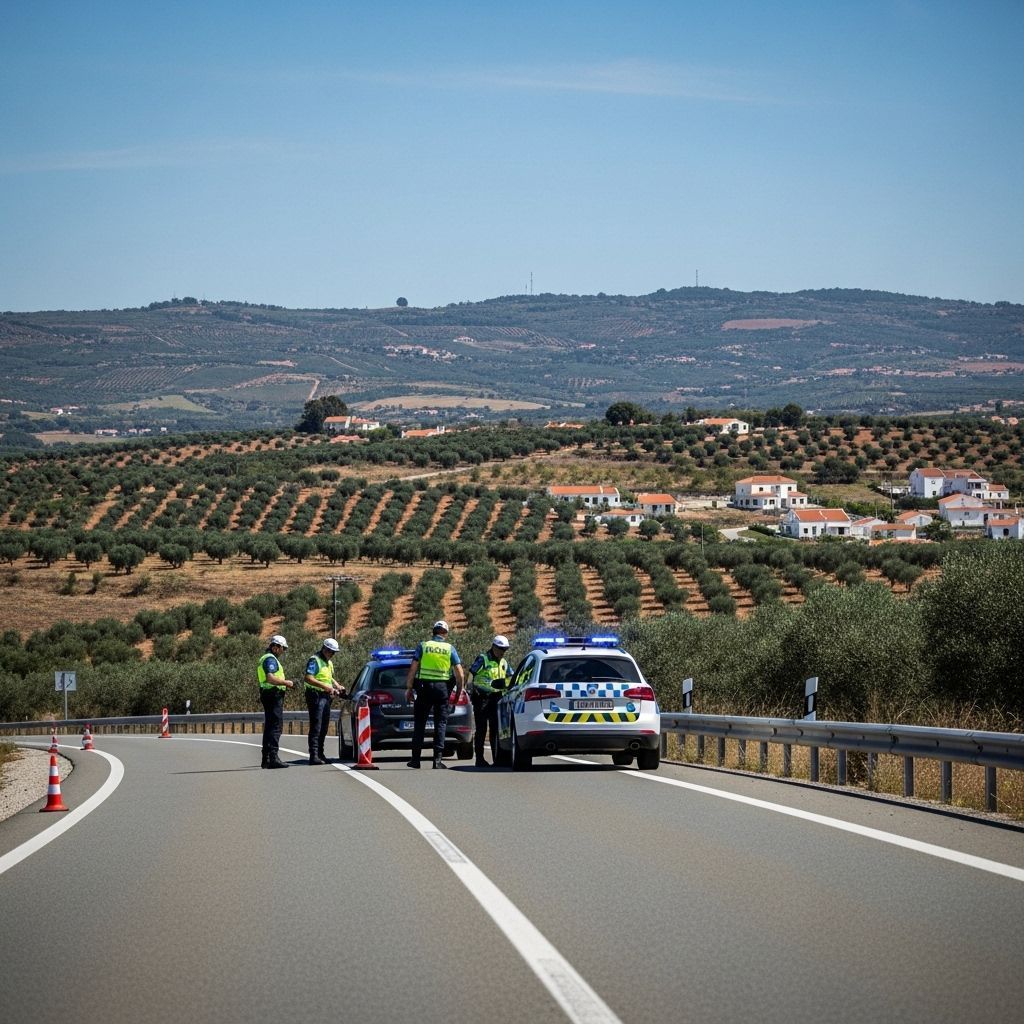
According to PSP (Polícia de Segurança Pública) sources, protesters barricaded the street with metal barriers and hurled glass bottles, fireworks, and smoke devices at officers. Trash bins along adjacent streets were set ablaze as the crowd dispersed through nearby alleys. Rapid Intervention Teams initially attempted to clear the area peacefully, but when protesters refused orders to leave, the Corpo de Intervenção tactical unit was deployed.
By 7:30 PM, several individuals had been detained, facing charges of disobedience, resisting arrest, and coercion of public officials. Additional charges related to property damage and projectile throwing may follow. Several police officers sustained minor injuries from thrown objects, though no serious casualties were reported on either side.
Government Walks a Tightrope
Speaking after the weekly Council of Ministers meeting, António Leitão Amaro, Portugal's Minister of the Presidency, delivered carefully calibrated remarks designed to defend law enforcement while distancing the violence from the strike's official organizers.
"A few exceeded what is acceptable in exercising the right to strike, provoking disturbances, offending public order, and confronting the authority of Portugal's security forces," Leitão Amaro stated. He emphasized this represented "the behavior of some, not the majority of demonstrators," most of whom protested peacefully.
Critically, he added that "based on the information we have, this is not behavior associated with the organization or organizers of this demonstration." The explicit exoneration of CGTP leadership suggests the government is attempting to avoid escalating tensions with Portugal's largest union confederation while still condemning the street violence.
Leitão Amaro praised the security forces for their "exemplary work in restoring and defending public order," thanking the men and women who "halted the disturbances of those who crossed the line."
Dueling Narratives on Strike Impact
The government and CGTP offered divergent accounts of the strike's reach, which was organized to protest the Trabalho XXI labor reform package.
Leitão Amaro claimed it was "a working day for the overwhelming majority of Portuguese," though he acknowledged "several Portuguese" did strike. He deferred detailed impact data to Labor Minister Maria do Rosário Palma Ramalho, whose specific figures were not immediately released.
CGTP Secretary-General Tiago Oliveira, by contrast, characterized the turnout as a demonstration of "immense force" that should prompt "humility" from Prime Minister Luís Montenegro. The union reported significant participation in their mobilization against the labor reforms.
What This Means for Labor Law Reform
The general strike represents a critical escalation in the battle over the Trabalho XXI package, which the government approved on May 15 and sent to parliament. The proposed reforms represent a significant shift in Portugal's labor framework, introducing more than 100 changes to the country's Labor Code.
The government frames the package as essential to addressing Portugal's structural economic challenges, while CGTP describes it as a "profound setback" that would harm workers' rights and organizational capacity.
Prime Minister Montenegro's government lacks an absolute majority in the Assembleia da República, meaning it needs opposition support or abstentions to pass the labor reform. Parliamentary debate will determine the package's fate.
Impact on Residents
For those living and working in Portugal, the strike created uncertainties:
Workplace uncertainty: Workers faced questions about whether their employers would participate in the strike action or operate normally.
Public service impacts: Residents relied on government announcements to understand which services might be affected by the strike action.
Political uncertainty: The ongoing labor law debate creates uncertainty for employers planning hiring strategies and workers evaluating job security under potentially new rules.
The confrontation at parliament signals that after years of relative social peace, Portugal's streets are again becoming contested spaces where economic policy is fought through both protest and parliamentary procedure.