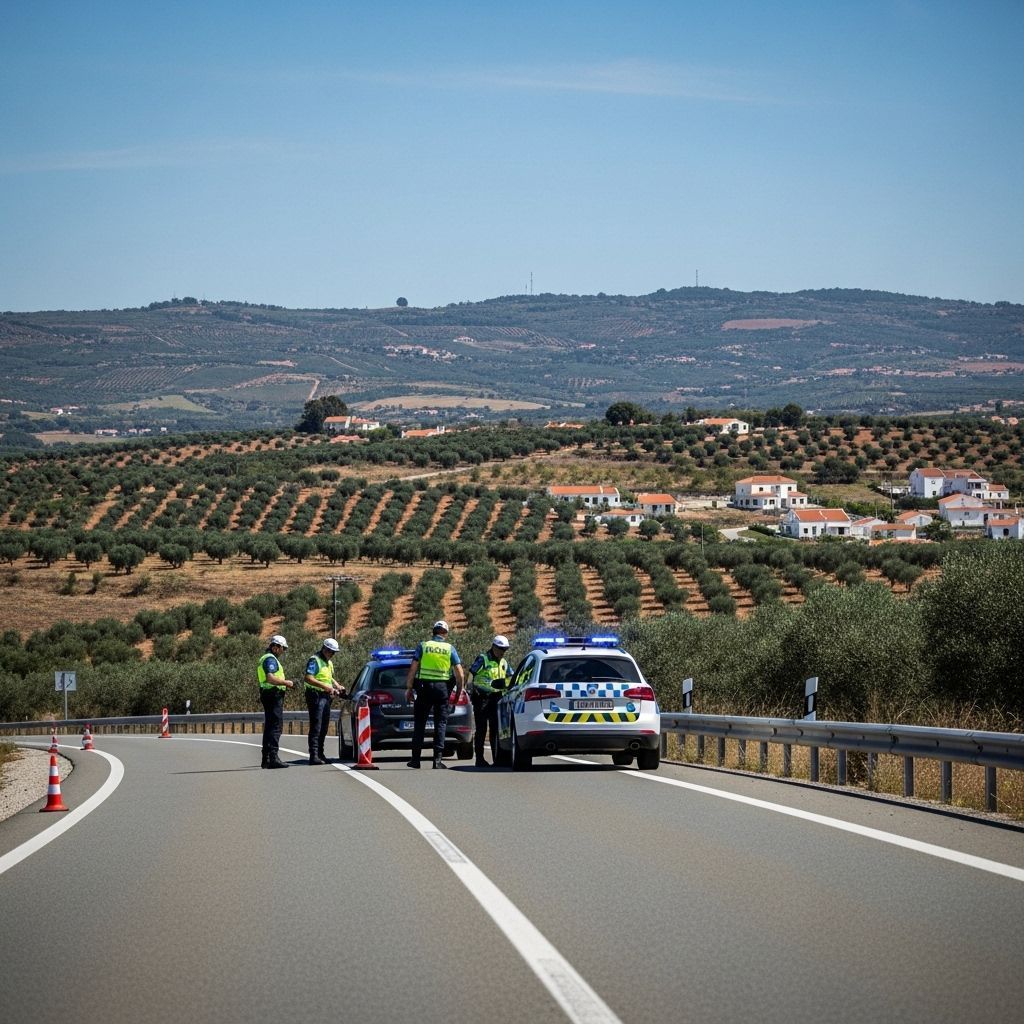
The Portugal Judicial Police (PJ) have arrested a 52-year-old man for allegedly setting fire to a forest near Louredo, Amarante, on May 24, a deliberate act prosecutors believe stemmed from a neighborhood dispute. The suspect will face judicial interrogation this week, and if convicted under Portugal's strict arson statutes, could serve up to 12 years in prison.
The blaze threatened not only significant forested land but also multiple residential buildings in and around the fire zone. Investigators say the man used direct flame to ignite the vegetation, escalating what was apparently a personal conflict into a criminal act with potentially catastrophic consequences for an entire community.
Why This Matters
• Legal precedent: Portugal treats intentional forest fires as Article 274 crimes, carrying sentences of 1–8 years, or 3–12 years when homes or lives are endangered.
• Community safety: The fire put multiple homes at immediate risk in Louredo, a parish already vulnerable during Portugal's increasingly intense wildfire season.
• Enforcement signal: The June 1 arrest, made by the PJ Northern Directorate in collaboration with the Portugal National Republican Guard (GNR), underscores intensified policing of deliberate arson ahead of summer.
How the Investigation Unfolded
The PJ Northern Directorate began tracking the suspect shortly after flames erupted in Louredo on May 24. Forensic teams canvassed the ignition point and identified evidence of direct flame application, a telltale sign of arson rather than accidental ignition or natural causes. Witness statements pointed investigators toward a local man known to have ongoing disputes with neighbors. By June 1, the PJ, working in tandem with the GNR Amarante division, had enough evidence to execute the arrest at the suspect's residence, located a short distance from the fire perimeter.
The case is now under the jurisdiction of the Department of Investigation and Penal Action (DIAP) in Amarante, which will present findings to a judge for the first judicial interrogation. At that hearing, prosecutors will request coercive measures — likely preventive detention or house arrest with electronic monitoring — to ensure the suspect does not flee or interfere with witnesses.
What Portugal Law Says About Arson
Deliberate forest fires fall under Article 274 of the Portuguese Penal Code, which criminalizes setting fire to forests, pastures, scrubland, or agricultural terrain. Base sentences range from 1 to 8 years, but when the act endangers human life or high-value property, penalties escalate to 3 to 12 years. Prosecutors can also invoke Article 272, covering fires that create "significant danger" to life or major assets, which carries a standard range of 3 to 10 years.
Both are public crimes, meaning the state prosecutes automatically without requiring a victim's formal complaint. Portugal's legal framework treats arson not as a property offense but as a public safety emergency, reflecting the nation's traumatic history with deadly wildfires. The 2017 Pedrógão Grande disaster, which killed 66 people, hardened political and judicial attitudes toward fire-starters, and prosecutors now routinely seek maximum sentences when malice is proven.
Neighborhood Feuds and Fire: A Dangerous Pattern
While Portugal's wildfire crises are often blamed on drought, lightning, or careless farmers, intentional ignition by aggrieved individuals forms a persistent sub-category of cases. The PJ has recorded similar arrests in recent years: a man in Seia was detained for setting two fires after a dispute with a neighbor, and multiple incidents in rural Trás-os-Montes and Beira Interior have involved landowners or locals weaponizing flame as retaliation.
Criminologists note that arson born of personal grievance tends to occur in low-density rural areas where formal conflict resolution mechanisms — police patrols, municipal mediation services — are sparse. Amarante, a municipality of roughly 55,000 spread across 301 square kilometers, fits that profile. Villages like Louredo rely heavily on volunteer firefighters and lack the dense surveillance infrastructure found in urban centers.
Impact on Louredo Residents
Though the exact area burned and the number of homes evacuated have not been disclosed, residents in the fire's path experienced hours of uncertainty on May 24. Firefighting brigades from across the Tâmega e Sousa region responded, deploying ground crews and at least one aerial water drop to contain the spread. Local reports suggest the flames came within 200 meters of several houses, forcing temporary evacuations and prompting civil protection authorities to issue safety advisories.
For homeowners in Louredo and neighboring parishes, the incident is a stark reminder that wildfire risk is not purely meteorological. Even in spring, before the traditional fire season peaks in July and August, a single act of malice can ignite disaster. Property insurers in rural Portugal have begun adjusting premiums upward in areas with documented arson patterns, and municipalities are lobbying the central government for increased funding for fire prevention patrols and community mediation programs.
What Comes Next
The suspect will appear before an Amarante examining magistrate in the coming days. Prosecutors will present forensic evidence, witness testimony, and any statements made during the arrest. The judge will then decide whether to impose preventive detention — rare but not unprecedented in arson cases that endangered lives — or alternative measures such as periodic reporting, geographic restrictions, or electronic tagging.
If the case proceeds to trial and results in conviction, sentencing will hinge on several factors: the exact area damaged, proximity of buildings to the ignition point, the defendant's prior criminal record, and whether he cooperates with investigators. Legal experts say the "endangerment of multiple residences" clause in Article 274 makes a custodial sentence highly probable, even for a first-time offender.
Meanwhile, the GNR and PJ are reviewing protocols for early intervention in neighbor disputes. Portugal's Ministry of Justice has floated proposals to expand community policing and train officers to flag escalating feuds before they turn violent or incendiary. The Amarante case will likely feature in parliamentary debates this summer as lawmakers weigh amendments to fire-prevention statutes ahead of another expected extreme drought season.
The Broader Context
Portugal remains one of Europe's most fire-prone nations. In 2024, the country recorded over 8,000 rural fires, consuming more than 100,000 hectares. While most ignitions were accidental or natural, prosecutors pursued criminal charges in roughly 300 cases where deliberate intent was evident. The PJ's specialized Arson and Explosives Unit has seen its caseload double since 2020, prompting calls for additional staffing and forensic resources.
For residents in fire-vulnerable regions like Amarante, the message is clear: deliberate arson is not tolerated, and the state will deploy significant investigative muscle to identify and prosecute perpetrators. The June 1 arrest serves as both a reassurance and a warning — law enforcement is watching, and those who weaponize fire will face the full weight of Portugal's legal system.