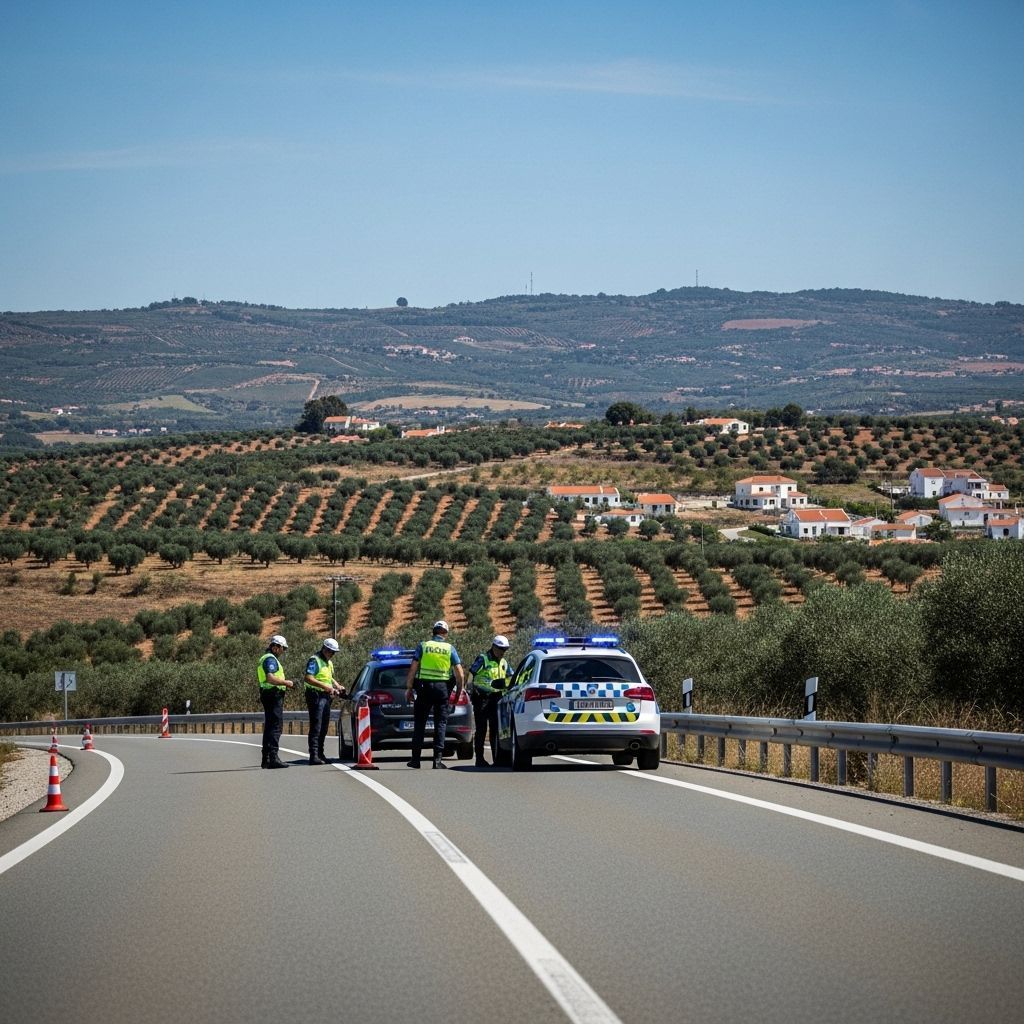
The Portugal Public Security Police (PSP) and Guarda Nacional Republicana (GNR) are confronting an era of unprecedented public scrutiny and digital complexity, following a year marked by serious misconduct allegations. Senior leadership is now calling for a fundamental overhaul of training programs to prioritize emotional intelligence, cultural competency, and ethical grounding alongside traditional law enforcement skills.
Why This Matters
• Accountability in focus: Over the past four months, the Portugal Interior Ministry has dismissed or suspended dozens of officers for serious infractions, signaling a zero-tolerance approach to corruption and abuse.
• Digital accountability: Officers now manage public perception, social media narratives, and instant judgment alongside physical security operations.
• Training transformation: Starting in 2026, all new recruits must complete mandatory modules on anti-discrimination, radicalization prevention, and responsible social media use.
• Legitimacy crisis: Without robust human rights integration, law enforcement loses public trust and constitutional authority.
The Current Crisis
Recent months have exposed systemic issues within both agencies. The Interior Ministry has initiated disciplinary proceedings against multiple officers for crimes ranging from embezzlement to misconduct, prompting an institutional reckoning about professional standards and ethical conduct. This backdrop of accountability measures has accelerated demands for comprehensive training reform.
The New Reality of Portuguese Policing
Speaking at a seminar titled "Human Rights and Security Forces: Trust in the Duty to Respect and Protect" held at the GNR's Escola da Guarda in Figueira da Foz, PSP Training Department Director Nuno Poiares framed the current environment with stark clarity. "Never have police been so observed, scrutinized, filmed, commented upon, and rapidly judged in the public square," he told an audience of over 200 officers and recruits. "This frequently undermines the constitutional principle of presumption of innocence—itself a human right."
The superintendent's remarks acknowledged that security forces are grappling with a fundamental shift in how policing operates. An institutional review recorded discrimination complaints across both agencies, prompting mandatory anti-discrimination and extremism prevention modules in recruit programs, alongside guidance on responsible use of personal mobile phones and social media accounts.
These incidents illustrate what Poiares described as the shift from physical to digital, media, and emotional battlegrounds. "A contemporary PSP agent or GNR officer no longer manages only incidents," he explained. "They manage perceptions, narratives, and public expectations. This demands far more complex preparation and training."
Beyond Batons and Badges: The Competency Gap
Traditional curriculum elements—legislation, policing technique, firearms proficiency, self-defense—remain essential but insufficient, according to the PSP's training chief. The job now requires professionals who are "emotionally intelligent, culturally competent, legally solid, and ethically prepared" to navigate societies that are plural, fragmented, and highly demanding.
The broader challenge, Poiares argued, stems from security forces being "frequently placed at the center of political, ideological, and identity tensions they did not create but must manage in their laboratory: the street." This includes responding to radicalization fueled by algorithm-driven echo chambers, online hate speech that spreads rapidly across platforms, and the migration of criminal activity to encrypted spaces where recruitment for serious crimes occurs beyond the reach of traditional oversight.
What This Means for Residents
For people living in Portugal, the institutional reckoning underway translates into both immediate accountability and long-term reform. The Interior Ministry's willingness to pursue disciplinary action against officers signals a departure from historic patterns and sends a clear message about professional standards.
Practically, residents should expect gradual shifts in how police interactions unfold. Officers trained under the new curriculum will be better equipped to de-escalate tense encounters, recognize implicit bias, and operate within a human rights framework that treats dignity and accountability as operational imperatives. This matters acutely in a country where demographic changes, aging populations, and rural depopulation already stretch security resources thin, and where migrant integration and urban polarization create new pressure points.
If you experience misconduct: Residents can report concerns to the Interior Ministry or file formal complaints through established institutional channels. The increased disciplinary activity suggests greater responsiveness to misconduct allegations.
When will changes be visible: The curriculum overhaul begins implementation in 2026, so training improvements will become evident as new recruits complete the updated modules.
The reform also addresses the capacity to police virtual spaces proactively—combating social media scams, blackmail via fake profiles, and financial fraud that preys on vulnerable residents. Law enforcement's ability to operate effectively in these domains depends on ethical frameworks embedded in training, not improvised in the field.
The Legitimacy Equation
Poiares offered what he called a "deeply personal conviction": that the future of Portuguese security forces "does not depend solely on better salaries, equipment, technology, or legislative adjustments. It will depend, above all, on the human and ethical quality of its professionals."
He framed human rights not as constraints on police action but as the reason police exist. "Perhaps one of today's great challenges is explaining to society that democratic authority is not the opposite of freedom—it is precisely a condition of that freedom," he said. "The forces that will overcome future challenges are those that can combine authority with legitimacy; effectiveness and discipline with respect for human dignity."
This philosophy echoes evolving standards across Europe, where ethical assessment methods for AI, video analytics, and automated data analysis in law enforcement are being developed to ensure transparency, fairness, and accountability while leveraging technology against organized crime.
Portugal's alignment with the EU's Artificial Intelligence Act and strict GDPR data protection rules creates a legal architecture that requires officers to navigate technical, legal, and ethical complexity simultaneously—a framework that demands training beyond traditional policing skills.
The Training Ground Ahead
The Figueira da Foz seminar reflects the GNR's institutional pivot toward what leadership has described as a "more capable and present Guard, committed to human rights." The curriculum overhaul also responds to institutional recognition that security forces must now police digital platforms where youth safety, radicalization risks, and gang recruitment operate alongside traditional crime.
Authority Without Losing Humanity
Poiares concluded with a challenge that doubles as mission statement: "We are talking about the capacity to exercise authority without losing humanity. That may be one of the noblest missions of a democratic state governed by the rule of law."
Whether Portugal's security institutions can execute that mission depends on sustained investment in human capital over hardware, on ethical clarity over political expediency, and on recognizing that in an era of smartphones and instant judgment, every officer is both enforcer and ambassador. The stakes are high: legitimacy and public trust are among the nation's most valuable resources in ensuring effective, accountable policing.
For now, the institutional commitment to reform represents a significant pivot—a bet that legitimacy can be taught, that authority can be earned, and that the rule of law depends less on the power to coerce than on the credibility to serve. The outcome will unfold not in policy documents but in thousands of street-level encounters, each one now filmed, scrutinized, and weighed against the promise of a force that respects before it protects.