Portugal's main police union has suspended planned Easter airport protests after meeting with Interior Minister Luís Neves this week, buying time for negotiations but not resolving the underlying staffing crisis at the country's international airports. The Associação Sindical dos Profissionais da Polícia (ASPP/PSP), which represents the majority of uniformed PSP officers nationwide, halted planned demonstrations following direct discussions with the Interior Ministry earlier this week. This pause postpones public disruption but offers no immediate solution to border checkpoint capacity challenges facing residents and travelers.
Which Airports Are Affected
This suspension directly affects Portugal's three largest international airports: Lisbon Portela Airport, Porto Francisco Sá Carneiro Airport, and Faro Airport. The staffing pressures primarily impact international and non-Schengen border control operations—meaning travelers arriving from outside the European Union and from non-Schengen countries face the most significant processing delays during peak periods. Schengen citizens traveling between EU member states experience less disruption, though checkpoint infrastructure affects all international arrivals.
Why This Matters
• Border checkpoint capacity remains unchanged: The suspension addresses neither officer shortages nor aging infrastructure; it only removes the threat of coordinated slowdowns during a peak travel window.
• A limited window exists for ministerial action: Interior Minister Luís Neves has roughly 6-8 weeks before summer travel season peaks and the union faces membership pressure to resume demonstrations.
• Your airport experience depends on union patience: Normal processing times at Portuguese air terminals will continue temporarily, but only if the Interior Ministry demonstrates measurable progress toward hiring and infrastructure upgrades.
How the Pause Came About
The ASPP/PSP suspended planned Easter airport demonstrations following the meeting with Interior Minister Luís Neves earlier this week. The union leadership characterized the decision as granting the new minister the necessary time to address institutional knowledge gaps and engage with challenges facing border operations.
What the union did not receive was a detailed reform package or binding implementation timeline. What it apparently did receive was ministerial acknowledgment that problems exist—a distinction that carries weight in Portugal's administrative environment.
This represents a significant tactical shift. Three separate demonstrations at Lisbon's main international terminal between November and January had escalated union pressure. By late January, membership voted to intensify action through Easter airport demonstrations, deliberately scheduled during peak passenger periods to maximize political pressure. Instead, union leadership decided to pause and pursue negotiations rather than proceed with coordinated action.
The System Under Strain
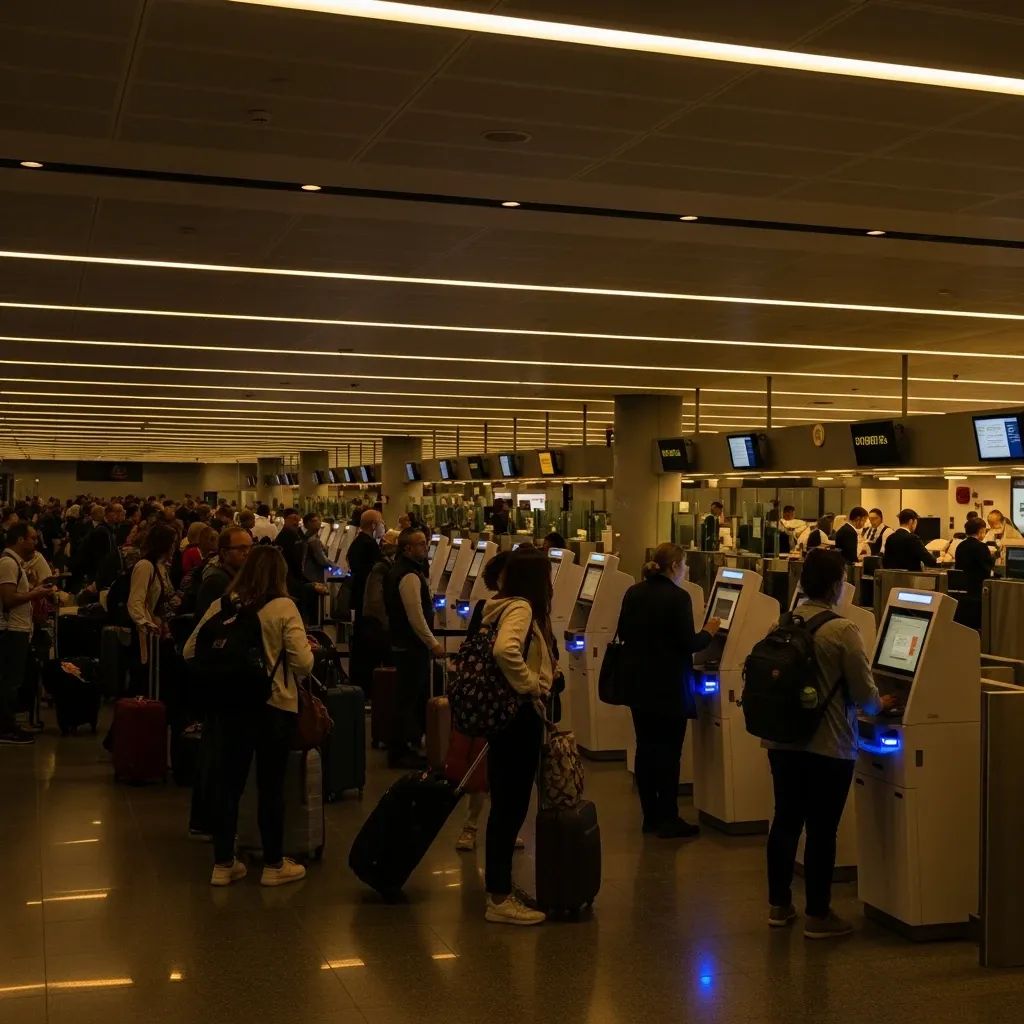
Portugal's international air terminals operate with persistent understaffing relative to passenger demand. Checkpoint processing at major airports failed to scale proportionally as tourism arrivals grew in recent years. PSP officers managing those checkpoints face workload density designed for substantially lower traffic volumes, administered by staffing levels established years ago when travel patterns differed significantly.
The ASPP characterizes the operational situation as unsustainable. Officer shifts routinely extend beyond scheduled duration. Mandatory overtime transitions from exceptional circumstance to operational norm. Processing technology remains outdated; equipment malfunctions create cascading delays across multiple flights. These constraints mean each passenger interaction requires longer than necessary, turning peak periods into bottleneck situations.
This is particularly acute during non-EU traveler processing, which demands trained personnel and more complex procedures. Border officers manage layered security requirements and documentation verification for travelers from outside the European Union—substantially more complex than processing Schengen arrivals. Peak seasons compress these procedures into time windows where demand exceeds capacity.
What "Normal Processing Times" Actually Means
For residents planning travel through Portuguese airports, baseline operations involve queue times of 20-30 minutes per passenger during peak hours. This is current operational capacity, not a failure of individual officer effort—it reflects systemic constraints built into checkpoint infrastructure and staffing levels. The union suspension removes the threat of deliberate procedural slowdowns that would extend these times further or coordinated sick leave actions that would reduce staffing below current levels. Without union coordination, passengers experience the actual capacity ceiling rather than an artificially lower one created through labor action.
The Calendar Creates Real Pressure
The Interior Ministry faces concrete timing realities. Easter represents a moderate peak in airport traffic; summer travel season (June-August) approaches substantially higher passenger volumes. Between now and early June, the ASPP must communicate measurable progress to its membership or face internal pressure demanding return to public pressure tactics.
"Measurable progress" doesn't require complete resolution. It means announcing specific hiring targets with implementation timelines, committing to equipment repairs and modernization prioritization, and revising shift scheduling to reduce forced overtime in the near term.
Planning Your Travel
For residents booking flights through June: Expect normal airport operations at Portuguese terminals. Processing times will continue at current baseline levels (20-30 minutes during peak periods) without union-coordinated slowdowns.
For those traveling July-August: Monitor news updates regarding union negotiations. If Interior Ministry demonstrates measurable progress on staffing and infrastructure, normal operations will continue. If negotiations stall without visible improvements, union actions could resume when summer travel volumes peak. Check your airport's official website before departure for current wait time information and operational updates.
Travel insurance considerations: Standard travel insurance typically covers flight cancellations but not labor-related delays. If you're concerned about potential disruptions affecting your itinerary, review your specific policy terms for labor action coverage.
What Success or Failure Looks Like
If the Interior Ministry acts decisively—announcing hiring, allocating resources to infrastructure upgrades, implementing scheduling changes—the ASPP can justify the suspension as having produced results. Union leadership can report to members that negotiations created opportunity for institutional reform.
If weeks pass with only bureaucratic statements and no concrete progress, pressure from officers at checkpoint posts will mount. By May or June, when summer travel season creates even greater operational strain, the union faces credibility questions if conditions remain unchanged.
Portugal's airports, tourism sector, and traveling public all benefit from the current operational calm. Passengers moving through Portuguese terminals experience normal checkpoint processes without cascading delays that coordinated labor action would produce. But this benefit carries an expiration date measured in weeks.
For residents and regular airport users, the practical guidance is direct: the issues that triggered months of escalating protest—understaffing, aging infrastructure, unsustainable officer workload—remain present and unresolved. The only change is tactical. Either the Interior Ministry demonstrates concrete action through measurable reforms, or the PSP union resumes demonstrations when maximum disruption would serve as leverage for negotiations.
The pause bought time. What Interior Minister Luís Neves does with that time determines whether this moment represents the beginning of institutional reform or merely a temporary delay before confrontation resurfaces.