

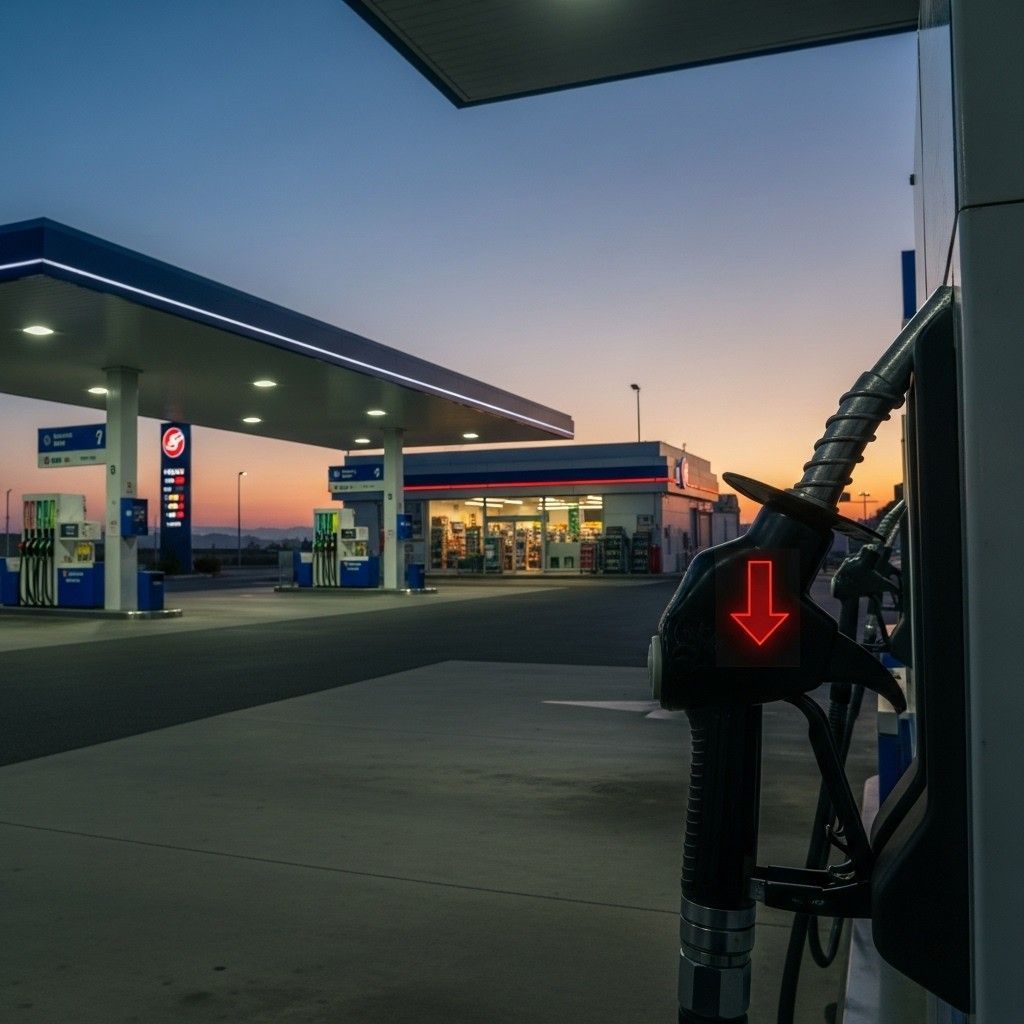
The Portugal economy, like the rest of Europe, caught a break in global oil markets as Brent crude futures for June delivery pulled sharply back from the psychologically critical $100-per-barrel threshold—a retreat that could translate directly into lower fuel costs at the pump and reduced inflationary pressure across the country.
Why This Matters
• Fuel prices: A sustained dip below $100 could prevent an estimated 5-10 cent increase per liter at Portuguese gas stations within two weeks.
• Diplomatic window: U.S. President Donald Trump signaled that negotiations with Iran in Islamabad could restart within 48 hours, potentially reopening the Strait of Hormuz.
• Economic breathing room: If the blockade ends, Europe—including Portugal—avoids a scenario that could push inflation up by more than 1 percentage point and shave several tenths off GDP growth.
• Brent closed at $94.79 on Tuesday after flirting with $103 earlier in the week, a $4.57 drop from Monday's close of $99.36.
The Diplomatic Shift Behind the Drop
Energy traders sent Brent tumbling after Trump, in a phone interview with the New York Post, recommended that a reporter remain in Islamabad because "something could happen in the next two days and we're more inclined to go there." The comment, delivered casually yet deliberately, was enough to shift market sentiment away from the near-panic that gripped crude markets last weekend when peace talks in Pakistan collapsed after 20 hours and Trump ordered a full naval blockade on all vessels entering or leaving Iranian ports.
That blockade—enforced by the U.S. Navy across the Strait of Hormuz, a chokepoint that normally handles 20% of the world's seaborne oil—has been in place for over a month, strangling supplies from Saudi Arabia, Iraq, Kuwait, Qatar, Bahrain, and the United Arab Emirates. Iran has threatened to completely seal off the waterway and disrupt shipping in the Persian Gulf, Gulf of Oman, and Red Sea if the U.S. maintains its cordon.
Ritterbusch & Associates, a U.S.-based energy consultancy, noted in a briefing that the price decline "reflects the possibility of resumed talks, which could lead to a nuclear agreement that would favor the opening of the Strait." The firm added: "Any sign of progress in negotiations can easily cause a drastic drop in prices."
Volatility Reflects Strategic Uncertainty
The whipsaw in pricing has been extreme. On Sunday, April 13, Brent for June delivery surged past $102, hitting an intraday peak of $103.87 as news of the blockade intensified. By Monday evening, it closed at $99.36. On Tuesday, April 15, it settled at $94.79—still 43.79% higher than the same day last year, but a sharp reversal from the week's highs.
Market watchers note that even a modest thaw in U.S.-Iran relations could send Brent spiraling lower. The U.S. Department of Energy projects that if the conflict resolves by mid-April, Brent could average around $70 per barrel in the second half of 2026. But if hostilities drag into the second quarter, the year-long average could approach $85, with sustained prices above $95 for the next two months.
Bank of America shares a similar view: a swift normalization could mean an annual average near $70, while a protracted standoff could push it toward $85. More bullish forecasters, including Trading Economics, expect Brent to trade at $97.93 by the end of the current quarter and climb to $108.11 within 12 months if supply disruptions persist.
What This Means for Residents
For households and businesses in Portugal, the immediate effect of Tuesday's price drop is tangible: every dollar below $100 per barrel reduces the upward pressure on diesel and gasoline. Portugal imports 100% of its petroleum, making it acutely vulnerable to crude price swings. When Brent hit $103 last weekend, analysts warned that pump prices could rise by 10-15 cents per liter within a fortnight. A sustained retreat toward $90 would reverse that trajectory.
Beyond the pump, cheaper oil means lower costs for electricity generation, as some Portuguese power plants still rely on oil-derived fuels during peak demand. Natural gas prices—also affected by the Hormuz blockade, given that significant liquefied natural gas (LNG) shipments transit the strait—would ease as well, feeding through to household energy bills over the coming months.
Inflationary knock-on effects extend into supermarkets. Petroleum is a feedstock for plastics, fertilizers, pharmaceuticals, and packaging. When crude spikes, so do production and transport costs across the supply chain. European Central Bank models suggest that if Brent holds above $100 for several months, Eurozone inflation could rise by more than a full percentage point, while GDP growth could slow by several tenths of a point. For Portugal, already navigating post-pandemic fiscal consolidation, that would complicate budget planning and dampen consumer spending.
The Geopolitical Gamble
The current U.S.-Iran standoff began escalating weeks ago, with both sides trading military strikes and economic sanctions. Pakistan has emerged as the sole mediator, hosting multiple rounds of talks in Islamabad. The White House has publicly praised Islamabad's role, and Trump's latest remarks suggest a second attempt at diplomacy is imminent.
Yet the path to a deal remains fraught. Iran has tied any reopening of the Strait of Hormuz to a lifting of U.S. sanctions and guarantees related to its nuclear program. Washington, meanwhile, insists on verification mechanisms and limits on Tehran's enrichment activities. If talks fail again, traders warn that Brent could quickly test $110 or higher, especially if military incidents escalate or if Saudi Arabia or the UAE suffer infrastructure damage at export terminals.
Alternative export routes exist—Saudi Arabia and the UAE operate overland pipelines with a combined capacity of roughly 2.6 million barrels per day—but that is far short of the 20 million barrels that normally flow through Hormuz daily. In a prolonged closure, Europe, Japan, and South Korea would compete for limited non-Middle Eastern cargoes, driving prices even higher and risking localized shortages of jet fuel and diesel.
Outlook for the Coming Weeks
For now, markets are pricing in cautious optimism. The $94.79 close on Tuesday represents a tactical retreat from panic levels, but it remains elevated by historical standards. If Trump and Iranian officials reconvene in Islamabad and announce even a provisional ceasefire or a framework for further talks, Brent could slide toward $85-90 within days. Conversely, another diplomatic collapse would likely send it vaulting back above $100.
Portugal-based importers and logistics firms are watching the calendar closely. Spring and early summer typically see lower fuel demand in Europe, but any prolonged supply disruption would tighten the global balance just as refineries gear up for the peak driving season. The Portugal Revenue Department and Directorate-General for Energy and Geology have not yet announced contingency measures, but officials privately acknowledge that sustained triple-digit Brent would require intervention—potentially including temporary fuel subsidies or strategic reserve releases coordinated with EU partners.
Energy analysts in Lisbon note that the current crisis dwarfs the 1970s oil shocks in terms of the sheer volume of daily supply at risk. Back then, disruptions amounted to a few million barrels per day; today, the Strait of Hormuz handles four to five times that figure. The difference is that global production is more diversified now, with significant output from the U.S., Canada, Brazil, and Norway. Yet even that cushion may prove insufficient if the blockade drags into May and June.
The Bottom Line
The Portugal consumer has reason for cautious relief. Tuesday's price drop offers a reprieve from the inflationary spiral that threatened to push household budgets to the breaking point. But the underlying geopolitical instability remains unresolved, and any fresh escalation—whether a military strike, a tanker seizure, or a breakdown in Islamabad—could send Brent rocketing back toward record highs. For now, the market is betting on diplomacy. Whether that bet pays off will become clear within days.


