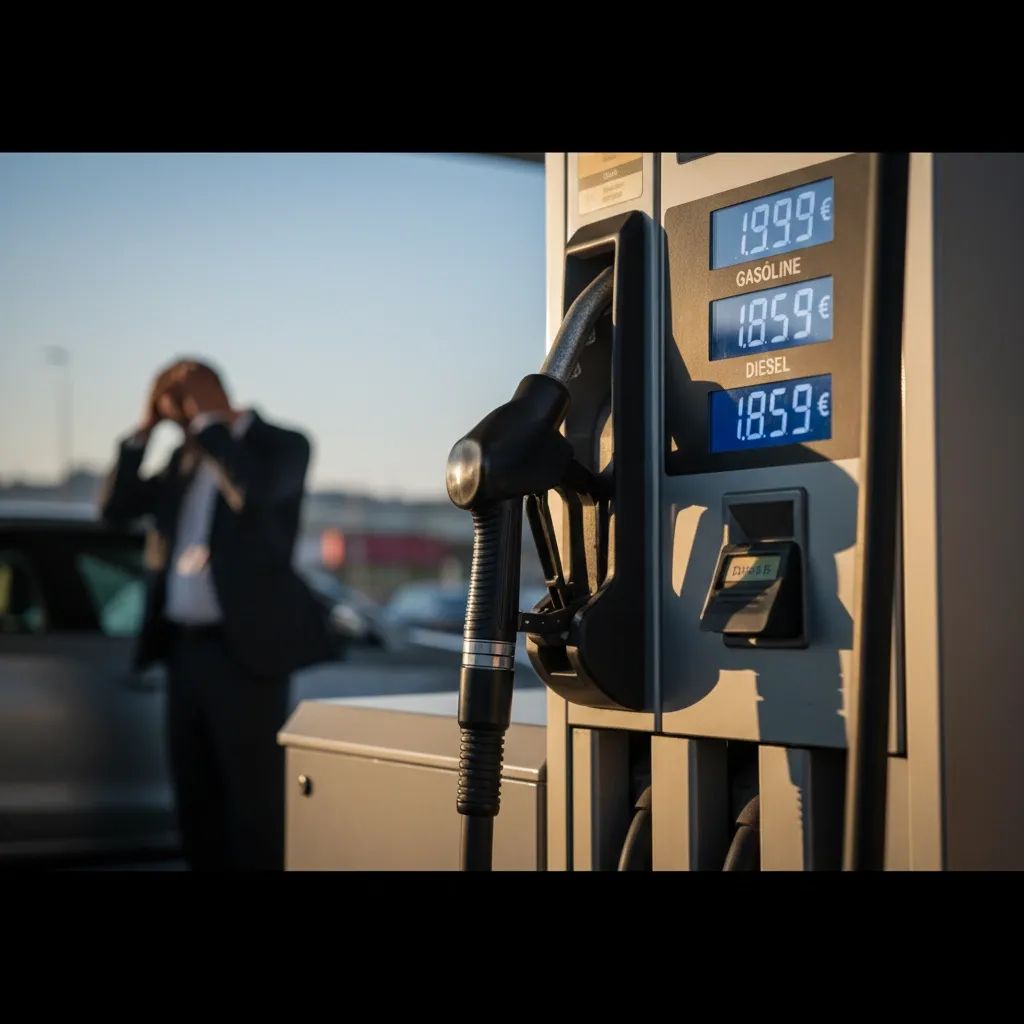
The Portugal Energy Ministry has affirmed that the country occupies a "relatively robust" position in physical energy supply despite mounting global turbulence, though officials acknowledge complete insulation from international market shocks remains impossible.
Why This Matters
• Physical supply secured: Portugal sources crude from Brazil and Algeria, natural gas from Nigeria and Brazil—avoiding direct exposure to Middle East infrastructure disruptions.
• Price exposure persists: Global petrol and gas markets dictate domestic prices, with officials noting a U.S. presidential tweet can move fuel costs faster than any national policy.
• Inflation impact: Energy prices climbed 11.7% year-on-year in April, pushing headline inflation to 3.36% and squeezing household budgets and industrial margins.
• Renewable shield: Portugal generated 80% of electricity from renewable sources in January, saving an estimated €703M in fossil fuel import costs that month alone.
Geopolitical Tensions Drive Economic Pressure
Speaking before the Environment and Energy Committee in response to a Chega party inquiry, State Secretary for Energy Jean Barroca drew a clear line between Portugal's physical security of supply and its unavoidable vulnerability to international pricing mechanisms. While the nation benefits from diversified infrastructure—including strategic reserves, the Sines LNG terminal, and domestic refining capacity—it cannot escape the reality that energy commodities trade on unified global markets.
"When international oil prices rise, they rise for everyone," Barroca explained, illustrating the point by highlighting how Donald Trump's social media activity can shift fuel prices more rapidly than any domestic intervention. That exposure has translated into measurable economic pain: in April, energy inflation surged to 11.69%, nearly double March's figure, reflecting the fallout from Middle Eastern supply disruptions and restricted petroleum availability.
The Confederation of Portuguese Businesses (CIP) revised its 2026 growth forecast downward from 1.8% to 1.5%, citing elevated energy and raw material costs alongside declining consumer confidence. The European Commission followed suit, lowering its Portugal GDP projection to 1.7% for the year.
How the Government Is Responding
Barroca outlined a two-tier strategy: immediate market monitoring paired with structural measures to reduce long-term fossil fuel dependence.
On the short-term front, the Portugal Energy Ministry tracks international market movements daily in coordination with national and European entities, evaluating price trends, reserve levels, and sectoral risks. Within this framework, the government activated temporary fiscal adjustments to the Petroleum Products Tax (ISP), designed to maintain fiscal neutrality as VAT receipts rise, and increased the bottled gas subsidy to €25 per month for vulnerable households.
Should conditions deteriorate further, standby crisis protocols allow the state to cap retail electricity prices if they exceed €180/MWh or rise more than 70%, or 2.5 times the five-year average. Under such scenarios, the government would absorb the differential, with costs recovered later.
Yet Barroca stressed the limits of fiscal intervention. "No state budget can insulate us from an international crisis," he said, arguing that genuine protection requires progressively dismantling external energy dependence. The administration has set an ambitious target: cutting fossil fuel reliance in half by 2034, down from the current level of roughly two-thirds of primary energy consumption.
Renewable Surge Offers Structural Buffer
Portugal's renewable electricity boom provides a tangible hedge against fossil fuel volatility. In the first quarter of 2026, renewables supplied 80% of national electricity demand, with the grid running entirely on clean power for the equivalent of 23 full days. Hydropower contributed 37.1% of the mix, wind 25.9%, and solar photovoltaic capacity continues rapid expansion.
That performance kept wholesale electricity prices competitive: Portugal's average settled at €41.90/MWh in the first quarter, among the lowest in Europe, while most continental markets exceeded €90/MWh. The renewable windfall also delivered direct savings, with reduced gas imports, lower electricity purchases from abroad, and avoided carbon allowance costs saving the economy an estimated €239M in gas imports and €166M in emissions costs during the quarter.
The National Energy and Climate Plan (PNEC 2030), revised in 2024, targets 93% renewable electricity by decade's end and 51% renewables across total final energy consumption. To support variable solar and wind generation, the government has launched a competitive auction for 750 MW of battery storage capacity, part of a broader strategy to reach 2 GW of storage by 2030.
Challenges in Transport and Industry
Despite electricity sector gains, Portugal remains heavily dependent on imported oil and gas for transport and industrial processes. Petroleum accounts for roughly 45% of total energy consumption and is 100% imported; liquefied natural gas represents 20% to 25% and is also fully imported.
This imbalance hits hardest in road transport and energy-intensive manufacturing. For ceramics, textiles, and other industrial sectors, energy can comprise 20% to 35% of production costs, compressing profit margins and limiting capital available for innovation. The Bank of Portugal has warned that oil price shocks elevate corporate default risk, particularly for energy-dependent firms, and tend to tighten credit conditions as lenders raise rates and reduce exposure.
Barroca emphasized that structural sovereignty hinges on electrifying consumption wherever feasible and deploying alternative technologies—renewable gases, biofuels, synthetic fuels, and carbon capture—for harder-to-decarbonize applications. Yet bureaucratic delays and grid capacity constraints have slowed both renewable project approvals and industrial electrification.
What This Means for Residents
For households, the energy turbulence translates into tangible cost pressures. Regulated electricity tariffs rose an average of 1% in 2026, adding roughly 18 to 28 cents per month to typical bills. In the liberalized market, outcomes vary: EDP Comercial projected a 1% average decline due to lower energy components, but other suppliers signaled increases.
Fuel prices remain exposed to global swings, with diesel and gasoline costs tracking crude benchmarks closely. The ISP adjustment mechanism offers partial relief, but cannot fully offset sustained price rallies. Energy products overall were 13.2% more expensive in May than a year earlier, a direct driver of the 3.3% headline inflation rate.
Vulnerable families benefit from the expanded gas subsidy, yet energy poverty persists as a structural challenge. In the event of a declared energy crisis, the government's standby mechanism would cover 80% of a household's prior-year electricity consumption at capped prices, shielding the majority of usage from market spikes.
Looking Ahead: Week-by-Week Adjustments
When pressed on the crisis trajectory, Barroca acknowledged the government "does not control the course of the crisis" and that support measures will adapt to evolving conditions. "The situation must be evaluated week by week," he said, signaling ongoing uncertainty tied to Middle Eastern geopolitics and global commodity flows.
Analysts note that while Portugal's renewable leadership positions it favorably compared to peers—Allianz Trade described the country as "relatively less exposed" than other European economies—the transport and industrial sectors remain vulnerable until electrification and alternative fuel adoption accelerate.
The State Secretary's core message was clear: every megawatt of renewable capacity installed reduces fossil fuel dependence, and sooner Portugal produces more energy from its own resources, the less vulnerable it becomes to external shocks. With renewable electricity now routinely meeting the majority of demand, the next frontier lies in decarbonizing mobility and heavy industry—a transition that will unfold over years, not months, and require sustained investment in grids, storage, and alternative fuel infrastructure.