The Federação Portuguesa dos Bancos Alimentares has recorded a sharp uptick in food aid requests across Portugal this month, driven by what its president, Isabel Jonet, describes as a "squeeze on household budgets" from persistently high fuel prices and rent costs. The surge signals that many families have abandoned hope that recent inflation would prove temporary—and now face a sustained cost-of-living crisis that is eroding their ability to afford basic groceries.
Why This Matters:
• Food insecurity is spreading: Requests for emergency food parcels have climbed month-on-month as families exhaust financial buffers.
• Fuel and housing driving the crisis: Diesel and petrol costs remain among Europe's highest; average rents in Lisbon now exceed €1,200 for a one-bedroom flat.
• National campaign underway: The Banco Alimentar launched its biannual collection drive this weekend, targeting essential staples like rice, cooking oil, and canned fish.
• Digital donations already flowing: Online pledges logged 1,850 liters of olive oil, 4,119 liters of milk, and 3,596 kg of tuna within three days of the campaign opening.
Families Hit by Triple Pressure: Rent, Petrol, Groceries
Multiple forces are converging to shrink household budgets. Portugal's rental market continues to tighten, with forecasts projecting a further 2.24% rise in 2026 on top of already steep base levels. In Porto, a one-bedroom apartment in the city center commands between €900 and €1,400 monthly; in Lisbon, the range stretches from €1,200 to €1,800. For couples, the average total cost of living—including rent, utilities, and food—hovers around €1,941 per month, climbing to €2,141 when unexpected expenses are factored in.
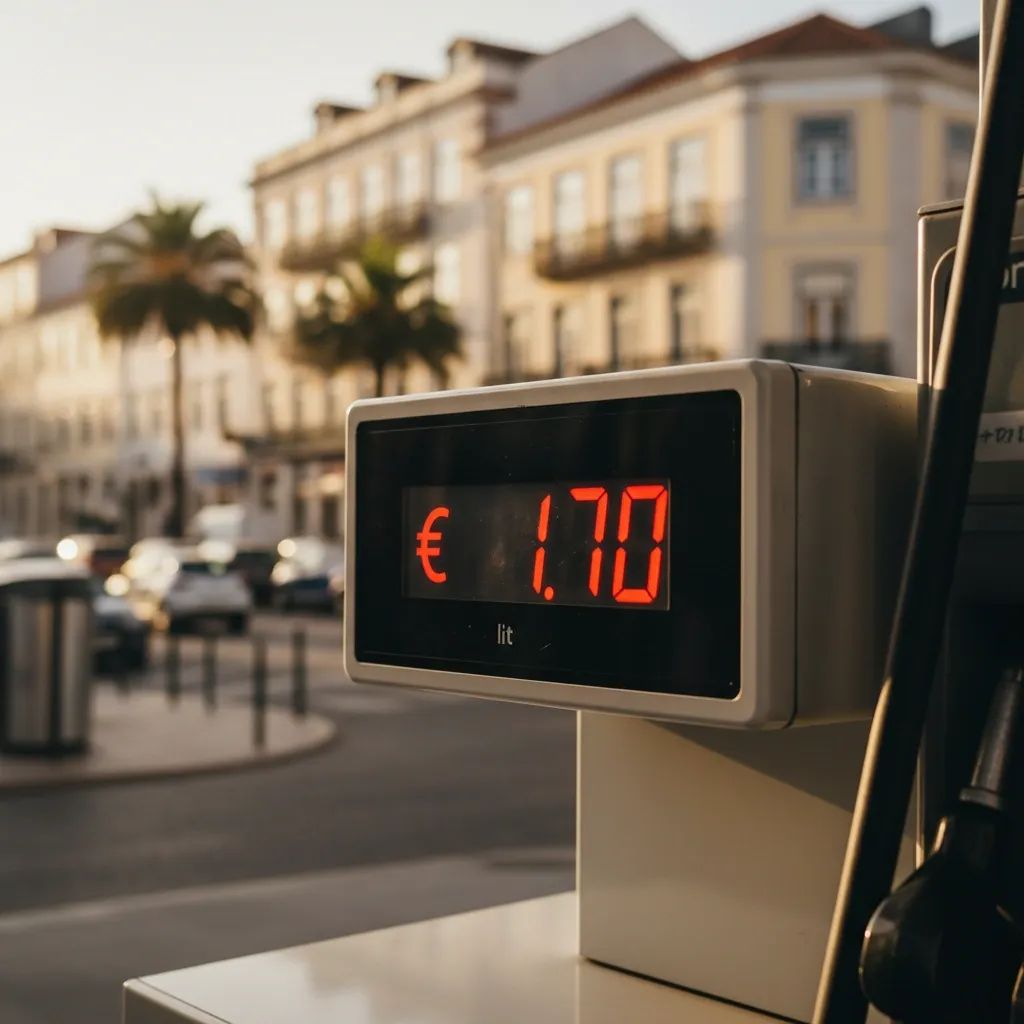
Fuel remains another pressure point. Despite a 12-cent-per-liter drop announced for the final week of May, Portugal still ranks 11th globally among developed nations for petrol prices, with a liter averaging €2.009 in mid-May. The cumulative impact of months of elevated fuel costs has rippled through transport budgets, making commutes to work and essential errands significantly more expensive.
Food prices have been climbing since the war in Ukraine disrupted supply chains for cereals, vegetable oils, and fertilizers. Monthly grocery bills per person in Portugal now range between €200 and €400, with families feeling the pinch on staples like meat, dairy, and bread. The Banco Alimentar reports that donations of basic items—rice, pasta, olive oil, canned protein—are critical lifelines for households that can no longer stretch their income across all three categories.
Weekend Collection Drive Targets Essentials
The Banco Alimentar Contra a Fome mobilized volunteers across supermarket checkouts and online platforms this weekend to gather non-perishable staples. The campaign, which runs twice annually—typically on the last weekends of May and November—seeks donations of milk, rice, pasta, olive oil, cooking oil, chickpeas, beans, tuna, sausages, biscuits, and breakfast cereals. This year's May drive follows a strong performance in 2025, when the equivalent campaign collected 1,878 tonnes, a 6.4% increase over the prior year. November's haul reached 2,150 tonnes, though it dipped 2.8% year-on-year.
Donors can contribute in three ways: by handing items directly to volunteers stationed at supermarket exits, by purchasing prepaid product vouchers at checkout (each voucher equals one unit of a specified item), or by logging onto the "Alimente esta Ideia" digital platform or the Banco Alimentar's online donation portal. The voucher system has streamlined logistics, allowing retail chains to deliver donated goods directly to regional warehouses and reducing the volunteer burden of sorting and transport.
Early results from the digital push have been encouraging. Between the campaign's Wednesday launch and Friday afternoon, online donors pledged 1,850 liters of olive oil, 1,766 liters of cooking oil, 4,119 liters of milk, 3,596 kg of tuna, 2,630 kg of sausages, and 3,045 kg of rice. These goods will be distributed to partner charities and social service organizations serving vulnerable families.
What This Means for Residents
If you or someone you know is struggling to afford groceries, local Banco Alimentar chapters and social solidarity institutions can provide emergency food parcels. Eligibility is assessed by partner organizations, which include parish councils, charities, and municipal social services. Residents do not interact directly with the Banco Alimentar; instead, they register with an accredited partner entity, which then requests supplies on their behalf.
For those wishing to help, the weekend collection continues through Saturday evening at participating supermarkets, and online donations remain open indefinitely. Contributions are tax-deductible for Portuguese taxpayers, and even small quantities—one bottle of oil, a kilo of rice—add up when multiplied across thousands of donors.
Government Responses and Structural Gaps
Portugal's Estratégia Nacional de Combate à Pobreza (2021–2030) aims to reduce the national poverty rate to 10% by 2030 through more than 270 measures spanning housing subsidies, social transfers, and employment programs. A new action plan for 2026–2030 is under consultation, with particular focus on children, single-parent households, and low-education workers.
In May, the Prestação Social Única—a consolidated benefit merging 13 non-contributory welfare payments—was approved to simplify access and reduce bureaucratic friction. The Complemento Solidário para Idosos (a top-up for low-income pensioners) was raised to €670 monthly, and the government expanded the Creche Feliz program by 16,000 childcare places to ease family budgets.
Yet structural challenges persist. A Politécnico de Leiria study, released in May following Storm Kristin, found that 40% of affected families lacked adequate insurance coverage, leaving them financially exposed when disaster struck. The research highlighted that community solidarity—not institutional aid—was the primary resilience factor during the crisis, a finding that underscores gaps in formal safety nets.
Food insecurity remains a stubborn problem. In 2024, 5.1% of people at risk of poverty in Portugal could not afford a complete meal every other day. By 2025, the Cáritas Portuguesa estimated that 200,000 residents lacked the financial capacity to secure adequate nutrition, though the INE's FIES scale reported a decline in moderate-to-severe food insecurity overall. The picture is mixed: fewer people face extreme hunger, but a larger share experience mild or moderate deprivation, suggesting many households are teetering on the edge.
Portugal in European Context
Portugal's 18.6% poverty or social exclusion rate (2025 data) sits below the EU average of 20.9%, but the country still ranks 13th globally for petrol prices and faces a housing affordability crisis comparable to that in Spain and Ireland. Other European nations have experimented with price controls (Bulgaria), consumer boycotts (Croatia), and EU-wide fertilizer reserves (proposed by Portugal itself) to stabilize food costs. The European Parliament approved binding targets in 2025 to cut food waste by 2030, recognizing that roughly 10% of the EU's available food is discarded while 40 million people struggle to afford a quality meal every two days.
Portugal's response has been incremental rather than dramatic: targeted subsidies, pension top-ups, VAT cuts on select items, and bolstered social programs. The Programa Operacional de Apoio às Pessoas Mais Carenciadas distributes thousands of tonnes of food annually to more than 80,000 beneficiaries, with an emphasis on nutritional adequacy—each food basket is designed to cover 50% of daily energy and nutrient needs.
Looking Ahead
Isabel Jonet's observation that families have lost confidence in a temporary correction carries weight. The expectation of a rapid return to pre-2022 price levels has evaporated, replaced by the realization that structural inflation in energy, housing, and food may define the medium term. Barring a decisive drop in global commodity prices or a breakthrough in domestic housing supply, the Banco Alimentar and its network of charities will remain a critical safety valve for tens of thousands of Portuguese households.
For policymakers, the challenge is twofold: shore up emergency food systems while addressing root causes—stagnant wages relative to rent, fuel taxes that inflate transport costs, and an insurance market that leaves low-income families exposed. For residents, the weekend's collection drive offers a tangible way to contribute. Every liter of oil and kilo of rice donated this weekend will reach someone who, a year ago, might never have imagined needing it.