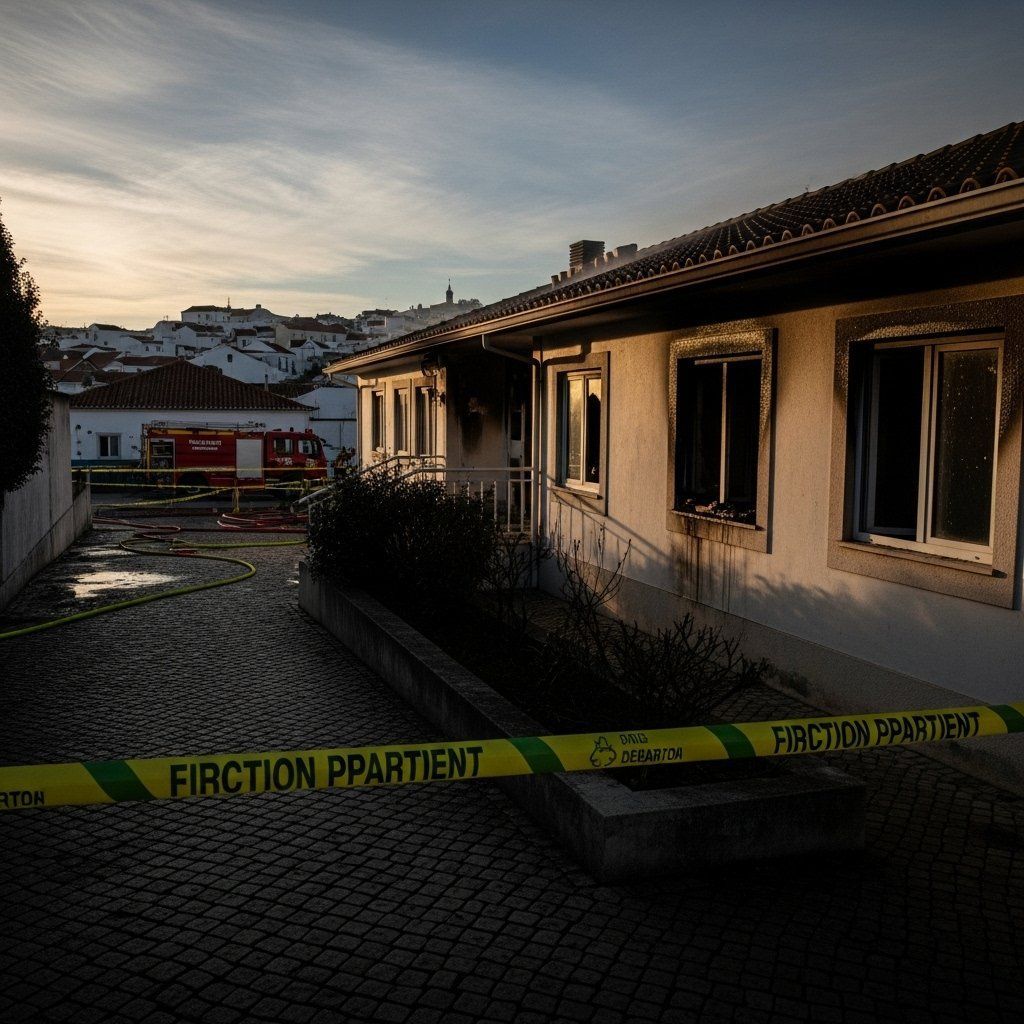

The Portugal Ministry of Infrastructure has reported that more than 99% of mobile network disruptions caused by the devastating winter storms have now been resolved, yet officials warn that the full repair of fixed-line networks and critical transport routes will stretch across the coming months—with one major railway line closed until at least September. For the hundreds of thousands still waiting for stable internet and facing months of rail detours, the recovery remains frustratingly incomplete.
Infrastructure Minister Miguel Pinto Luz confirmed to lawmakers that approximately 280,000 mobile users experienced service outages during the successive storms, but restoration efforts have restored connectivity for nearly all affected subscribers. The fixed-line network, however, remains a concern, with recovery hampered by ongoing power supply issues and the need to physically reconstruct damaged cable infrastructure in rural and flood-affected zones.
Why This Matters
• Mobile networks are functional again, but those relying on fixed broadband—especially in Leiria and Pombal districts—should expect continued intermittent service until electricity restoration is complete.
• Over 90% of National Road closures have been cleared, but approximately 30 road sections remain restricted due to landslides and geotechnical damage requiring specialized repair work.
• The Linha da Beira Baixa railway will remain closed for six months, disrupting commuter and freight routes between Abrantes and Guarda; replacement bus services began on March 16.
• Projects funded by the Portugal Recovery and Resilience Plan (PRR) are at risk of missing EU deadlines, forcing the government to substitute delayed works with faster alternatives to avoid forfeiting allocated funds.
The Human and Economic Cost: A Six Billion Euro Catastrophe
The sequence of depressions—Kristin, Leonardo, and Marta—which struck mainland Portugal between January 28 and mid-February 2025 has been confirmed as the costliest weather disaster on record for the country. Storm Kristin alone generated losses exceeding €6 billion, according to updated assessments, with total damages from the three-week siege of extreme weather potentially reaching €7.2 billion when Spanish losses are included.
At least 19 people died across Portugal during the storms and their aftermath, with more than half of those fatalities occurring during cleanup and recovery operations. Over 205,000 homes sustained damage, ranging from missing roof tiles to structural collapse. In Pedrógão Grande, 80% of dwellings were affected. The district of Leiria saw more than 800 businesses and 2,200 homes destroyed or severely damaged by Kristin's sustained winds, which exceeded 200 km/h in some exposed locations.
Agricultural and forestry sectors bore heavy losses as well: 15 million trees were felled by Kristin, obliterating 20% of the national resin production. Preliminary estimates place agricultural and forestry losses at €750 million. In the Sintra mountains alone, 250,000 trees toppled over the past year, including 20,000 during the recent storm sequence.
What This Means for Residents and Businesses
For those living in the Centro, Lisbon and Tagus Valley, and Alentejo regions—the hardest-hit areas—the road to normalcy involves both short-term inconvenience and long-term uncertainty.
Transport Disruptions: The Infraestruturas de Portugal (IP) recorded over 3,632 road incidents, with the majority now cleared. Yet intensive geotechnical repairs on embankments, retaining walls, and drainage systems will persist until year-end. The Linha da Beira Baixa, a critical rail artery linking the interior to Lisbon, will not reopen until September following a major landslide between Belver and Barca da Amieira. Commuters and freight operators must rely on bus replacements or reroute via Lisbon.
Fixed Broadband and Electricity: Although mobile coverage is largely restored, fixed-line internet and telephone service remain patchy in rural areas. The primary bottleneck is the restoration of electrical supply, which affects both customer premises and telecommunications infrastructure. As of early March, the NOS operator reported roughly 5,000 customers still without fixed service, while the E-Redes utility confirmed that 39,000 clients in the Leiria district lacked power as of mid-February. Affected residents should contact their providers for service status updates and inquire about mobile hotspot alternatives or temporary compensation arrangements. The government has approved emergency measures to expedite cable replacement and is exploring the progressive burial of overhead lines to improve resilience—though at significantly higher cost.
PRR-Funded Projects in Jeopardy: Economy Minister Manuel Castro Almeida acknowledged that several public works financed under the Portugal Recovery and Resilience Plan will miss their EU-mandated deadlines due to storm damage. Rather than leave projects half-finished, the government intends to substitute delayed initiatives with alternatives that can be completed on time, ensuring that PRR funds are not lost. "We will not see the country dotted with abandoned construction sites for lack of PRR financing midway through a project," Castro Almeida assured legislators.
Local Government Struggles to Cover Costs
Municipal authorities are grappling with overwhelming repair bills. The mayor of Golegã, António Camilo, estimated that storm-related damages in his municipality alone exceed €1 million, a figure that continues to climb as floodwaters recede and previously submerged roads become accessible for inspection. Initial assessments after Kristin in late January projected €200,000 in losses, including damage to municipal swimming pools where a large glass panel shattered and part of the roof caved in. Subsequent depressions multiplied the destruction.
"Municipal and rural roads are what worry us most, because many remain under water," Camilo told the press. Agricultural losses are harder to quantify: crops including broccoli were submerged for days, and planting schedules were disrupted across the region. The mayor emphasized that Golegã lacks the financial capacity to shoulder reconstruction alone, calling for national government and Infraestruturas de Portugal investment in projects such as the completion of the IC3 highway between Almeirim and Vila Nova da Barquinha and a new Tagus crossing.
Damage inventories are being submitted to the Regional Coordination and Development Commission (CCDR), but comprehensive assessments depend on floodwaters fully subsiding. Among the damaged infrastructure, Camilo highlighted the Cardiga bridge, two municipal sports halls, the municipal pools, and the Broa bridge, the latter exhibiting non-alarming but worrying fissures that require engineering evaluation.
New Storm System Compounds Recovery Challenges: Therese Brings Rare Snow to Azores
Even as recovery efforts continue on the mainland, a new weather system—Depression Therese—is batching fresh challenges. The Portuguese Institute for Sea and Atmosphere (IPMA) has issued orange-level warnings for wind and sea conditions across the Azores archipelago and expects the system to bring heavy rain and localized severe weather to mainland Portugal's Centro and South regions through the weekend.
In the Azores, Therese is delivering an unusual cold snap: temperatures plunged to 0°C at Cabeço do Teicho on Pico Island and 0.9°C at Pico Santos de Cima on São Miguel. While such readings are unremarkable in mainland mountain regions, they represent near-record lows for the typically temperate mid-Atlantic islands. IPMA meteorologist Tânia Viegas explained that a polar air mass driven by the interaction of a western anticyclone and an eastern depression is funneling Arctic conditions into the mid-Atlantic. "This doesn't happen often," Viegas noted, adding that snowfall above 800 meters is possible on the Central and Eastern island groups—a rare occurrence that last blanketed the archipelago in 2009.
Wind gusts in the Azores are forecast to reach 110 km/h in the Central and Eastern groups (Terceira, São Jorge, Graciosa, Faial, Pico, São Miguel, and Santa Maria) and 95 km/h in the Western group (Flores and Corvo). Wave heights could hit eight meters, prompting the Atlânticoline ferry operator to cancel the March 18 inter-island service between Faial, Pico, and São Jorge. The Ponta Delgada municipal council has closed six public spaces—including the António Borges Garden, Parque Urbano, and Torre Sineira—as a precaution and opened the Carlos Silveira Pavilion overnight to shelter homeless residents.
On Madeira, the Regional Maritime Authority (Capitania do Funchal) extended marine warnings until 06:00 Thursday, with northerly waves expected to swell to four to six meters and potentially spike to 10 meters overnight. The Porto Santo Line suspended its Lobo Marinho ferry service for Tuesday. IPMA has issued yellow alerts for heavy rain and thunderstorms, and for snowfall above 1,200 meters in mountainous areas, where accumulations of up to 10 cm are forecast above 1,500 meters.
Mainland Portugal: Centro and South in the Firing Line
On the mainland, Depression Therese will station itself west of Portugal from late today through Saturday, organizing convective lines that will sweep north from the Algarve through the Centro and South regions. The IPMA warns of persistent heavy rain and localized severe thunderstorms capable of producing damaging wind gusts, particularly in coastal districts south of Cabo Carvoeiro (including Lisbon, Setúbal, Évora, Faro, and surrounding areas) and interior areas south of the Serra da Estrela. Rainfall will be most intense and prolonged between Wednesday and Friday.
Wind speeds will temporarily spike along the coast south of Cabo Mondego and across highland areas, with gusts reaching 70 km/h. Southern coastal waters will see waves build to 2.5 meters from the south quadrant, while the western coast maintains three to four meter northwest swells before shifting to west-southwest waves of two to three meters by Friday.
"There is some uncertainty in the position of this depression over the coming days, which translates into uncertainty about the location and intensity of precipitation," the IPMA cautioned in its advisory. Yellow alerts for precipitation are in effect, and authorities urge residents to monitor updates closely.
Mobilizing for Recovery: 4,700 Workers on the Ground
The scale of the recovery operation is unprecedented. Minister Pinto Luz told parliament that more than 4,700 workers from state agencies, private contractors, and municipal teams have been deployed to restore roads, railways, power lines, and telecommunications infrastructure. Over 2,000 personnel focused solely on clearing and reopening National Roads, achieving a 90% restoration rate by mid-March.
The government's emergency support package totals up to €2.5 billion, earmarked for affected households, businesses, and municipalities. An additional €200 million is allocated to coastal protection and repair, with €15 million released by May and another €12 million by December for immediate interventions. Coastal erosion reached alarming levels in some areas, with the shoreline receding up to 20 meters and damaging beach access ramps, wooden walkways, and bathing facilities.
Despite the scale of support, the clock is ticking for PRR-funded projects. The European Union's Recovery and Resilience Facility imposes strict deadlines, and storm-induced delays jeopardize compliance. Minister Castro Almeida confirmed that works unable to meet the schedule will be excluded from the PRR and replaced with faster-completing alternatives. "We will find solutions so that works can continue, with or without PRR financing," he pledged.
Lessons in Resilience: Portugal's Vulnerable Infrastructure Under Scrutiny
The triple-storm crisis exposed deep vulnerabilities in Portugal's infrastructure networks, prompting calls for structural reforms to climate-proof essential systems. The E-Redes power distributor reported damage to 6,300 km of electrical grid and the destruction or toppling of 5,800 utility poles during Kristin, resulting in the largest blackout in Portuguese history. At its peak, one million customers lost power, with restoration stretching weeks in the hardest-hit districts.
Telecommunications providers, including Vodafone and NOS, mobilized hundreds of field technicians and received government approval to share antenna infrastructure under national roaming arrangements. Yet the dependency of fixed-line networks on stable electricity supply underscored a systemic weakness. The government is now exploring a phased underground cabling program for both power and telecoms infrastructure, alongside geographic redundancy in fiber-optic backbones and the distribution of satellite phones and Starlink terminals to parish councils in remote areas.
The Infraestruturas de Portugal (IP) is advancing a Climate Resilience Plan covering road, rail, and digital networks, focusing on risk mapping, impact assessment, and preventive adaptation measures. Early studies identify flood-prone corridors, landslide-susceptible slopes, and coastal erosion hotspots, proposing engineering interventions such as improved drainage, reinforced embankments, and elevated railway beds.
The government has committed to presenting a comprehensive infrastructure resilience strategy to parliament by June 2025, with public consultation on priority regions and timelines. For residents, the coming months will test not only rebuilt infrastructure but also the political will to prevent the next storm from causing comparable devastation. European Union climate adaptation strategies provide a framework, but Portugal's experience underscores the need for continuous investment and cross-sector coordination. As one Portuguese official remarked, "You're never fully prepared for a natural catastrophe"—but the country's ability to recover faster and with greater resilience depends on treating climate adaptation not as an afterthought, but as a core element of all public infrastructure policy.