
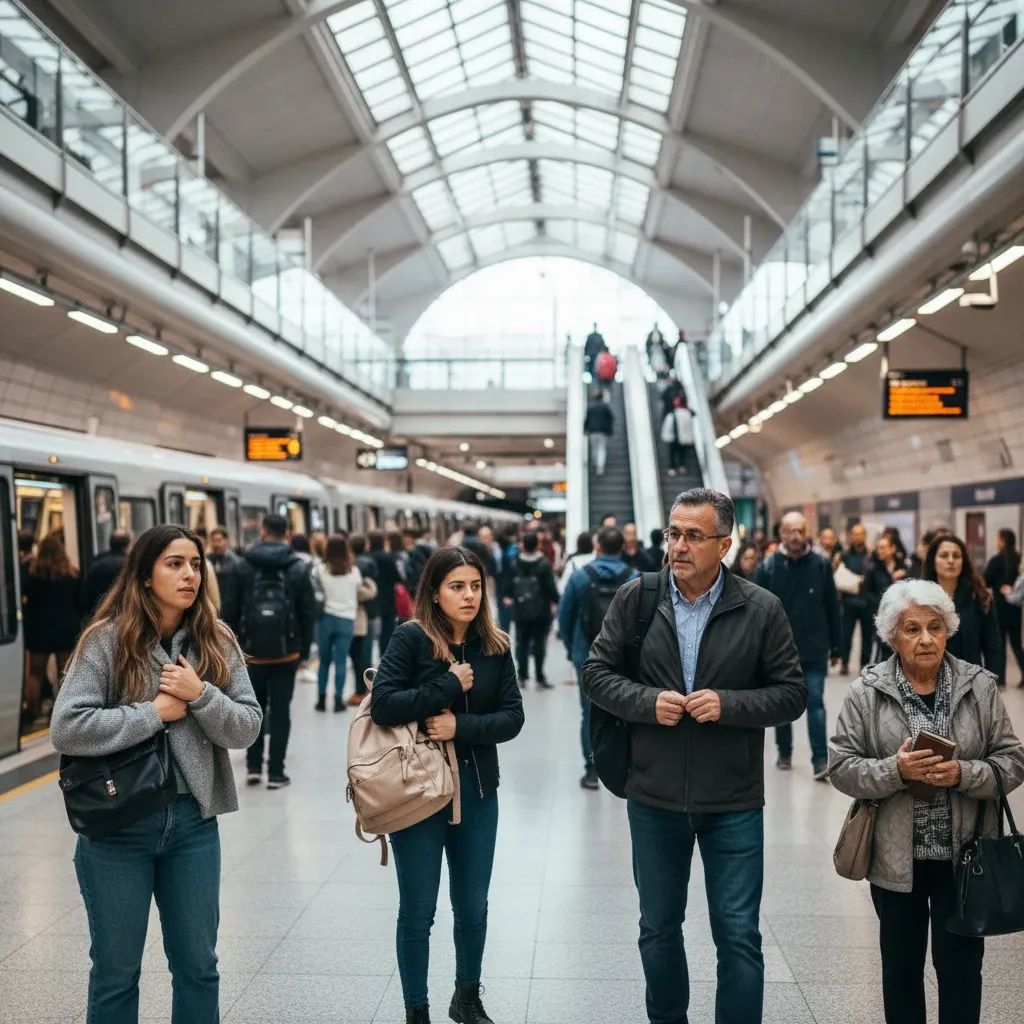
The Polícia de Segurança Pública (PSP) arrested an 18-year-old man on Monday after he allegedly used a simple request for a lighter to distract a foreign visitor and steal his mobile phone—a tactic that underscores why pickpocketing remains one of the country's most stubborn public safety challenges.
The incident on April 6 in Lisbon's Misericórdia parish, a historic neighborhood popular with tourists, reflects broader trends captured in newly released data: 1,617 pickpocketing incidents recorded nationwide during the first quarter of 2026 alone. For residents navigating Lisbon's crowded transport hubs and tourist districts, practical precautions have become essential. Experts recommend keeping valuables in front pockets or crossbody bags worn in front, avoiding the display of phones and cash in crowded spaces, and carrying only necessary documents.
Why This Matters
• Tourism hotspots remain vulnerable: Thieves target high-traffic areas where distraction is easiest, from Santa Maria Maior to transport hubs.
• Organized networks dominate: Most pickpockets in Portugal are foreign nationals working in coordinated groups, often moving between European cities.
• The crime is escalating: Pickpocketing was one of eight offenses that increased in 2025, according to the Internal Security Annual Report (RASI), with almost 6,200 cases logged nationwide.
The Lighter Trick and How It Worked
According to the PSP, the 26-year-old victim reported that he had lent a lighter to an unknown individual moments before noticing his phone had vanished. The suspect leveraged that brief moment of distraction—a common maneuver in pickpocket operations—to extract a €350 device from the tourist's back pocket.
Officers quickly canvassed the area and identified the suspect, whom the victim recognized without hesitation. A search yielded not only the stolen phone but also three debit cards belonging to third parties, suggesting the young man had been involved in multiple thefts. The victim indicated his intent to press charges, and the suspect was remanded to judicial authorities for the imposition of coercive measures, likely a restraining order or reporting requirement pending trial.
Inside the Pickpocket Ecosystem
Portugal's pickpocketing landscape has evolved from opportunistic lone operators into a sophisticated ecosystem dominated by international crime networks. Research indicates that many offenders are recruited by organized syndicates that provide training, assign territories, and enforce quotas, often under coercion.
These groups typically operate in clusters of three to four individuals, each with a defined role. One member engages the victim (asking for a light, dropping coins, spilling a drink), another executes the theft, and a third swiftly takes possession of the stolen goods. This rapid handoff makes it difficult to attribute culpability if police intercept the group.
Tools of the trade include folded newspapers, jackets draped over an arm, or large handbags—anything to obscure the thief's hand and conceal the stolen item. Locations favored include trams, metro stations, bus stops, shopping districts, and historical sites, especially in Lisbon and Porto, where tourist density peaks.
Crucially, the crime doesn't end with the theft. Stolen debit and credit cards are frequently used for fraudulent purchases within minutes, compounding the financial damage. Law enforcement sources confirm that many of these networks operate on a transnational scale, moving between Portugal, Spain, France, and Italy to exploit seasonal tourism surges.
What the Numbers Reveal
The PSP logged 6,153 pickpocketing incidents in 2025—an average of 17 per day—and detained or formally identified 448 suspects over the course of the year. That works out to roughly 1.2 suspects processed daily, a figure that underscores both the scale of the problem and the intensity of enforcement efforts.
During the first three months of 2026, that pace has accelerated. The PSP detained 38 pickpockets and identified 78 additional suspects through the end of March, while incident reports climbed to 1,617—roughly 18 per day, a modest uptick compared to the prior year's average.
Lisbon accounts for the lion's share of cases, according to the 2025 RASI report, which listed pickpocketing among the eight offenses with the steepest year-over-year growth. The capital's narrow cobblestone streets, crowded viewpoints, and busy transport interchanges create conditions where thieves can operate with relative ease.
Enforcement Response: Specialized Teams and Seasonal Operations
Recognizing the persistent nature of the threat, the PSP established a dedicated pickpocketing investigation unit in 2018. This team focuses exclusively on profiling itinerant criminal groups, analyzing patterns, and coordinating arrests across jurisdictions. The investment has yielded measurable results: flagrante delicto arrests have risen significantly, and intelligence sharing with European counterparts has disrupted several cross-border networks.
In early April 2026, the PSP conducted a two-day operation near Castelo de São Jorge in the Santa Maria Maior district, detaining six suspects in coordinated sweeps. Similar operations took place under the banner of "Operação Páscoa" (Easter Operation), which deployed additional patrols to high-risk zones during the holiday influx.
What This Means for Residents
Whether you're a long-term resident or a newly arrived expat, the pickpocketing surge has practical implications for daily life:
• Avoid back pockets and open bags: Thieves prioritize easy access. Front pockets, zipped compartments, and crossbody bags worn in front offer the best deterrence.
• Be discreet with valuables: Using a phone or withdrawing cash at an ATM in crowded spaces broadcasts opportunity. Step aside, shield your screen, and pocket devices immediately.
• Don't carry everything at once: Leave passports, secondary credit cards, and excess cash at home or in a hotel safe. If your wallet is stolen, you'll still have backup documents and funds.
• Report immediately: Even if recovery seems unlikely, filing a police report generates data that shapes deployment decisions and supports insurance claims. PSP stations in tourist districts are accustomed to processing these complaints in multiple languages.
For business owners in hospitality, retail, or food service, consider posting multilingual signage warning guests to secure belongings. Some establishments in Lisbon have begun offering free lockers or secure hooks under tables—a small gesture that enhances customer confidence.
Broader European Context
Portugal is hardly alone. Barcelona recorded its lowest theft rate in a decade during 2024 thanks to increased patrols, yet pickpocketing persists in La Rambla and Sagrada Família. London saw a mobile phone stolen every six minutes in 2024, prompting the Metropolitan Police to deploy new tracking technology and reroute patrols. Paris and Rome continue to grapple with organized rings that exploit legal protections for minors and the sheer volume of tourist foot traffic.
Europol's EMPACT platform facilitates intelligence sharing on organized crime, though pickpocketing networks often fall below the threshold for large-scale task forces unless tied to human trafficking or money laundering. Bilateral cooperation—such as Portuguese officers deployed to the Euro 2024 championship in Germany and the Paris 2024 Olympics—has proven effective in identifying and tracking itinerant groups.
Looking Ahead
The arrest in Misericórdia illustrates both the scale of the challenge and the difficulties facing law enforcement. An 18-year-old suspect carrying three stolen debit cards alongside the tourist's phone indicates the persistence of this crime type across age groups and skill levels.
While the PSP continues to refine its tactics and expand specialized resources, the offense's inherently opportunistic nature means prevention ultimately rests on individual vigilance. The data paints a clear picture: pickpocketing in Portugal is rising, organized, and persistent. Residents and visitors alike must adapt their habits accordingly, treating crowded public spaces with appropriate caution.