

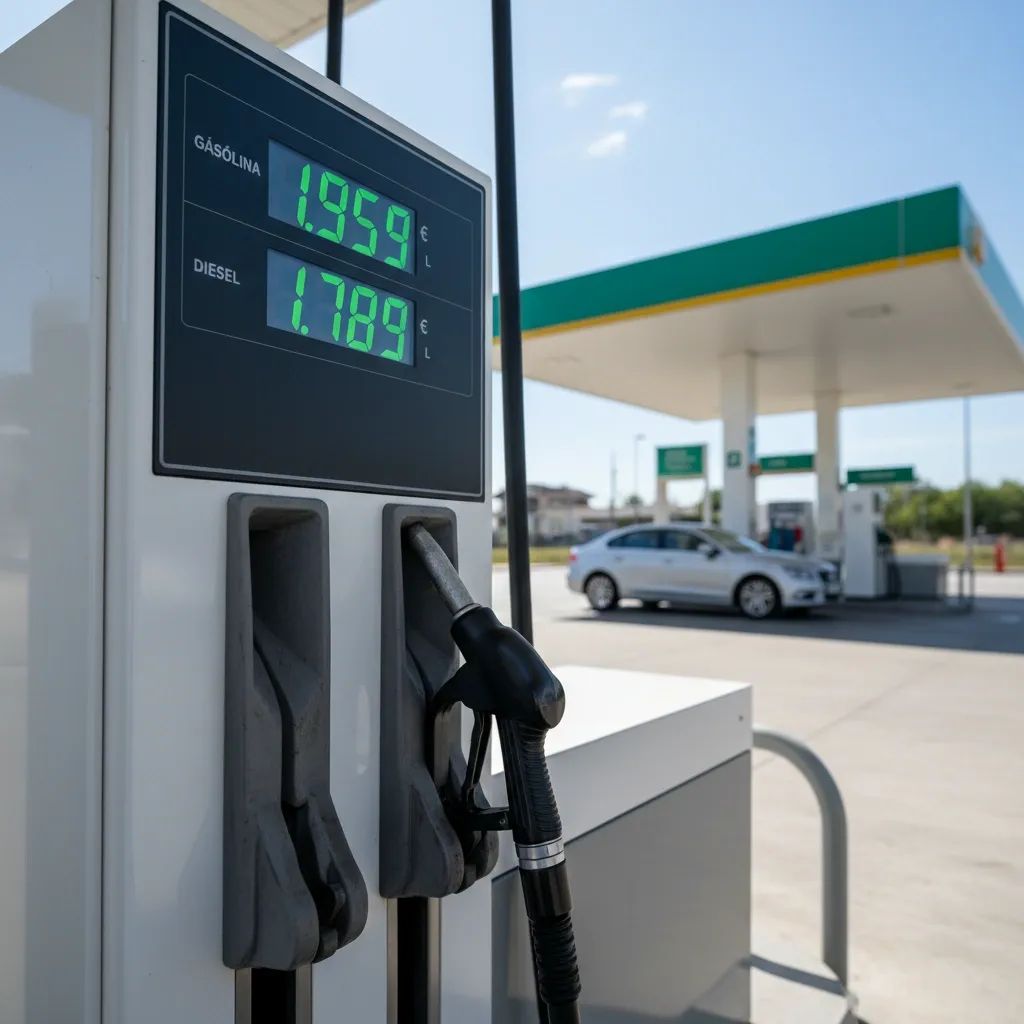
The Portugal Government has scaled back fuel tax relief starting Monday, May 11, reducing the extraordinary discount on petroleum products tax (ISP) as pump prices show signs of stabilizing. The move will trim subsidies by 1.47 cents per liter on diesel and 0.21 cents per liter on gasoline, though motorists can still expect a net drop at the pump next week.
Why This Matters
• Your fuel bill drops anyway: Despite the smaller subsidy, diesel falls 9 cents per liter and gasoline 2 cents per liter next week, according to the Automóvel Clube de Portugal (ACP).
• Subsidy still active: The emergency relief remains in place at €60.78 per 1,000 liters for diesel and €49.80 per 1,000 liters for gasoline.
• Trigger mechanism: This discount activates automatically when prices exceed the benchmark set during the week of March 2–6, 2026, by more than 10 cents per liter.
How the Adjustment Works
A decree published today in the Diário da República confirms the adjustment to the temporary and extraordinary ISP discount that has been in place since fuel prices began rising earlier this spring. The subsidy mechanism is designed to track the gap between current pump prices and the early March baseline, automatically adjusting support levels as international market conditions change.
What This Means for Residents
For the average Portuguese driver filling a 50-liter tank, the reduced discount translates to roughly €0.74 less relief on diesel and €0.11 less on gasoline compared to this week's subsidy. However, the broader price drop projected by the ACP means a €4.50 saving on a diesel fill-up and a €1 saving on gasoline next week, even after factoring in the trimmed subsidy.
The subsidy reduction applies to mainland Portugal, with the Azores and Madeira operating under separate pricing regimes. Commercial operators and transport businesses, which rely heavily on diesel, will be most affected by any reduction in relief as margins remain tight across Portugal's logistics sector.
Households outside major urban centers, where public transit options are limited and car dependency is high, remain particularly exposed to fuel price volatility. While the subsidy cuts are small in absolute terms, they reflect the government's gradual transition away from emergency fuel support measures.
What Comes Next
The Portugal Government will continue publishing weekly ISP adjustments based on ACP price forecasts and the March benchmark. If international crude stabilizes or declines further, subsidies could shrink to negligible levels by mid-summer, at which point the emergency mechanism may be suspended altogether. Conversely, any escalation in global energy markets could trigger renewed intervention.
For now, Portuguese drivers face a straightforward situation: prices are falling next week, but the scale of government support is declining. The coming weeks will reveal the trajectory of this emergency relief program.


