Portugal's financial markets opened under pressure this morning, dragged down by broader European stock losses even as energy costs climbed sharply, creating a volatile cocktail for investors and everyday consumers alike. The Lisbon Stock Exchange (PSI) shed 0.34% to close at 9,134.62 points, reflecting a continent-wide sell-off driven by geopolitical uncertainty and mounting inflation fears that will ripple through household budgets and corporate profit margins.
Why This Matters:
• Higher energy bills ahead: Brent crude surged 3.49% to $106.18 per barrel, pushing natural gas to €47.22 per MWh — costs that translate directly to electricity and heating expenses.
• Investment portfolios under strain: Portugal's benchmark PSI index declined despite having reached a 17-year high just weeks ago, signaling renewed volatility.
• Currency headwinds: The euro weakened 0.29% against the dollar, raising import costs for businesses and consumers in Portugal.
Lisbon Market Feels Continental Tremors
The Portuguese Stock Exchange mirrored the broader European malaise, with the PSI dropping from the record highs set on April 9, when it touched 9,484.93 points — the strongest performance since June 2008. That brief moment of optimism now feels distant as investors grapple with the reality of sustained geopolitical risk and the inflationary consequences of soaring energy prices.
Across Europe, the picture was uniformly bleak. The EuroStoxx 600 fell 1% to 606.68 points by mid-morning, while major exchanges in London retreated 0.92%, Frankfurt dropped 0.95%, and Paris slid 0.52%. Southern European markets fared worse: Madrid declined 0.66% and Milan tumbled 1.29%, reflecting heightened sensitivity to energy costs in Mediterranean economies.
Energy Surge Creates Economic Headache
The divergence between falling equities and rising commodity prices tells a story of mounting economic strain. Brent crude for July delivery jumped to $106.18 per barrel, while U.S. West Texas Intermediate (WTI) climbed 2.14% to $96.77. European natural gas futures on the Dutch TTF exchange rose 2.12%, reaching €47.22 per megawatt-hour — a development that will directly impact heating and electricity bills across Portugal throughout the coming months.
This energy rally stems from the fragile diplomatic standoff between the United States and Iran, with President Donald Trump warning that the ceasefire remains on "life support." Concerns over the Strait of Hormuz — a chokepoint for roughly 20% of global oil and liquefied natural gas shipments — have created a supply premium that analysts warn could push Brent to $115 or even $120 per barrel if negotiations collapse entirely.
For Portugal, which imports the vast majority of its energy needs, this represents a direct threat to economic stability. The country's dependence on external energy sources means that every dollar added to the barrel price translates into higher costs for transport, manufacturing, and households.
What This Means for Residents
Portugal's reliance on imported fossil fuels makes the nation particularly vulnerable to Middle Eastern supply disruptions. The current Brent price of $106 per barrel — up from roughly $70 before the conflict escalated — means:
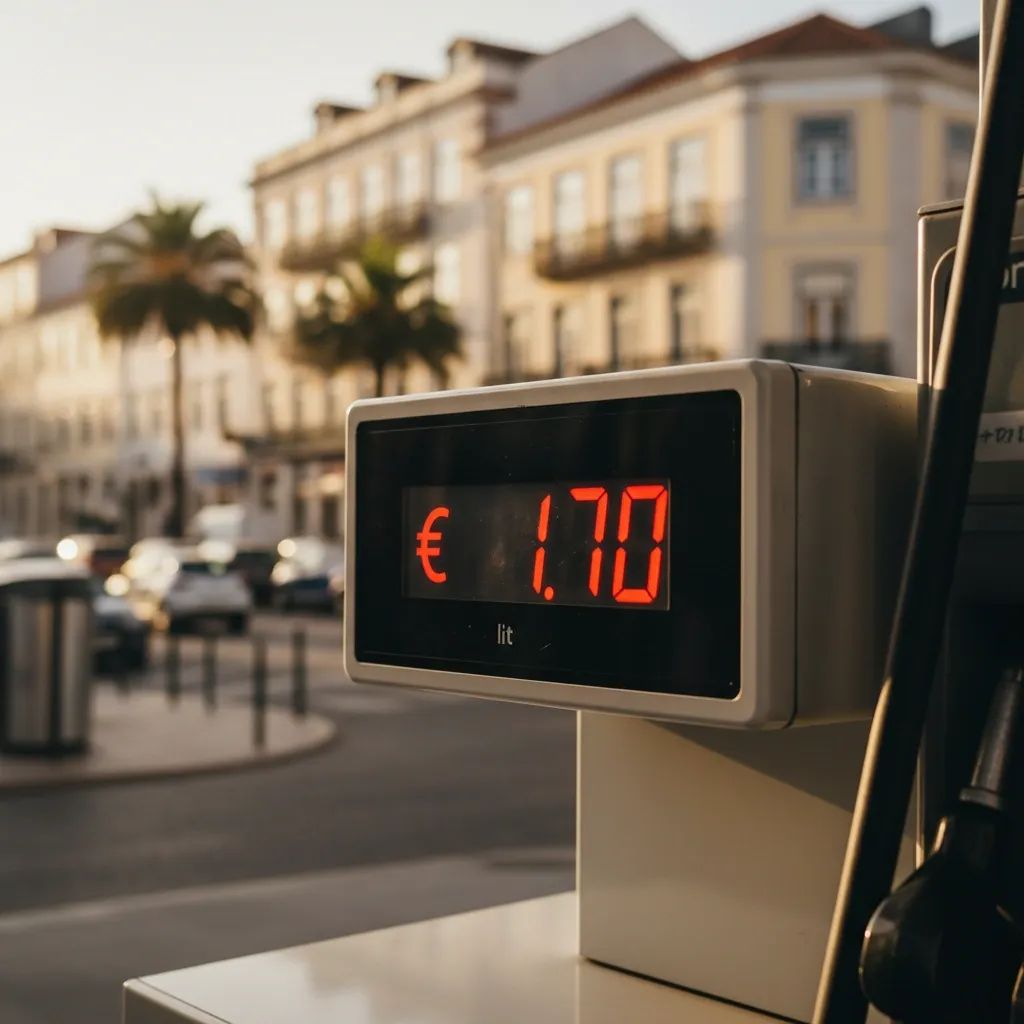
Transport costs will rise: Gasoline and diesel prices at the pump typically follow crude oil movements with a lag of several weeks. Commuters and commercial transport operators should brace for increases.
Electricity bills face upward pressure: Portugal's electricity generation still relies partly on natural gas, and the €47.22 per MWh price for European gas futures will feed into retail tariffs, though the timeline depends on regulatory buffers and contract structures.
Inflation could accelerate: The European Central Bank faces a delicate balancing act — maintaining elevated interest rates to combat inflation while avoiding choking off economic growth. For Portuguese mortgage holders and businesses seeking credit, this likely means borrowing costs will remain elevated for longer than previously anticipated.
Investment returns become uncertain: The PSI's 0.34% decline underscores the challenge facing Portuguese pension funds and retail investors. Markets that reached 17-year highs in April now face headwinds from both inflation fears and slowing growth prospects.
Global Markets Show Mixed Signals
Asian trading offered little relief. Tokyo's Nikkei managed a modest 0.52% gain, but Chinese markets declined, with Shanghai down 0.23%, Shenzhen losing 0.47%, and Hong Kong's Hang Seng sliding 0.29%. U.S. futures pointed to further losses, with the Dow Jones expected to fall 0.13% and the Nasdaq anticipated to drop 0.62% when Wall Street opens.
The previous session had seen American indices close slightly higher — the Dow up 0.13% and the Nasdaq gaining 0.62% — but that optimism evaporated overnight as diplomatic hopes between Washington and Tehran faded. The Iranian government rejected U.S. demands for full nuclear disarmament and the reopening of Hormuz, while insisting on the withdrawal of American military presence as a precondition for any agreement.
Precious Metals, Crypto, and Bonds React
Safe-haven assets provided little comfort. Gold declined 0.77% to $4,699.68 per ounce, while silver tumbled 2.16% to $84.20, suggesting investors are prioritizing liquidity over traditional hedges. Bitcoin fell 1.05% to $80,963.90, continuing its pattern of trading in tandem with risk assets rather than serving as a store of value during turmoil.
In debt markets, German 10-year bond yields climbed to 3.089% from 3.039% in the previous session, reflecting expectations that the ECB will maintain a restrictive policy stance. Rising yields typically signal either inflation concerns or increased government borrowing costs — neither favorable for Portugal's fiscal position or borrowing needs.
Economic Calendar Holds Key Data
Investors in Portugal will be watching several critical data releases today that could determine near-term market direction:
Germany's final April CPI (consumer price index) will provide clarity on whether inflationary pressures are moderating or accelerating in Europe's largest economy. The ZEW economic sentiment survey for May will offer insight into whether business confidence is holding up despite energy shocks.
Across the Atlantic, U.S. April inflation data will be scrutinized for signs that the Federal Reserve might shift its policy stance. The NFIB Small Business Optimism Index for April will reveal whether Main Street America shares Wall Street's recent enthusiasm or remains cautious about the economic outlook.
Sector-Specific Impacts in Portugal
Portugal's banking sector faces particular headwinds. European banks broadly declined during the morning session, and Portuguese lenders are exposed both to domestic mortgage portfolios (where defaults could rise if energy costs squeeze household budgets) and to sovereign debt holdings (where rising yields create mark-to-market losses).
Portugal's utilities and energy companies present a more complex picture. While higher energy prices boost revenues for electricity generators and distributors, they also increase input costs and create regulatory pressure to shield consumers from the full brunt of price increases.
Export-oriented manufacturers — a cornerstone of Portugal's economic recovery — will feel the squeeze from multiple directions: higher energy inputs, a weaker euro (which does help competitiveness but raises import costs), and potentially softer demand from trading partners facing their own inflation challenges.
The tourism sector, critical to Portugal's economy, faces mixed signals. A weaker euro makes Portugal more attractive to visitors from dollar and pound zones, but higher fuel costs could dampen travel demand and raise operational expenses for hotels and transportation providers.
Outlook Remains Clouded
The fundamental tension driving today's market movements — falling equities amid rising energy prices — reflects a troubling economic reality. The same geopolitical instability that pushes oil and gas higher undermines confidence in economic growth, creating a stagflation risk where prices rise while activity slows.
For residents of Portugal, this environment demands financial prudence: energy conservation measures will provide direct savings, while investors may need to rebalance portfolios toward more defensive positions. The coming weeks will reveal whether diplomatic efforts can ease supply concerns or whether Portugal and Europe face a prolonged period of elevated energy costs and economic uncertainty.