

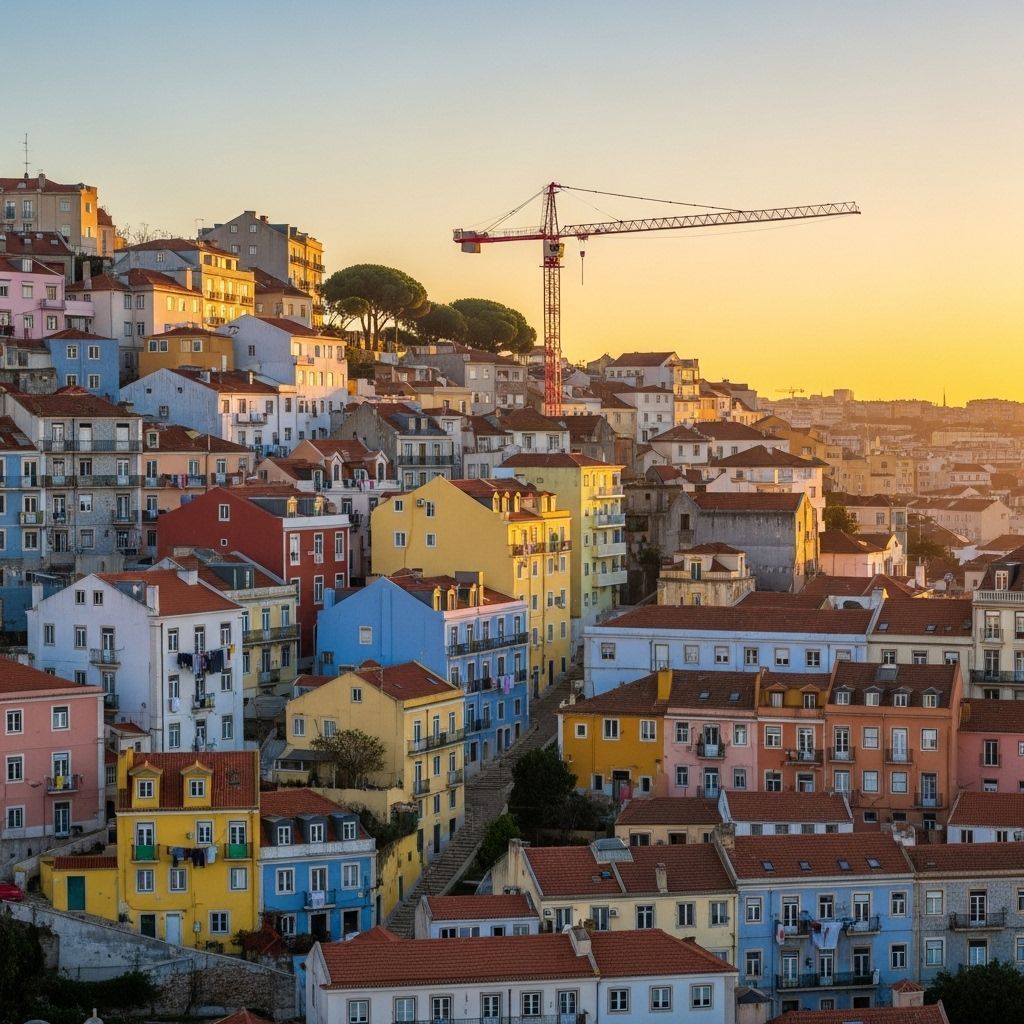
Loulé's public housing program has reached a tipping point. After nearly doubling its social housing stock since 2019, the municipality is now hunting for another 100 ready-to-occupy homes to meet an avalanche of applications that far exceeds availability. This expansion matters because it signals how acute the Algarve's housing shortage has become—and how far government intervention still falls short of the actual crisis.
Why This Matters
• The gap between supply and demand is widening: In the most recent allocation round this spring, the council allocated 117 units to qualifying families. The overwhelming demand underscores how desperate the housing shortage has become across the region.
• Tourism has fundamentally broken the housing market for workers. Local employees in hospitality and retail now compete with international investors, short-term rental operators, and remote workers for living space. Rental costs have climbed to consume as much as 96% of a family's monthly income in premium coastal areas like Vilamoura and Almancil.
• The 1,500-unit target through 2030 is ambitious but depends on sustained support. It relies on continued European funding and coordination between three delivery channels: new construction, property acquisitions, and rehabilitation of existing stock. Any disruption to financing or permitting delays the entire timeline.
A Market Detached from Reality
The Algarve has become structurally incompatible with the incomes of people who actually live there. Purchasing a home now consumes between 57% and 87% of annual household earnings in municipalities like Loulé, Albufeira, and Lagos—double or triple the threshold most economists consider sustainable. For renters, the arithmetic is even harsher: a person earning a median Algarve wage (typically between €1,100 and €1,400 monthly) faces rents that leave nothing for utilities, transport, or food.
The root cause is transparent. Property values have nearly doubled in five years, while worker incomes have inched upward at a fraction of that pace. Tourism drives continuous demand for holiday rentals and investment properties. International visa schemes—particularly the digital nomad program—funnel additional purchasing power into an already-constrained market. Meanwhile, construction cannot keep pace with demand.
In Loulé specifically, the squeeze has forced families into impossible choices: commute from cheaper towns an hour away, double up in overcrowded rentals, or leave the region entirely. Hospitality businesses complain openly about staff shortages driven by housing costs. Workers find themselves unable to afford employment that once provided stability.
How Loulé Is Responding
The municipality's Local Housing Strategy, updated through 2032, commits Loulé to supporting 2,000 families by plan's end. That's a meaningful goal, but context matters. The council has already delivered 170 homes since the strategy launched in 2019 and allocated 117 more in the most recent round. The council has also extended rental subsidies to 349 families, a temporary safety net for those unable to access public housing immediately.
The council's delivery model operates through three channels: new construction, acquisition of existing properties, and retrofitting vacant municipal stock. Financing flows through the "1º Direito" program, managed nationally by the housing institute IHRU and bankrolled by the EU Recovery and Resilience Plan.
Beyond direct housing allocation, the strategy has achieved transparency. The municipality now publishes detailed eligibility criteria and selection processes, ending the opacity that once defined social housing access in Portugal. Families know exactly where they stand and what documentation they require.
How to Apply: What Residents Need to Know
For residents currently navigating Loulé's housing crisis, the application process is now more transparent than ever before. To qualify for public housing, you must meet specific vulnerability criteria set by the municipality.
Eligibility generally includes:
• Living in substandard housing conditions
• Documented homelessness or risk of homelessness
• Housing hardship verified through municipal assessment
• Income below established thresholds for your household size
Next steps for interested residents:Contact Loulé's municipal housing department to request an application form and clarification on current income limits. The municipality publishes selection results publicly, so applicants can understand where they rank on the waiting list. Rental subsidy programs may offer faster relief if you qualify—the council currently supports 349 families through these schemes while they await permanent public housing placement.
The transparency means no hidden processes: families know the selection criteria upfront and can assess their realistic chances before investing time in an application.
Regional Context
Loulé is not alone in its struggle. The European Commission approved additional funding specifically for affordable housing across the Algarve region, signaling recognition of the broader crisis. Across the region, municipalities are deploying whatever resources they can assemble to address the shortage, though the scale of housing production remains constrained by construction capacity, financing availability, and labor shortages in the building trades.
The Barriers Beyond Housing Policy
Infrastructure strains beyond housing itself complicate the picture. During summer, the Algarve's population swells by millions. Healthcare facilities, public transport, waste management, and water supply all face seasonal congestion. Rising housing supply does nothing to resolve these seasonality pressures; it simply means more residents competing for stretched services.
Accessibility for residents with disabilities remains inadequate. While the region markets accessible tourism aggressively, much existing housing stock lacks adaptations. Retrofitting is slow and expensive. The housing shortage paradoxically limits renovation funding available for accessibility upgrades.
Construction sector constraints are also immovable in the short term. Portugal faces chronic shortages of skilled tradespeople, particularly in regions like the Algarve where labor migrates toward better-paid work in construction or tourism. Material costs remain elevated. Municipal licensing, while improving, still delays projects by months or years in some cases.
What Loulé's Track Record Shows
The municipality's achievements offer cautious evidence of progress. Since 2019, Loulé has grown its public housing portfolio from 234 units to over 400—genuine expansion in seven years. The most recent allocation round demonstrated operational competence: the council successfully vetted applications, conducted transparent selection processes, and coordinated hand-overs across multiple neighborhoods.
Whether that capacity can sustain through 2030 depends on factors outside municipal control. EU funding flows must continue at current levels or expand. National government support cannot weaken. Labor availability must stabilize. Material costs must stop escalating. Any of these variables moving in the wrong direction jeopardizes the 1,500-unit target.
For a family earning €1,200 monthly in a region where rental apartments cost €900, Loulé's expansion represents a genuine shift from ignoring the problem to addressing it. That represents substantive change. But the scale of housing production remains constrained by realities beyond what local policy can control.


