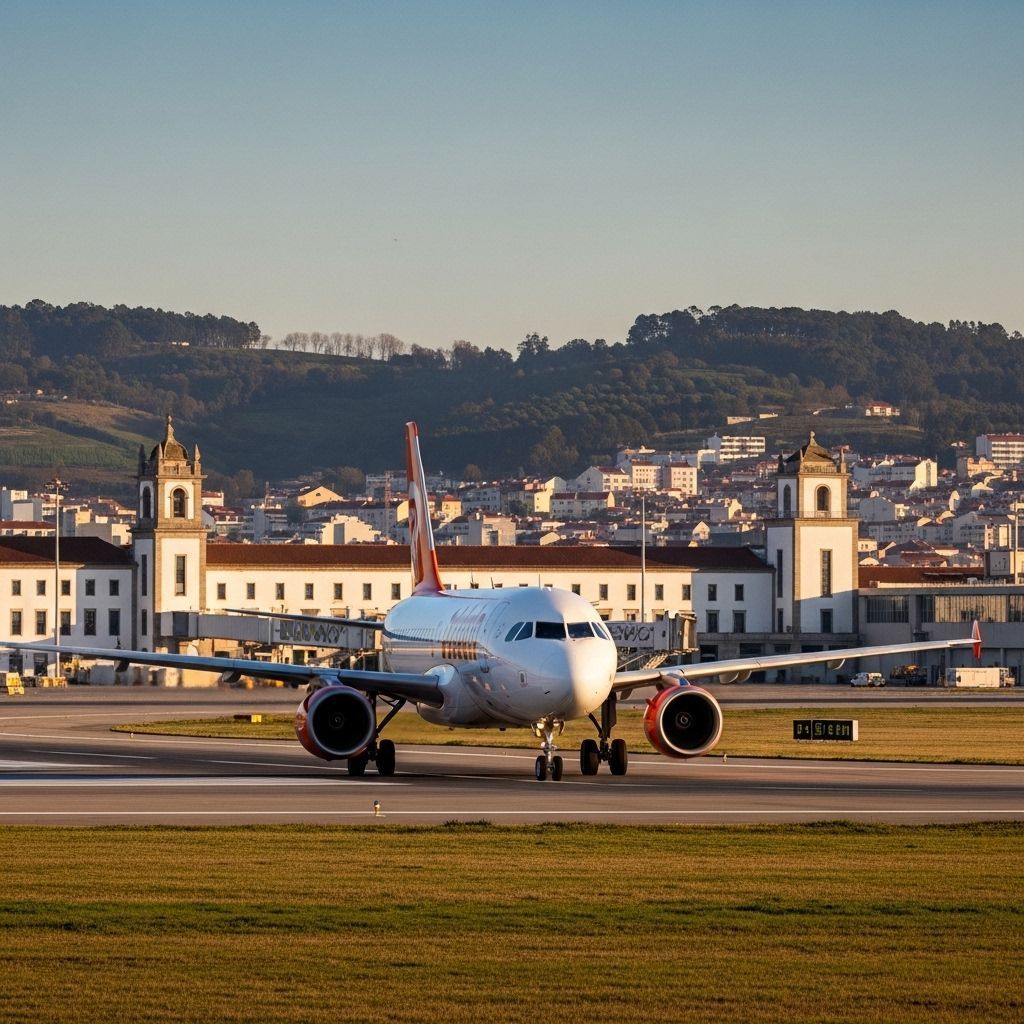
SATA Air Açores has logged an 80% seat-fill rate on its new Terceira–Madeira route in its first month of operation, a signal that inter-island mobility is reshaping travel patterns across Portugal's two Atlantic archipelagos and opening a new corridor for both resident movement and multi-destination tourism.
Why This Matters
• Frequency drops in winter: Two weekly flights through October shrink to one per week from November, testing year-round viability.
• Occupancy at 80% in June: Demand split among Madeiran visitors to the Azores, Azorean travellers, and international tourists island-hopping.
• Chamber of Commerce engagement: Trade bodies in Angra do Heroísmo and Funchal are planning joint sessions to expand business ties.
Launch Delivers on Pent-Up Demand
The Lajes–Funchal direct service lifted off on June 2, a month behind its original May 7 start date due to Public Service Obligation regulatory clearances. Operated by Bombardier Q400 turboprops, the route achieved an occupancy level in June that João Ferreira, head of international markets at SATA, described as "very satisfactory," with July and August bookings trending even stronger.
Three passenger segments are driving traffic. Madeirans exploring the Azores for leisure account for a sizeable share, while Azoreans travel to Madeira for short breaks and family visits. The third cohort—foreign tourists combining both archipelagos in a single itinerary—represents the long-term growth opportunity that both regional governments and aviation planners have bet on. That dynamic mirrors broader patterns in European island-hopping, where direct links unlock multi-stop packages previously constrained by connection times and layover costs.
Until late October, SATA schedules departures on Tuesday and Friday. From November through March the timetable compresses to a single weekly round-trip: Thursday evening departure from Lajes at 21:15, arriving Funchal shortly after midnight, with the westbound leg lifting off Friday at 05:20 and touching down at Terceira by 06:55. Peak-season Mondays and Thursdays see occasional extra rotations to soak up holiday demand.
What This Means for Residents
For anyone living in Portugal, the route translates into reduced reliance on Lisbon or Ponta Delgada hub transfers when moving between Madeira and the central Azores. Previously, reaching Terceira from Funchal required a layover, often adding three to five hours to total journey time and forcing overnight stays or early-morning connections. The direct link collapses that to roughly 90 minutes gate-to-gate, a material gain for business travellers and families managing time-sensitive trips.
Pricing remains an open question. With Ryanair's exit from Azores routes in March over airport-fee disputes, the low-cost competitive floor has lifted. Historically, both SATA and TAP Air Portugal command higher fares than budget carriers on island routes; advance booking—ideally 16 weeks out—remains the surest way to secure better tariffs. The absence of alternative carriers on Terceira–Madeira means SATA holds effective pricing power, though the 12 weekly frequencies combining direct and Ponta Delgada connections during summer create some scheduling flexibility.
Economic and Trade Ripple Effects
Marcos Couto, president of the Angra do Heroísmo Chamber of Commerce and Industry, acknowledged the asymmetry in scale: the route is "a drop in the ocean for Madeira" but "very important for the Azores and even more so for Terceira." He returned to the Azores committed to organizing a joint chamber meeting with his Funchal counterpart, António Jardim Fernandes, who chairs the Associação Comercial e Industrial do Funchal (ACIF). Both men framed the link as a catalyst for business-to-business relationships in sectors where the islands have complementary strengths.
The Azores produce substantial volumes of dairy and beef, and freight-forwarding groups have floated the idea of leveraging passenger slots for belly-hold cargo to test an inter-island supply chain. Madeira, meanwhile, exports higher-margin products—wine, embroidery, tropical fruit—that could benefit from streamlined logistics eastward. While neither chamber disclosed concrete trade figures, the subtext is clear: connectivity drives commerce, and regular air service lowers transaction costs for small and medium enterprises wary of complex multi-leg shipping.
Tourism boards in both regions are coordinating joint marketing campaigns targeting northern European and North American source markets, positioning the combined itinerary as a nature-and-culture package: volcanic landscapes, laurel forests, levada walks, and whale-watching bundled into a single week. Early booking data suggest the pitch resonates, particularly among over-50 travellers seeking softer adventure without long-haul fatigue.
Winter Outlook and Seasonal Risk
Ferreira conceded that demand softens in winter months, a universal pattern for Atlantic island tourism. Yet he emphasized "very real potential" during festive periods—Christmas, New Year, Carnival—and school breaks, when Portuguese mainland families and diaspora visitors seek milder climates. Madeira's reputation as a year-round destination, bolstered by its number-one ranking on TripAdvisor's 2026 trending list, should anchor off-season traffic, though Terceira lacks the same all-weather brand equity.
The Azores face a steeper challenge. Accommodation providers on São Miguel logged a drop in overnight stays in April, prompting trade associations to demand more aggressive winter promotion. São Miguel accounts for just over 70% of Azorean tourism activity, leaving outer islands like Terceira even more exposed to seasonal swings. If the single weekly winter frequency proves insufficient to sustain profitability, SATA may revisit the schedule or lean harder on Public Service Obligation subsidies designed to preserve social and economic cohesion across Portugal's autonomous regions.
Broader Competitive Landscape
The Terceira–Madeira route sits within a shifting competitive map. TAP Air Portugal has expanded aggressively since Ryanair's departure, adding four weekly Porto–Funchal flights in March and launching a twice-weekly Lisbon–Santa Maria service in May. In July, TAP introduced a Porto–Terceira link, raising its Azores frequency to 48 weekly departures from the mainland. That expansion pits TAP against SATA on trunk routes, but the two carriers occupy complementary niches: TAP owns the mainland-to-island segments, while SATA dominates inter-island shuttles and regional connections.
For residents and frequent flyers, the calculus is straightforward. SATA's Azores Air Pass, a multi-stop tariff bundled with inbound tickets, starts at €22 per inter-island leg and rewards itinerary flexibility. TAP's deeper schedule and aircraft mix offer more seat inventory on peak days but rarely undercut SATA on intra-regional hops. With no ultra-low-cost alternative in play, travellers face a duopoly pricing environment tempered only by advance-purchase discounts and loyalty schemes.
Long-Term Viability Hinges on Volume
Whether the Terceira–Madeira route evolves into a permanent fixture or a seasonal experiment depends on sustained passenger flow beyond the honeymoon phase. An 80% load factor in the launch month is encouraging but not definitive; airlines typically target 75–80% breakeven thresholds on thin regional routes, leaving narrow margin for error if bookings sag.
Both archipelagos have demographic and economic constraints. The Azores count roughly 236,000 residents, Madeira about 252,000. Organic inter-island travel—family visits, medical appointments, official business—can only generate so much baseline demand. The route's success rests on attracting stopover tourists who might otherwise fly direct to one island and skip the other. If combined packages gain traction and winter occupancy holds above 60%, SATA will likely maintain year-round service. Below that threshold, the Thursday–Friday winter slot risks suspension, reverting travellers to the old hub-and-spoke model.
For now, the flight represents a modest but meaningful gain in autonomy and convenience for residents navigating Portugal's far-flung island network—a tangible dividend of regulatory coordination and regional aviation policy, provided demand proves durable enough to keep the turboprops in the air.