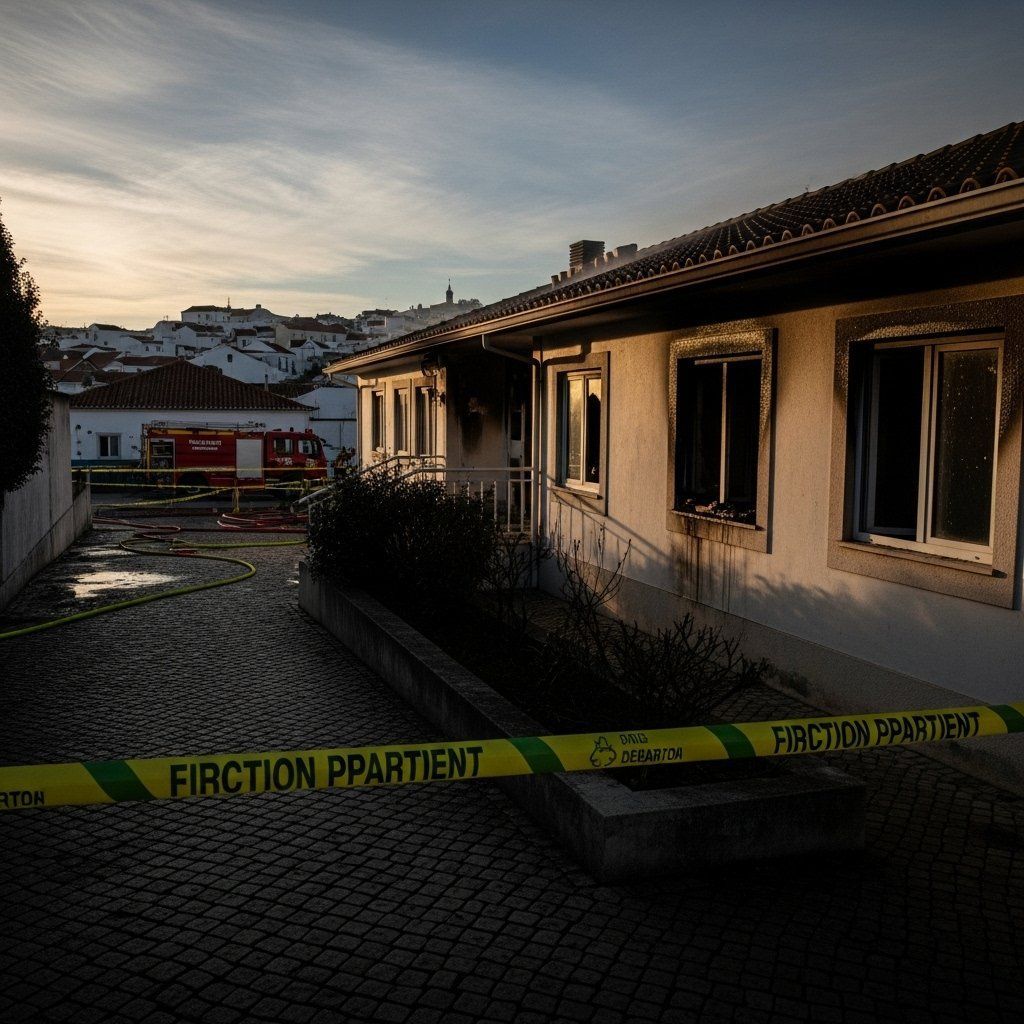
The Portugal A3 motorway was shut down for several hours following a two-vehicle collision near Bougado in Trofa that left 7 people with minor injuries and forced traffic diversions onto the national route. The crash, which occurred late Saturday night around 22:51 in the Porto-Braga direction, involved a rollover and vehicle fire that required a significant emergency response.
Why This Matters
• Traffic Impact: The A3 corridor—a critical artery connecting Porto to Braga—remained completely closed at the accident site, with all northbound vehicles rerouted via the EN104 national road.
• Injury Count: 7 people sustained minor injuries and were treated at Hospital de Famalicão, underscoring the severity of the incident despite the absence of fatalities.
• Emergency Scale: 45 operatives and 18 vehicles from multiple fire brigades responded, including teams from Santo Tirso, Tirsenses, and Ermesinde, alongside advanced medical units.
The Incident: Rollover and Fire at Kilometer 21.3
The collision occurred around 22:51 near kilometer 21.3 of the A3, just after the Santo Tirso/Trofa entry ramp. According to the Sub-Regional Command for Emergency and Civil Protection of the Porto Metropolitan Area, two light vehicles collided, causing one to roll over and catch fire. The blaze required immediate intervention from firefighters, who worked to extinguish the flames while medical teams assessed the victims.
All 7 individuals injured in the crash suffered minor injuries and were transported to Hospital de Famalicão for evaluation and treatment. The Guarda Nacional Republicana (GNR) secured the scene and began investigating the circumstances that led to the collision, though no official cause has been released.
Emergency services mobilized VMER de Famalicão (a mobile emergency and resuscitation unit) and SIV de Santo Tirso (an immediate life support vehicle), alongside the volunteer fire brigades. The coordinated response reflects the protocols established for highway incidents involving fire and multiple casualties.
Why the A3 Has Become a Concern
This latest crash is part of a troubling pattern on the A3 corridor during early 2026. The stretch between Porto and Braga has experienced multiple significant accidents in recent months, raising questions about road safety infrastructure and driver behavior. While specific details of these incidents vary, the concentration of collisions in this area has prompted discussions among local authorities about whether additional safety measures—such as improved lighting, speed enforcement cameras, or barrier upgrades—are needed.
Nationally, road safety concerns remain significant, and the Autoridade Nacional de Segurança Rodoviária (ANSR) continues to monitor accident trends. The Porto district has consistently recorded high numbers of traffic incidents relative to other regions, pointing to a combination of high traffic density, aging infrastructure on some routes, and enforcement challenges.
Impact on Residents and Commuters
For anyone who uses the A3 regularly—whether for daily commutes, freight transport, or travel between the northern cities—the frequency of these incidents has real consequences.
Longer Journey Times: Saturday's closure forced all northbound traffic onto the EN104, a two-lane national road not designed to handle motorway volumes. Residents familiar with this diversion know it can add 20–30 minutes to a journey, and often much longer during peak hours or after dark.
Economic Disruption: The A3 is a vital logistics route. When closures last several hours, delivery schedules are disrupted, and businesses that depend on just-in-time supply chains face delays. For smaller companies operating in the Porto metropolitan area, these disruptions can translate into missed contracts and strained client relationships.
Safety Concerns: The concentration of accidents in this corridor has prompted discussions among local authorities about whether additional safety measures are needed. While the GNR and Civil Protection have conducted emergency response drills, including a 2024 exercise in Trofa that identified equipment gaps, the emphasis has largely been on response rather than prevention.
How Emergency Services Handle Highway Incidents
The response to Saturday's crash illustrates the multi-agency coordination required for motorway emergencies. Once the alert was issued, the Sub-Regional Command dispatched fire brigades, medical units, and traffic police simultaneously. The GNR's traffic division secured the scene, while firefighters tackled the vehicle fire and paramedics triaged the injured.
Protocols call for the VMER and SIV units to arrive quickly, equipped to handle life-threatening conditions on-site before hospital transfer. In this case, the absence of serious injuries meant that stabilization could occur rapidly, but the fire and debris field required extensive cleanup before the motorway could reopen.
The GNR's Núcleo de Investigação de Crimes em Acidentes de Viação (accident investigation unit) typically examines serious collisions to determine whether criminal negligence, mechanical failure, or road conditions played a role. While findings are not always made public, they inform both legal proceedings and policy recommendations.
Civil Protection exercises, such as the Trofa drill in 2024, revealed that while response times are generally adequate, some brigades lack specialized equipment for complex extrications or hazardous material spills. These gaps are being addressed through Autoridade Nacional de Emergência e Proteção Civil training programs and infrastructure investments coordinated with Infraestruturas de Portugal, the state roads agency.
What This Means for Drivers in the Porto-Braga Corridor
For residents, the immediate takeaway is vigilance. The A3's accident rate this year suggests that a combination of factors—potentially including road design, driver fatigue, and traffic volume—are contributing to a higher-than-normal risk profile.
Practical Steps:
• Plan for Delays: If traveling the A3 during evening or early morning hours, check real-time traffic updates. The Brisa concession company and navigation apps typically flag major incidents, but delays can persist long after an accident is cleared.
• Use Alternative Routes During Peak Times: The EN104, while slower, may be preferable during known congestion periods, especially if you're transporting goods or traveling with children.
• Report Hazards Promptly: If you witness debris, broken-down vehicles, or dangerous driving, contact the GNR via the emergency number (112). Early alerts can prevent secondary collisions.
• Advocate for Infrastructure Improvements: Local councils and regional authorities have limited budgets, but resident pressure can push for upgrades like rumble strips, variable speed limits, or enhanced emergency stopping areas.
The Broader Road Safety Context
Portugal's road safety record has improved significantly over the past two decades. The Porto district has consistently recorded high numbers of traffic incidents relative to other regions, pointing to a combination of high traffic density, aging infrastructure on some routes, and enforcement challenges.
The GNR's Unidade de Emergência de Proteção e Socorro (UEPS) operates specialized teams that work with concessionaires to manage traffic during adverse weather and respond to minor incidents. However, the volume of serious collisions on the A3 suggests that reactive measures alone are insufficient.
Transport analysts have called for a comprehensive audit of the Porto-Braga corridor, including geometric design reviews, barrier effectiveness studies, and driver behavior surveys. Whether such an audit will occur depends on political will and available funding—both of which are under pressure from competing infrastructure priorities nationwide.
For now, the A3 remains a critical but increasingly risky route. Saturday's crash, while not fatal, underscores the fragility of traffic flow and the cascading effects when a major artery is severed. Residents who depend on this corridor should stay informed, drive defensively, and support local advocacy for safer roads.