

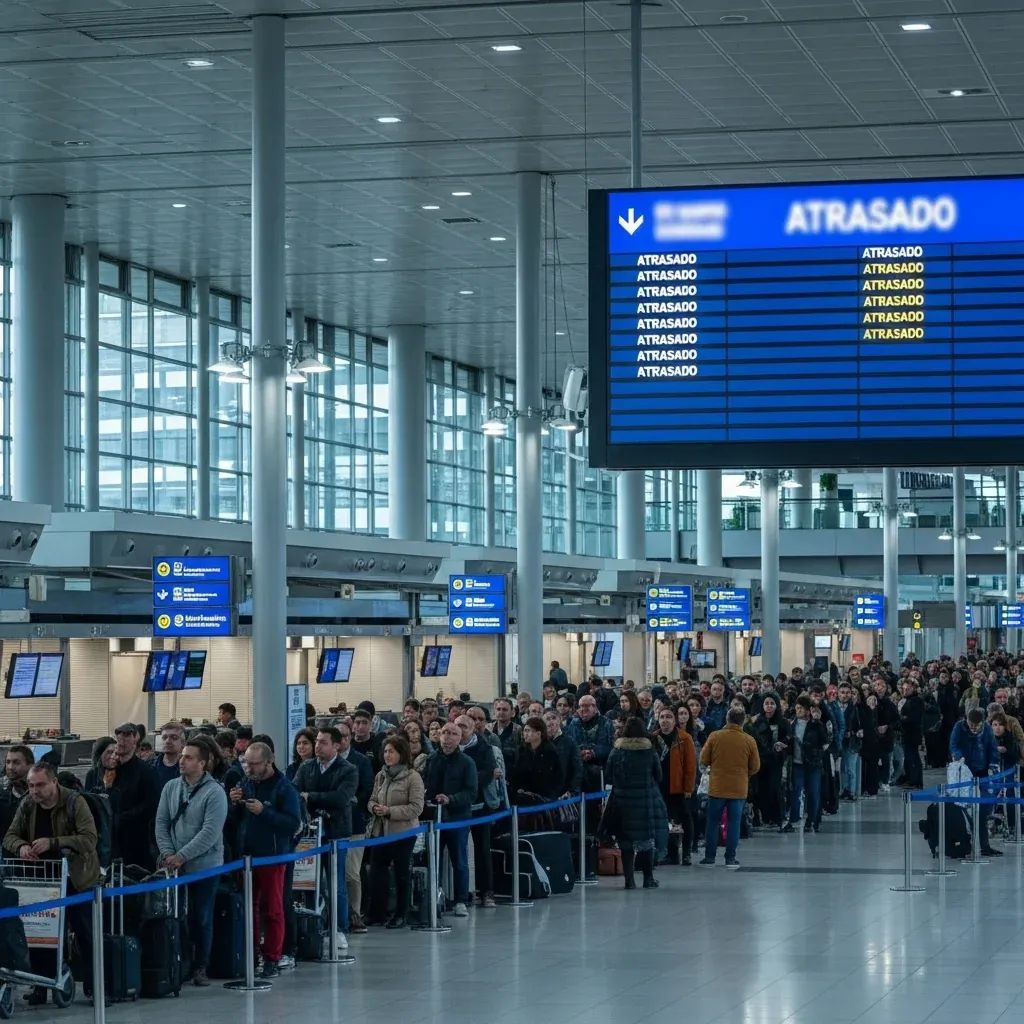
The European Parliament and the Council of the European Union reached a provisional agreement in June 2026 that preserves the strongest passenger compensation framework in global aviation. Portuguese travelers will continue to receive €250 to €600 per ticket for lengthy delays and cancellations, despite a decade of industry pressure to roll back protections that first came into force in 2004.
Why This Matters
• Compensation trigger holds at three hours: Airlines pushed to raise the threshold to four or even six hours; passengers won, keeping current rules intact.
• New claims deadline: Carriers must acknowledge your complaint immediately and respond within 14 days with payment or a clear reason for refusal.
• "No-show" clauses banned: You can now skip the outbound leg of a round-trip without losing the return ticket.
• Formal approval pending: The deal needs ratification by the full Parliament and Council, with implementation expected in late 2027, twelve months after entry into force.
Twelve Years to Reach the Table
Portugal consumer advocacy group DECO described the outcome as a hard-fought victory, noting that the agreement "took more than ten years of battle for passenger rights, but it was worth it." The reality is less triumphant. What passengers retained is essentially what they already had, against an opening negotiating position from the Council that would have excluded as many as 85% of currently eligible travelers by raising delay thresholds and cutting payout amounts.
Portuguese MEP Sérgio Humberto (PSD), who sat on the temporary Conciliation Committee that brokered the final deal, acknowledged the compromise: "We chose the path of pragmatism. This arm wrestle lasted over a decade, but it was necessary to break it. This is not a perfect agreement, but it is historically necessary."
What Stays, What Changes
Under the provisional text, passengers flying out of Portugal or arriving on EU-registered carriers keep the right to compensation when a flight lands more than three hours late or is canceled fewer than 14 days before departure. Compensation tiers remain fixed: €250 for trips under 1,500 km, €400 between 1,500 and 3,500 km, and €600 beyond that. Those sums often exceed the price of a discounted ticket from Lisbon to Madrid or Porto to Paris.
The new framework introduces a 96-hour clock. Within four days of a disrupted journey, carriers must send electronic instructions explaining how to file a claim. Once you submit, the airline has to confirm receipt instantly and deliver a final answer—payment or written refusal—within 14 days. That cadence is a marked improvement over today's black hole of unreplied emails.
Airlines also lose the power to cancel your return when you miss the outbound segment of a single booking. DECO singled out the prohibition of no-show clauses as a key consumer win, ending a practice that forced travelers to forfeit expensive return legs or purchase walk-up one-ways at triple the fare.
What Passengers Lost
The Conciliation Committee rejected mandatory free carriage of a cabin-sized carry-on bag. The final text grants only the right to a "small personal item"—a handbag or backpack that fits under the seat. Budget carriers will continue charging for overhead-bin luggage.
DECO pointed to that gap as emblematic of a broader shortfall: "It remains below what was needed, not revising its scope and reducing the assistance that must be provided to passengers." The group argued that the reform, despite isolated wins, does not expand the regulation's reach to new service types or restore in-flight support obligations that airlines have steadily eroded.
Extraordinary Circumstances and the Strike Loophole
The provisional regulation codifies an open-ended list of extraordinary circumstances—natural disasters, wars, severe weather, unruly passengers, and strikes—that allow carriers to dodge compensation. While the list brings clarity, the inclusion of strikes is contentious. A work stoppage by a carrier's own employees often falls outside the definition, but the language is broad enough to create fresh litigation around air-traffic-control walkouts or ground-handler disputes.
For context, Portugal saw repeated summer disruptions in recent years due to understaffing at ANA airports and ground crew shortages. Under the new rules, carriers that can attribute a cancellation to a strike by a third-party service provider may escape liability, shifting costs back onto passengers who must rebook or wait without financial redress.
Impact on Expats and Investors
Portugal's aviation market ranks among the most complained-about sectors in the country, according to DECO, driven by airline refusals to recognize rights, proliferating unfair commercial practices, and chronically inefficient airport infrastructure. For foreign residents and digital nomads, the stakes are practical: a delayed connection can mean a missed visa appointment, a lost rental deposit, or an unpaid client meeting.
The preservation of the three-hour threshold matters most to short- and medium-haul travelers. A Lisbon–Amsterdam flight that arrives at 19:30 instead of 16:00 triggers the €250 payout, roughly equivalent to a week's groceries for a single person in the capital or two nights in a mid-range Algarve hotel. Had the Council prevailed, that same passenger would receive nothing.
The 14-day claims response obligation also addresses a chronic pain point. Portuguese passengers filing with low-cost carriers headquartered elsewhere in the EU often face months of silence or automated rejections. The new timeline, if enforced, should reduce the volume of cases escalating to DECO or national enforcement authorities.
Family Seating and Disability Rights
Families traveling with children under 14 gain a cost-free right to adjacent seating. Airlines charging parents €10 to €30 per segment to sit beside a toddler will have to eliminate those fees. Passengers with reduced mobility will also receive compensation, rerouting, and assistance if they miss a flight because the airport failed to provide timely wheelchair or escort services to the gate.
These provisions respond to documented abuses and represent protections that extend a philosophy of equitable access: carriers cannot monetize entitlements that the regulation deems basic rights.
Tarmac Clock and Error Correction
Two smaller changes carry practical weight. Passengers will gain the right to deplane after two hours on the tarmac, preventing the multi-hour cabin confinement incidents that have plagued transatlantic arrivals into Lisbon during summer thunderstorms. And airlines will be barred from charging fees to correct typographical errors in passenger names, a notorious revenue stream that turned a single-letter mistake into a €50 penalty.
When the Rules Take Effect
The provisional text must still clear plenary votes in both the European Parliament and the Council. Once approved, the regulation will become binding twelve months later—likely the second half of 2027. Until then, the 2004 framework remains in force, and passengers should continue to cite Regulation (EC) No 261/2004 when filing claims.
What to Do Now
If you're flying out of Portugal or returning on a European airline, document every delay. Photograph departure boards, save boarding passes, and request written confirmation of the reason from the gate agent. When the new regulation enters force, those records will feed directly into the streamlined claims process. Until then, existing rights remain robust—but enforcement still depends on passengers who know the rules and insist on them.


