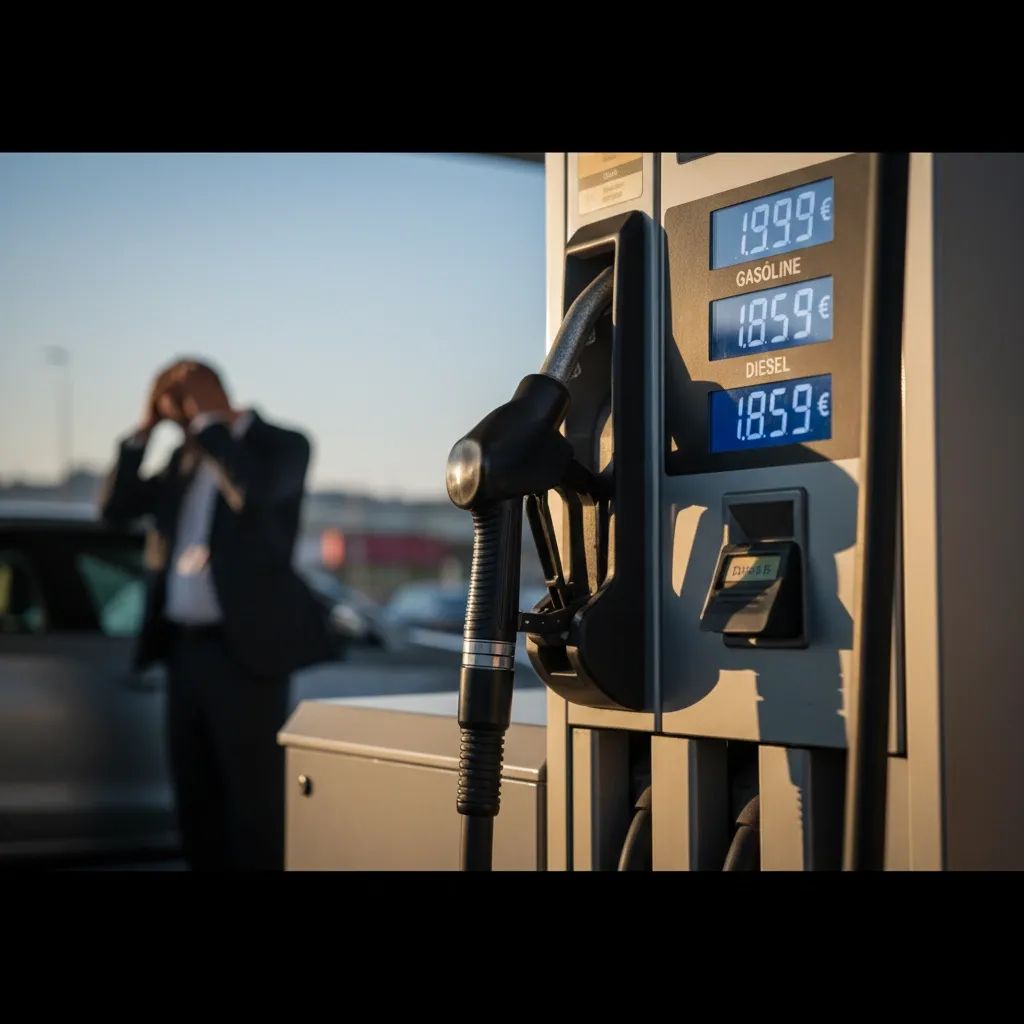
The Strait of Hormuz has been effectively closed since late February, strangling global energy supplies and hitting Portuguese household budgets hard. Since Iran's Revolutionary Guard began boarding merchant ships, laying sea mines, and restricting tanker traffic on February 28, 2026, the world's most critical energy chokepoint has funneled only a trickle of oil and liquefied natural gas (LNG) through its 21-nautical-mile-wide channel. Normally, this strait handles roughly one-fifth of the world's seaborne oil and a quarter of global LNG shipments. The blockade has forced shipping to detour around the Cape of Good Hope—adding 10-14 extra days and thousands of euros to every cargo's journey—while insurance premiums for war-risk coverage have spiked to 23 times normal rates.
This structural disruption to global energy flows came to a head over the weekend of May 30-31, 2026, when U.S. and Iranian forces exchanged military strikes. American forces launched "self-defense" strikes against Iranian radar and drone-control installations after an MQ-1 surveillance drone was shot down. Iran's Revolutionary Guard retaliated by firing missiles at a U.S. base, prompting Kuwait to report intercepting Iranian projectiles over its airspace. Those exchanges torpedoed any lingering market hope that a draft cease-fire memorandum—complete with a 60-day extension and the reopening of Hormuz—would win final approval from President Donald Trump.
For Portugal residents, the consequences are immediate and concrete. Electricity prices in Portugal are forecast to rise more than 32% in July-September 2026—just weeks away—driven partly by instability in global oil and gas markets and the elevated costs of rerouting LNG cargoes. For a typical Portuguese household currently paying €80 per month for electricity, that translates to a jump of approximately €26, bringing the monthly bill to around €106. Fuel prices are already spiking at the pump, with diesel and petrol costs rising daily as global crude climbed back above $94 per barrel.
Why This Matters for Your Budget
• Household energy costs under severe strain: 57% of Portuguese consumers surveyed in early 2026 expect difficulty paying energy bills this year, with 87% already spending more on energy than at any time in their lives.
• Imported fuels still dominate: Although Portugal generated 80% of its electricity from renewable sources in the first quarter of 2026, imported fossil fuels account for 55% of the country's total final energy consumption, largely because of road transport demand. Natural gas, much of it imported as LNG from Qatar via the now-restricted Strait of Hormuz, fuels backup generation when hydro and wind output sags.
• Businesses squeezed harder: Energy-intensive manufacturers and logistics firms face twin pressures of higher diesel prices and elevated electricity costs that are squeezing margins and raising borrowing costs with banks.
Oil Price Whiplash: A Week of Volatile Trading
Over a single week ending May 30, Brent crude futures for July delivery swung wildly. The benchmark started at $103.54 per barrel on May 22, plunged to $92.05 by May 30, and then reversed course. By Monday, June 1, both Brent and West Texas Intermediate (WTI) had climbed back up—Brent to around $94-95 and WTI above $90—as traders priced in renewed Middle East supply risk.
The week's trading pattern tells the story of a market caught between hope and dread. On Monday, May 26, Brent dropped 7.15% to $96 after Trump said negotiations were "moving forward." Tuesday's session saw a 3.58% rebound to near $100 when cross-border attacks resumed. Wednesday brought another 5% drop to $94.29 on optimism that a breakthrough was imminent. Thursday's close at $93.94 followed reports that a preliminary memorandum on Hormuz had been drafted but required presidential sign-off, which Iran publicly denied receiving. By Friday, with no White House decision forthcoming, Brent slid 1.77% to $92.05.
Why Your Electricity Bill Will Jump (And When)
When global crude prices spike, Portuguese refiners and fuel distributors pass those costs along within days. Electricity tariffs feel the knock-on effect because natural gas, much of it sourced from Qatar and shipped via LNG, fuels backup generation when renewable output sags. Here's what happens operationally: LNG carriers that once sailed directly through the Strait of Hormuz now must reroute around Africa's Cape of Good Hope. That extra 10-14 days of sailing time means higher fuel costs for the ships, additional port fees, and war-risk insurance premiums—all of which get embedded into the price Portugal pays for each cargo. Power-sector analysts warn that the third-quarter 2026 tariff adjustment will reflect both seasonal demand peaks and the lingering premium paid for these re-routed LNG cargoes.
For consumers, the Banco de Portugal has flagged that oil-price shocks materially increase corporate default probabilities and lead banks to tighten lending standards, raising borrowing costs for small and mid-sized enterprises at a time when confidence is already fragile.
Diplomatic Impasse Deepens
Iran's Foreign Ministry spokesman Esmaeil Baqaei announced last week that indirect negotiations with the United States have been suspended, citing continued Israeli bombardment of Hezbollah strongholds in Lebanon as a breach of earlier cease-fire commitments. Tehran insists a full cease-fire in Lebanon is an "essential precondition" for any broader agreement and has made clear its nuclear enrichment program remains off the table during this phase of talks. Instead, Iranian officials are demanding immediate sanctions relief and the unfreezing of overseas assets.
The American counter-proposal, sent back to intermediaries with new conditions, reportedly calls for the destruction of Iran's stockpile of highly enriched uranium and a binding pledge that Tehran will not develop a nuclear weapon. Trump has said publicly he would have "no problem waiting" for a deal that meets U.S. terms, while simultaneously insisting talks are proceeding at "an accelerated pace." That mixed messaging has left commodity traders guessing and oil volatility indices elevated.
What Can Portuguese Residents Do Now?
Facing mounting energy costs with limited national policy response, households have a few practical options:
• Review your electricity contract: If you're on a variable-rate tariff, consider switching to a fixed-rate plan to lock in current prices before the Q3 hike takes effect.
• Check for government assistance: Portugal's government has targeted support programs for low-income households facing energy hardship. Contact your local municipality or the National Social Security office to inquire about eligibility.
• Reduce consumption where possible: Simple steps like switching to LED lighting, improving home insulation, and adjusting water heater temperatures can trim 5-15% off electricity and heating bills.
• Explore renewable options: If you own a home, rooftop solar installations now qualify for expanded government incentives and can offset a portion of grid consumption over time.
Market Outlook and Long-Term Stability
Market analysts expect Brent to trade in a $90-$105 range through the summer, with upside risk if the U.S.-Iran impasse drags into autumn or if a major supply disruption—such as an attack on Saudi export terminals—materializes. Some commodity strategists have warned that a prolonged Hormuz closure could push crude toward $200 per barrel, though most view that scenario as unlikely given strategic-reserve releases and demand destruction at very high price levels.
Portuguese energy regulators and the Ministry of Environment have accelerated permitting for offshore wind test sites and expanded incentives for rooftop solar installations, part of a broader push to cut structural reliance on imported hydrocarbons. Officials have pointed out that every additional megawatt of domestic renewable capacity insulates the economy from Middle East risk premiums.
In the near term, however, there is little Portugal can do to shield consumers from global oil swings. Fuel taxes remain a significant revenue stream for the state budget, and any temporary reduction to offset crude-price spikes would force compensating cuts or borrowing elsewhere. The government has so far resisted calls for a broad fuel-subsidy program, arguing that targeted support for low-income households and transport operators is more fiscally sustainable.
For now, Portuguese drivers filling up at the pump and families watching their electricity meters will need to brace for continued turbulence. The diplomatic calendar offers a glimmer of hope—talks have not collapsed entirely, and both Washington and Tehran have domestic incentives to avoid all-out war—but until tankers move freely through Hormuz again and oil inventories rebuild, energy costs will remain a persistent drag on household budgets and business confidence across Portugal.