

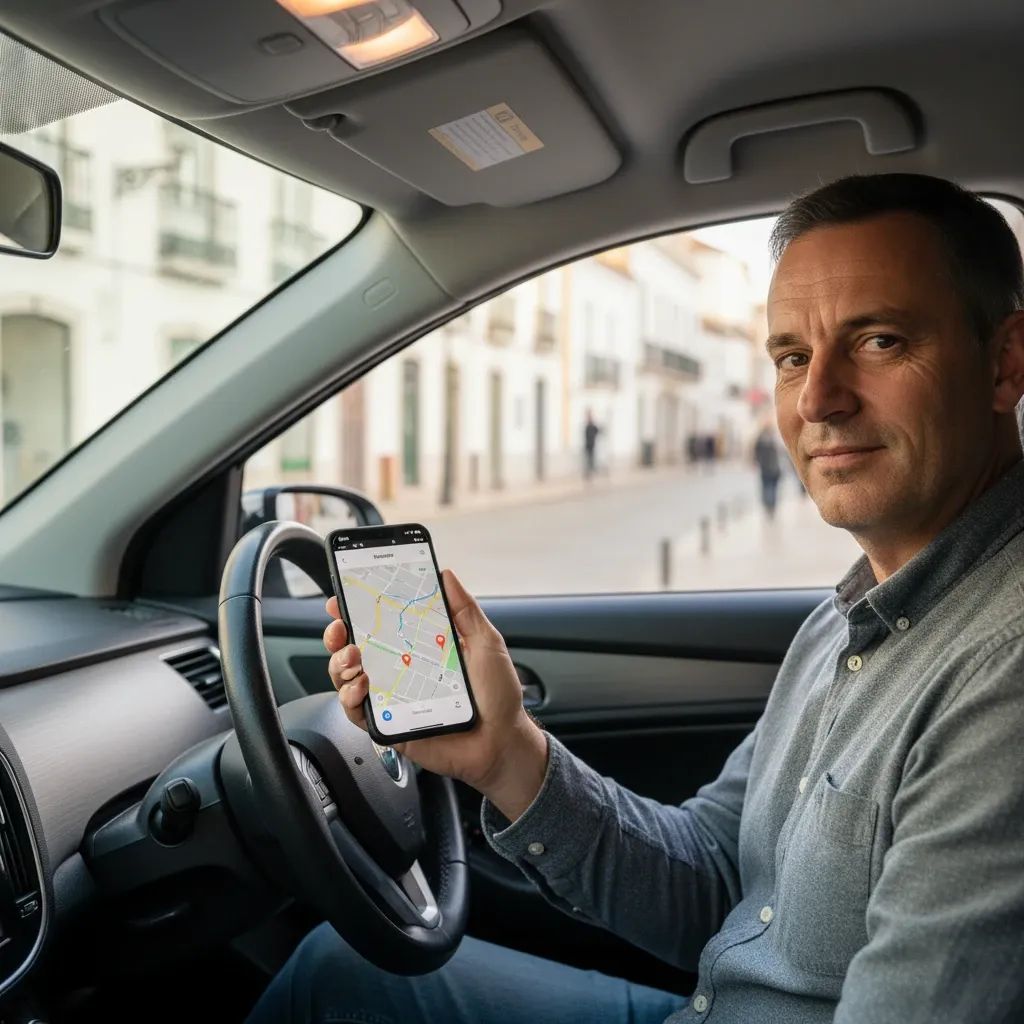
Portugal's Congress is preparing to overhaul the country's rules for ride-hailing services like Uber and Bolt, with reforms aimed at closing enforcement gaps, boosting passenger safety, and potentially allowing taxi companies to operate on the same platforms. The changes, which form the most significant rewrite of the 2018 TVDE law since its inception, come amid rising complaints about lax driver vetting, excessive working hours, and opaque pricing structures that have left both passengers and drivers unsatisfied.
Why This Matters:
• Safety upgrades: Mandatory panic buttons, holographic vehicle seals, and stricter driver exams are set to be required for all ride-hailing vehicles.
• Pricing volatility: Proposed changes would eliminate the current cap on surge pricing, currently limited to double the base fare.
• Taxi-TVDE convergence: Licensed taxi operators may soon be able to register the same vehicle as both a taxi and a TVDE car, a move that has sparked backlash from both industries.
The Push to Fix a "Broken" Law
Portugal's State Secretary for Mobility, Cristina Pinto Dias, told the Parliamentary Committee on Infrastructure, Mobility, and Housing that the current framework is "outdated" and plagued by "failures in oversight and sector control." The 2018 legislation mandated a review after three years, but political turbulence—including the collapse of the previous government—stalled the process until now.
In the interim, complaints ballooned. The consumer complaint portal Portal da Queixa logged 1,416 grievances against ride-hailing platforms in 2025, with over half related to billing disputes and unauthorized charges. Another 9% cited dangerous driving or passenger safety concerns, including reports of drivers falling asleep in vehicle trunks and operating without proper credentials.
The Automóvel Club de Portugal (ACP) has been particularly vocal, warning of "historically low safety standards" driven by inadequate driver training, language barriers, and minimal practical oversight. The group has called for mandatory practical driving exams and fluency in Portuguese as preconditions for licensure.
What's Changing: Eight Key Reforms
The legislative proposals now under debate—introduced primarily by the center-right PSD and CDS-PP parties—passed their first reading in March and are being refined in committee. Here's what's on the table:
Holographic Seals and Panic Buttons
Current ride-hailing vehicles use removable stickers for identification. The new law would mandate tamper-proof holographic seals with QR codes and unique serial numbers. Both passengers and drivers would also gain access to in-app panic buttons linked directly to emergency services.
Language Filters
Users will be able to request drivers who speak Portuguese, addressing a long-standing complaint that many drivers lack basic communication skills. The Autoridade para as Condições do Trabalho noted that language gaps compound safety risks and complicate conflict resolution.
Extended Vehicle Age Limits
The current seven-year vehicle age cap would increase to 10 years for combustion engines and 12 years for electric vehicles. Driver advocacy groups have also lobbied for ISV tax exemptions comparable to those enjoyed by taxis, though that provision remains under discussion.
Surge Pricing Deregulation
Existing rules cap dynamic fares at twice the average rate. The PSD and Iniciativa Liberal want to abolish that ceiling entirely, arguing that pricing flexibility is essential for matching supply with demand. Consumer advocates worry this could lead to exploitative spikes during peak hours.
Taxi-TVDE Dual Registration
This is the most contentious proposal. It would allow licensed taxi companies to operate as TVDE operators and permit a single vehicle to toggle between taxi and ride-hailing modes. Proponents say it would increase vehicle utilization and reduce urban congestion; critics—including the Associação Nacional Movimento TVDE—argue it undermines the distinct business models of both sectors.
Platform Commission Transparency
The 25% cap on platform commissions would remain, but the calculation base would shift to exclude VAT. Drivers say this does little to address the fundamental problem: commissions of 25% plus VAT make it nearly impossible for smaller, Portugal-based platforms to compete with Uber and Bolt, effectively exporting wealth abroad.
Mandatory Data Sharing
A digital platform launched in March 2026 now requires Uber, Bolt, and the IMT to share real-time driver and vehicle data. The system has already reduced non-compliance rates to 0.43% for drivers, 0.76% for operators, and 1.35% for vehicles—down from initial figures as high as 7.92%.
Exam Centralization
Driver qualification exams, previously outsourced to third-party entities with minimal oversight, must now be administered by the IMT or certified testing centers. Pinto Dias called this reform "the first major step" toward restoring credibility to the licensing process.
What This Means for Riders and Drivers
For passengers, the reforms promise greater safety reassurances: verifiable driver credentials, easier access to emergency services, and the option to communicate in Portuguese. The holographic seal system should make it harder for unlicensed drivers to operate under false identities, a problem that has plagued enforcement.
For drivers, the picture is more complicated. While the extended vehicle age limits reduce the financial burden of fleet renewal, the absence of a minimum fare guarantee remains a major grievance. Driver associations have proposed a €4.00 minimum fare, €0.65 per kilometer, and €0.12 per minute, but the proposals currently before Parliament leave pricing almost entirely to the platforms.
The Autoridade para as Condições do Trabalho acknowledged that "excessive working hours" among TVDE drivers pose dual risks: to the drivers' health and to road safety. Yet the law does not address this issue directly, in part because most drivers are classified as independent contractors rather than employees. A 2023 labor law granted certain employment rights to gig workers who meet specific criteria, but enforcement has been uneven.
Opposition lawmakers criticized the government for focusing on procedural fixes while ignoring the structural imbalances that leave drivers dependent on platform algorithms that assign fares unilaterally and often below operating costs.
The Taxi Question: Integration or Collision?
The proposal to allow taxis and TVDE services to share vehicles has ignited fierce debate. Pinto Dias defended the idea, arguing that "21st-century mobility demands integration between different transport modes," but she cautioned that any convergence must "not undermine the public service role of taxis."
Taxi operators have historically resisted ride-hailing platforms, viewing them as unfair competition operating under lighter regulatory burdens. In 2024, the women-only ride service Pinker was shut down for violating Article 7 of Law 45/2018, which guarantees equal access to TVDE services regardless of sex. That case underscored how rigid anti-discrimination statutes can collide with market innovation.
In practice, European precedents suggest integration is viable. Germany's Uber now partners with centralized taxi dispatchers in Stuttgart, Munich, and Berlin, allowing more than 900 taxis to receive ride requests through the app. The model has reportedly boosted taxi revenues and increased vehicle utilization. In Spain, France, and the UK, taxis are increasingly signing onto platform apps as stricter labor laws make the gig-worker model less attractive for platforms.
Whether Portugal follows that path depends on the final legislative text, which Pinto Dias emphasized "is up to the Assembly to decide."
Safety Scandals and the Political Heat
The committee hearing grew tense when Francisco Gomes, a deputy from the right-wing Chega party, cited a litany of criminal incidents tied to TVDE drivers—including attempted rapes, insurance fraud, and even a murder in England. Committee chair Miguel Santos (PSD) rebuked the intervention, calling the examples "inadequate" and urging a focus on the legislative substance.
But the examples are not entirely fabricated. In September 2025, a Lisbon TVDE driver was arrested on suspicion of attempting to rape a passenger who had fallen asleep during a ride. In March 2026, a Porto driver was convicted of brutally assaulting two passengers, leaving one with permanent injuries.
Despite these high-profile cases, a July 2025 survey by Católica Lisbon and Bolt found that over 80% of Portuguese respondents consider TVDE services an important tool for road safety, particularly in preventing drunk driving. Nearly half said they chose ride-hailing because they felt safer than driving themselves, and 9 in 10 reported feeling secure when using the services after a night out.
What Happens Next
The revised law is expected to clear the Committee on Infrastructure by late June 2026, with a final vote in the full Assembleia da República likely in the third quarter. Municipal regulations are also evolving: in March, Lisbon City Council signed an agreement with Uber and Bolt to create restricted zones where rides cannot begin or end—including historic districts and dedicated bus lanes—and to designate specific pickup and drop-off points. The deal also commits both platforms to full fleet electrification by 2030.
The outcome will hinge on whether lawmakers prioritize consumer choice and platform flexibility or worker protections and fare transparency. For now, the only certainty is that the rules governing Portugal's ride-hailing sector—long considered a regulatory patchwork—are about to undergo their most comprehensive rewrite in nearly a decade.


