

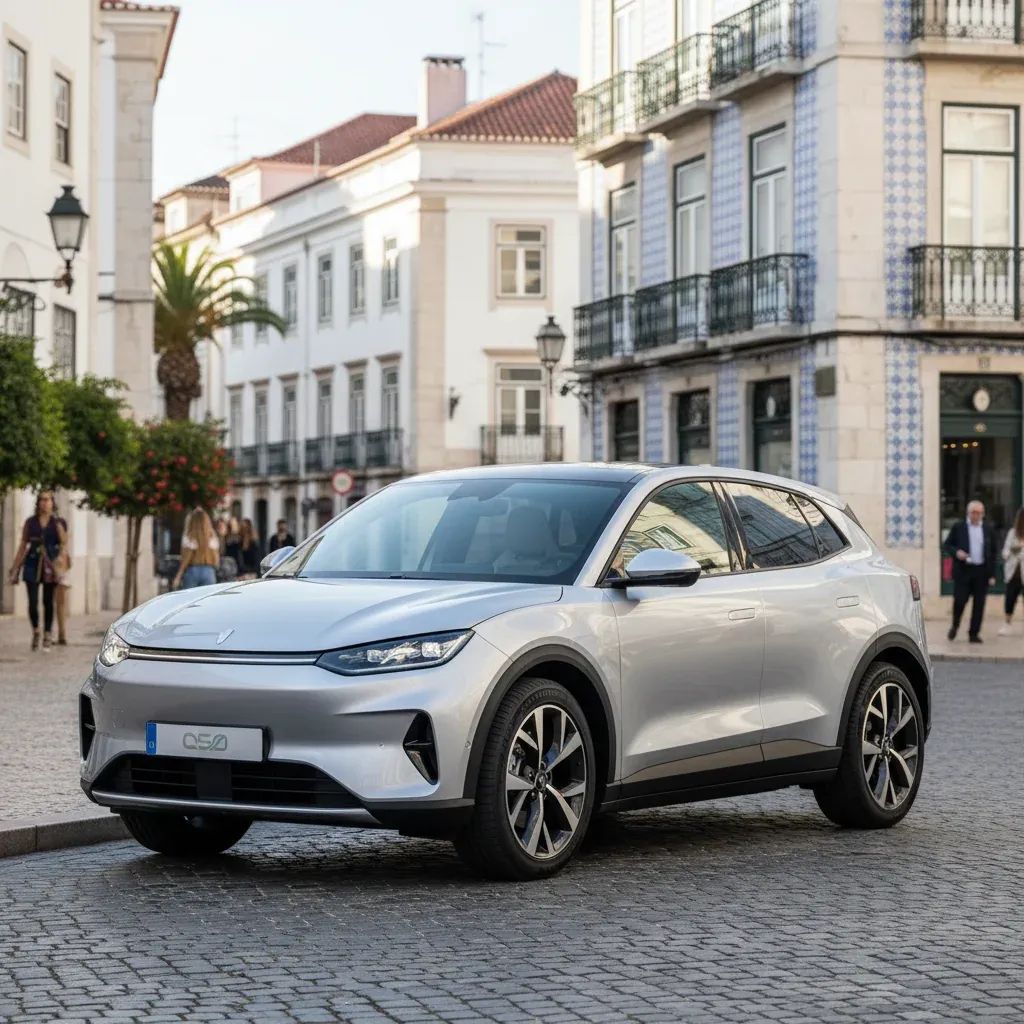
Tesla has begun discussions with suppliers about a new compact electric SUV that could arrive before the decade's end, signaling a potential return to the company's shelved mass-market ambitions—a shift that may carry significant implications for European buyers and the broader EV landscape.
Why This Matters
• Aggressive pricing: Target price around €29,000 in China, positioning it well below the Model 3's €37,000 threshold and competitive with budget-focused rivals like the Chevrolet Equinox EV and Nissan Leaf.
• Production strategy: Initial manufacturing slated for Shanghai, with plans for eventual European and U.S. factories—critical for navigating EU import duties and localizing supply chains.
• Dual-use design: The vehicle may support both human driving and autonomous operation, hedging against regulatory uncertainty across markets.
• Timeline uncertainty: Despite supplier outreach in recent weeks, production is unlikely before late 2027, tempering expectations for near-term availability.
A Strategic Pivot Under Pressure
Tesla's decision to resurrect a compact, affordable SUV program marks a significant departure from the direction the company charted in 2024. At that time, Tesla canceled the so-called "Model 2" project—an entry-level sedan priced around $25,000—to concentrate resources on Robotaxi and autonomous driving technology. That shift reflected confidence that self-driving fleets would redefine urban mobility faster than consumer-owned vehicles.
Market conditions have prompted a strategic reconsideration. Chinese rivals, led by BYD, surpassed Tesla in global EV sales volume during 2025, leveraging lower price points and rapid model iteration. Meanwhile, regulatory approval for fully autonomous vehicles has proceeded more slowly than anticipated, with most jurisdictions still requiring driver supervision for Level 2 systems like Tesla's Full Self-Driving (Supervised).
Four people familiar with the matter told Reuters that supplier discussions began in earnest over recent weeks, focusing on manufacturing details for a vehicle code-named internally as the E41 project. Unlike the Model Y refresh or a badge-engineered variant, this would be an entirely new platform—approximately 4.28 meters long, roughly half a meter shorter than the Model Y's 4.75-meter footprint.
Engineering for Affordability
To hit aggressive cost targets, Tesla plans several structural differences that differentiate this SUV from its premium siblings:
Weight and Battery Optimization
The vehicle will ride on a lighter chassis, shedding weight to an estimated 1.5 metric tons—meaningfully below the Model Y's curb weight. A smaller battery pack will curtail range compared to the Model Y's 306 to 327 miles, though exact figures remain undisclosed.
Motor and Manufacturing Strategy
Most versions will feature a single electric motor, trading acceleration for economy, though a dual-motor variant may follow for markets willing to pay a premium. Tesla has committed to refining assembly processes to reduce manufacturing costs by approximately 20%, drawing on lessons learned from its high-volume Shanghai Gigafactory.
Pricing and Competitive Positioning
In China, where EV competition is fiercest, the target price hovers around $34,000 (roughly €29,000 at current exchange rates). That undercuts the Model 3's starting price in the same market and places the new SUV directly in competition with domestic rivals like the BYD Atto 3 and Nio ES6, both of which have captured significant market share with sub-€30,000 offerings.
What This Means for European Buyers
For residents across the European Union, the compact SUV's arrival could reshape EV ownership economics. Portugal faces specific market conditions that make affordability critical:
The Portuguese EV Market Context
Portugal has seen EV adoption lag behind northern neighbors partly due to purchase costs relative to consumer income. The Portuguese government currently offers subsidies up to €5,000 for electric vehicle purchases, with additional benefits including exemption from vehicle registration tax and reduced vehicle ownership tax. However, these incentives apply primarily to vehicles below certain price thresholds—a €29,000 Tesla would likely qualify, making it significantly more accessible than premium models.
For context, Portugal's average new car purchase price hovers around €35,000, meaning a €29,000 electric SUV would position itself competitively against mainstream non-electric alternatives. Combined with government incentives, effective purchase prices could drop to €24,000 or lower, dramatically expanding the addressable market among middle-income Portuguese households.
Charging Infrastructure and Practical Implications
Local production in Europe remains a significant variable. While Tesla's Gigafactory Berlin has capacity to absorb new models, initial output from Shanghai would subject the SUV to EU import tariffs—currently running as high as 10% on Chinese-made EVs—potentially eroding the price advantage. Expanding European production would mitigate that friction but demands capital outlays at a time when Tesla is simultaneously ramping Cybercab robotaxi manufacturing and scaling its Optimus humanoid robot lines.
Portugal's charging infrastructure has expanded substantially, with over 3,000 public charging points now operational nationwide as of 2026. The compact SUV's smaller battery would reduce charging times at Supercharger stations—a tangible benefit for urban dwellers without home charging. However, shorter range could prove limiting for cross-border travel, a common use case for Portuguese motorists visiting Spain or traveling north through Europe. Most owners would likely require realistic expectations around 250-280 miles per charge, suitable for urban and regional use rather than extended highway journeys.
Autonomous Ambitions Meet Reality
One of the project's most intriguing dimensions is its dual-use architecture. According to sources briefed on the design, the SUV may accommodate both manual driving and autonomous operation, allowing Tesla to pivot depending on regulatory climate and consumer appetite.
This hedging strategy reflects market realities. The Cybercab prototype—a purpose-built robotaxi with no steering wheel or pedals—remains in regulatory limbo across most of Europe, where transport authorities demand driver supervision even for advanced assistance systems. Portugal's Institute of Mobility and Transport (IMT), like counterparts in Spain and France, has not approved fully driverless operation on public roads.
Current Regulatory Framework in Portugal
By designing the compact SUV for human control, Tesla ensures a revenue stream while continuing to refine its Full Self-Driving (Supervised) software, now on version 14.3. The system, classified as SAE Level 2 automation, requires hands on the wheel and eyes on the road—a standard applicable across Europe, including Portugal. Recent updates improved hazard prediction and traffic light handling, but real-world testing in complex European city centers—think Porto's narrow Ribeira district or Lisbon's hilly tramway corridors—remains limited.
Competitive Landscape Intensifies
The compact SUV enters a crowded field. Chevrolet plans to relaunch its Bolt LT in 2027 starting around €25,000, while Subaru's newly unveiled Uncharted crossover promises over 300 miles of range at $34,995 in the U.S. Hyundai slashed the Ioniq 5 SE base price to $36,600 for 2026, and Toyota's bZ series now starts near €29,000 after incentives.
Chinese brands pose significant competitive pressure. BYD and Nio have announced plans to expand dealership networks across Southern Europe, leveraging lower production costs and competitive financing. Portugal recorded a 47% year-on-year increase in Chinese EV registrations through March 2026, with BYD alone capturing nearly 8% of the national market.
Tesla's pricing has already shifted. In early 2026, the company introduced a cheaper Model Y variant in the U.S. at $41,990, signaling a shift toward volume over margin. Used Tesla values have also declined as new-car discounts proliferate, affecting resale value considerations for early adopters.
Timeline and Uncertainty
Despite supplier activity, production timelines remain uncertain. While initial reports suggested a 2026 start, current sources describe late 2027 or early 2028 as more realistic. The Shanghai Gigafactory, already operating near capacity with Model 3 and Model Y lines, would require retooling or expansion. European and U.S. sites lag further behind, with no formal commitment to allocate production slots.
Tesla has not formally confirmed the project. The company's 2026 production target of 2.6 million units annually across all factories is itself ambitious, leaving limited flexibility for additional model launches.
Looking Ahead
For Portuguese and European buyers, the compact SUV represents a potentially transformative option—if production timelines hold and pricing remains competitive. Current market conditions favor affordability: government incentives, charging infrastructure expansion, and intensifying competition all point toward lower barriers to EV ownership. Whether this specific vehicle materializes on schedule, however, depends on execution across manufacturing, regulatory approval, and market demand. The next months will determine whether Tesla's latest pivot addresses genuine market needs or becomes another example of diverging priorities within the company.


