

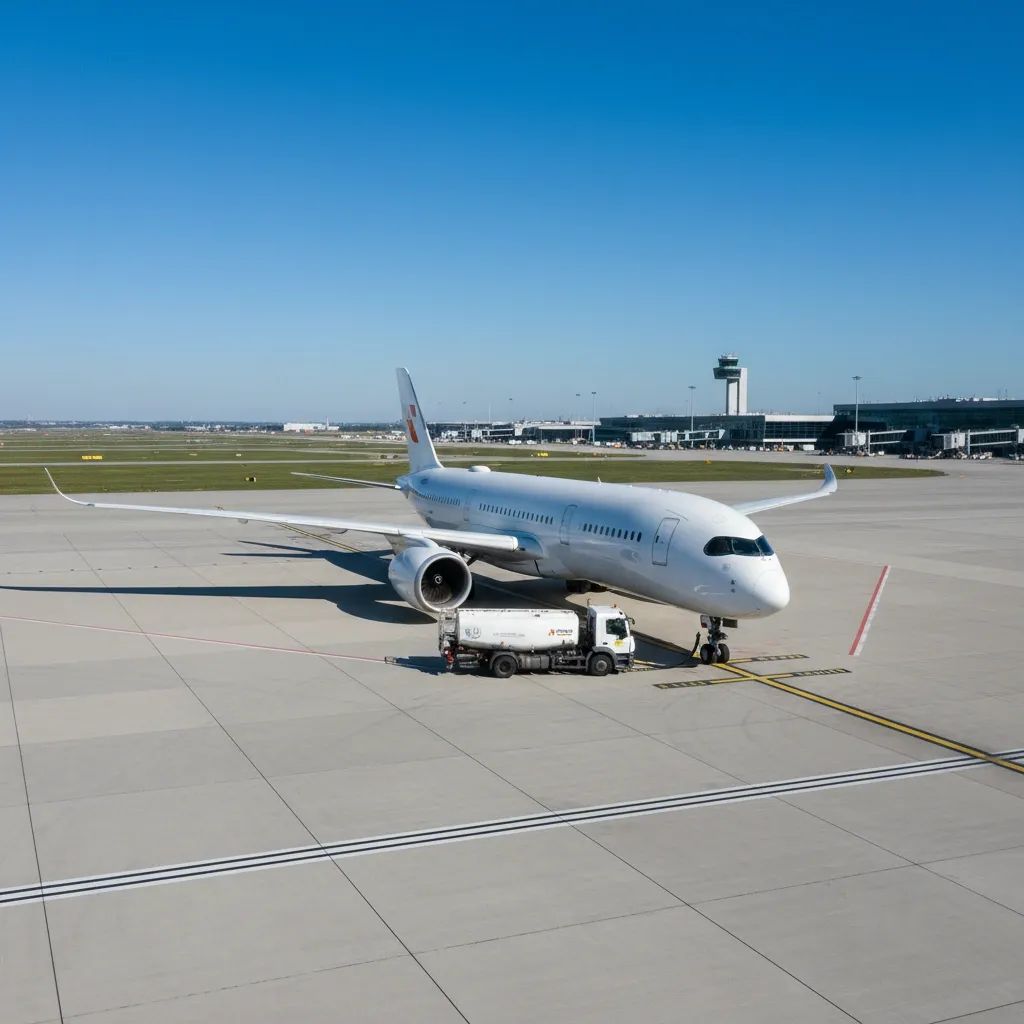
TAP Air Portugal has locked in just 47% of its jet fuel needs for 2026, leaving the carrier significantly more exposed to volatile energy markets than most major European rivals—a gap that could translate directly into higher ticket prices for passengers flying in and out of Portugal.
Why This Matters:
• Price vulnerability: TAP's hedging ratio trails major European competitors, meaning the airline faces greater exposure to market swings in volatile energy markets.
• Cost pressure ahead: Jet fuel prices have surged significantly, with energy market volatility continuing to impact operating costs across the aviation sector.
• Ticket price hikes coming: The airline has confirmed it will pass fuel costs onto consumers through fare adjustments in the coming quarters.
• Middle East risk: Geopolitical tension around the Strait of Hormuz, which supplies 50% of Europe's jet fuel, continues to threaten supply routes and prop up prices.
The Hedging Gap
TAP's 47% coverage represents a modest uptick from the 40% recorded in April, according to financial analyst Nuno Esteves, but the carrier remains well below the industry benchmark. In a sector where fuel typically accounts for 25% to 35% of operating costs—and can exceed 50% for low-cost carriers—this shortfall matters.
By comparison, the Air France-KLM Group extended its hedging horizon to eight quarters in February 2026, bringing total coverage to approximately 85% over more than a year's consumption. Ryanair has protected a significant portion of its fiscal 2027 fuel needs as part of a conservative strategy designed to insulate profits from oil market volatility. Lufthansa Group stands at 78% coverage for the remainder of 2026, employing active hedging across kerosene and 16 major currencies.
The International Airlines Group (IAG), parent company of Iberia and British Airways, hedges 62% of its fuel exposure, while easyJet maintains annual coverage between 65% and 70%.
TAP's Strategy: Flexibility Over Certainty
The Portugal flag carrier defends its approach as "consistent and phased," prioritizing a balance between short-term cost predictability and the ability to capitalize on potential fuel price declines. A significant portion of TAP's hedging portfolio relies on options contracts rather than fixed-price forwards, allowing the airline to avoid locking in prices entirely while retaining downside protection.
TAP also emphasizes that it hedges direct exposure to jet fuel, rather than using indirect instruments tied to crude oil or other refined products—a method the airline considers more precise and effective than the industry norm. This approach, the company argues, delivers better risk mitigation tailored to aviation-specific fuel dynamics.
Yet the trade-off is clear: TAP remains more vulnerable to spot market fluctuations. With jet fuel prices elevated and Middle Eastern tensions showing no sign of easing, the airline's lower coverage ratio means greater uncertainty in cost forecasting and, ultimately, fare pricing.
What This Means for Passengers and the Market
TAP has openly acknowledged that fuel cost pressure will weigh on results through the second and third quarters of 2026, despite existing hedges. To offset this, the carrier plans a multi-pronged response:
• Fare adjustments: Ticket prices will rise to reflect higher fuel costs as the airline adjusts pricing to cover increased operational expenses.
• Capacity discipline: TAP will tightly manage seat availability to optimize load factors and revenue per passenger.
• Cost controls: Operational efficiencies and expense management will be deployed across the network.
The airline notes that booking dynamics remain resilient, supporting higher load factors and improved unit revenue, particularly on its core routes to South America and North America—markets that accounted for much of TAP's improved first-quarter performance.
However, the broader impact on Portugal's tourism sector could be significant. Travel is highly price-sensitive, and families planning summer holidays may face increased ticket costs as airlines across the board adjust fares to reflect higher fuel expenses. Portuguese travel agencies are already advising clients to book early to lock in current fares before further adjustments take effect.
Fleet Modernization as a Hedge Against Volatility
One mitigating factor in TAP's fuel exposure is its fleet composition. The airline reports that 71% of its Airbus fleet consists of NEO (New Engine Option) models, which deliver significant fuel efficiency gains over older-generation aircraft. As the carrier continues its planned fleet renewal, these savings will help cushion the blow from higher fuel prices, even if they cannot fully offset the impact of incomplete hedging.
The airline also highlighted that it has no direct exposure to conflict zones in the Middle East and maintains active contingency measures, including flexible fleet deployment and route planning, to navigate supply disruptions.
First-Quarter Performance: A Silver Lining
Against the backdrop of fuel market turbulence, TAP posted narrowed losses of €39.9 M in the first quarter of 2026, down sharply from the €108.2 M loss recorded in the same period of 2025. Operating revenue climbed 11% to €914.4 M, driven by higher passenger yields and a 3.9% increase in capacity.
The carrier transported 3.7 M passengers between January and March—up 6.4% year-over-year—across 27,300 flights. Traffic growth outpaced capacity expansion, pushing the load factor to 83.5%, a positive sign of demand strength even as prices rise.
Third-party maintenance revenue also surged, climbing 31.8% to €58.4 M, providing a valuable non-ticket revenue stream as the airline diversifies its income base.
Operational Headwinds Beyond Fuel
TAP's CEO, Luís Rodrigues, flagged additional challenges in the quarterly results release, including operational complications tied to the rollout of the Entry/Exit System at European airports. The new border control framework, designed to digitize entry and exit stamps for non-EU travelers, has caused delays and processing bottlenecks at major hubs, adding friction to the passenger experience and operational timelines.
The Outlook: Navigating Uncertainty
With fuel prices elevated and geopolitical risks unresolved, TAP's lower hedging ratio places the airline in a more precarious position than many of its peers. While the strategy offers upside flexibility if prices fall, the near-term reality is one of cost pressure, fare increases, and tighter margins.
For passengers flying to or from Portugal, the message is clear: expect higher ticket prices in the months ahead, particularly on long-haul routes where fuel costs represent a larger share of the fare. For investors and observers of the Portuguese aviation market, TAP's Q2 and Q3 results will serve as a critical test of whether operational discipline and fleet efficiency can offset the airline's fuel exposure gap—or whether the hedging shortfall will prove costly.


