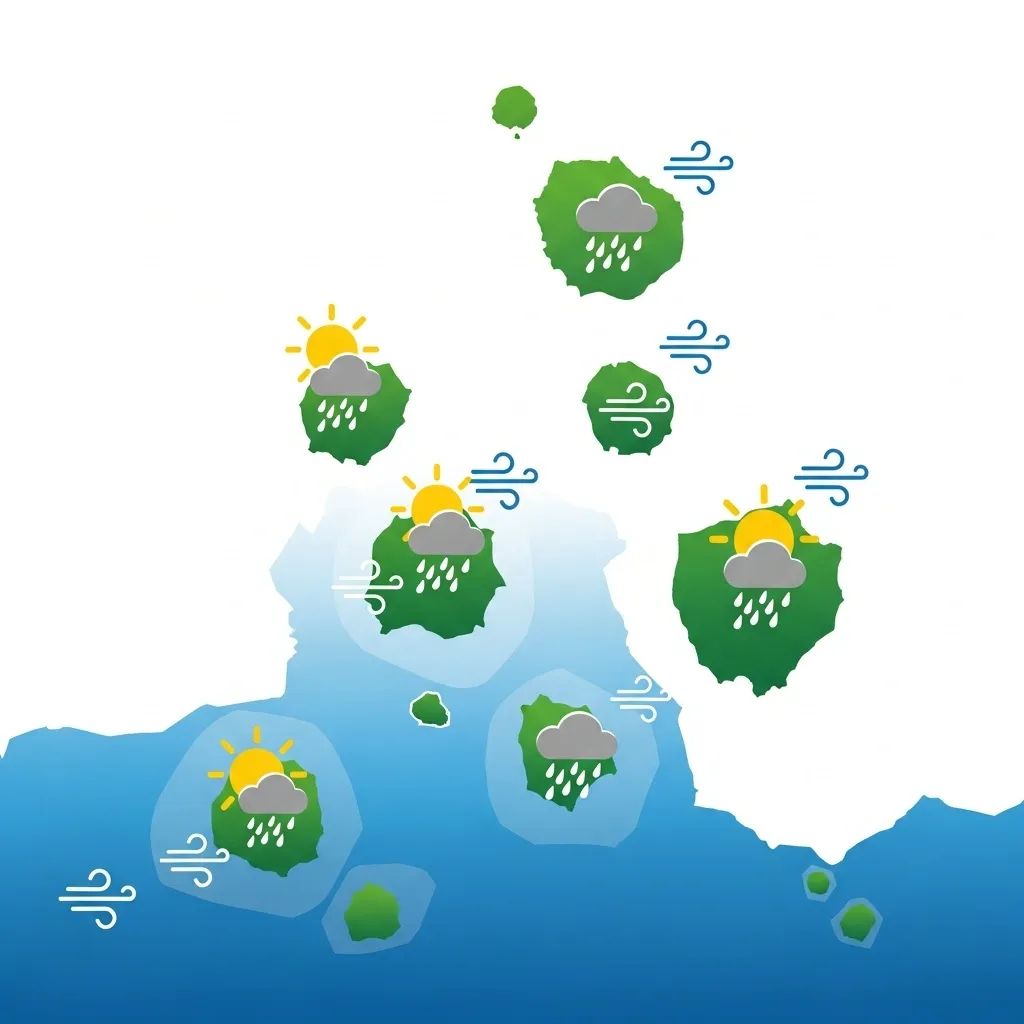
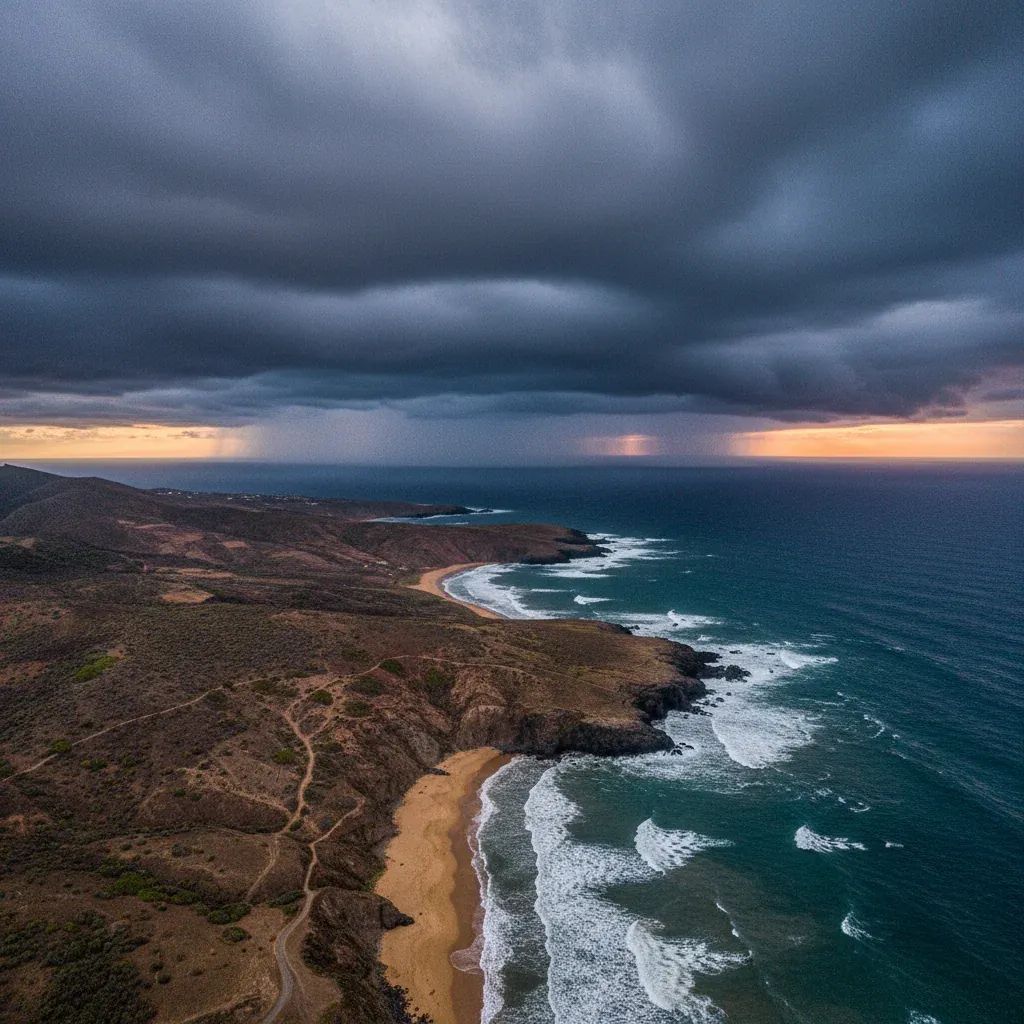
The Madeira archipelago remains under weather alerts as Storm Therese continues to batter Portugal's Atlantic island territory, with 116 emergency incidents logged since Thursday and disruptions rippling through transportation, education, and daily life for residents and visitors alike.
Why This Matters:
• Travel chaos: Dozens of flights at Madeira International Airport were cancelled; operations have since normalized but delays linger.
• Road closures: Multiple highways and coastal access points remain blocked, with 17 of 42 recommended hiking trails closed until further notice.
• School shutdown: Campo de Baixo Primary School in Porto Santo will stay shuttered through Wednesday for repairs.
• No casualties: Despite extensive property damage, emergency services report zero injuries or deaths across all 116 incidents.
Porto Santo Bears the Brunt
The smaller island of Porto Santo absorbed the heaviest punishment, recording 28 separate emergencies—nearly a quarter of the regional total—after what local meteorologists described as an "extreme weather cell" swept through Friday evening. Witnesses reported conditions consistent with a convective storm system, unleashing torrential rain, building damage, and widespread tree collapse in a concentrated timeframe.
By Sunday morning, the Portugal Regional Civil Protection Service had mobilized 301 personnel and 139 technical units to address the escalating situation. The majority of interventions occurred at the municipal level, with teams working around the clock to restore power lines, clear debris, and stabilize structures at risk of further collapse.
Infrastructure Damage Breakdown (As of Sunday 08:30)
The archipelago-wide tally as of 8:30 a.m. Sunday reveals the scope of Storm Therese's assault on Madeira's built environment:
• 22 fallen trees blocking roads and public spaces
• 26 landslides or soil movements, particularly along hillside communities
• 17 flooding incidents affecting homes and commercial properties
• 10 structural element failures from buildings
• 5 electrical grid outages
• 3 complete structural collapses
• 2 building foundation failures
The Portugal Institute of Sea and Atmosphere (IPMA) downgraded its alert level from orange—the second-highest tier indicating moderate to elevated meteorological risk—to yellow as of 9:00 a.m. Sunday, with the lower-level caution remaining in effect until 6:00 p.m. The yellow designation warns of potential hazards for outdoor activities and weather-dependent operations.
South Coast Communities Hit Hardest
On the main island of Madeira, the densely populated southern coastline absorbed the majority of storm impacts. Funchal, the regional capital and commercial hub, registered 28 separate incidents—the highest single-municipality count. This concentration matters for residents and businesses in the metro area, where any prolonged infrastructure disruption affects the largest population center and economic engine of the archipelago.
The breakdown by municipality illustrates the geographic pattern: Câmara de Lobos (15 incidents), Santa Cruz (13), Machico (11), Calheta (6), Ribeira Brava (3), and Ponta do Sol (1). Northern municipalities saw lighter impacts, with Santana and Porto Moniz each reporting 4 incidents, and São Vicente logging 3.
This distribution reflects typical weather patterns in Madeira, where the southern coast faces more direct exposure to Atlantic low-pressure systems while the northern highlands experience different precipitation and wind dynamics.
What This Means for Residents and Travelers
For anyone navigating life in Madeira this week, practical considerations dominate. The Regional Civil Protection Service has issued explicit guidance: avoid unnecessary travel, stay clear of affected zones, and postpone any plans involving mountain trails or coastal walks. All classified pedestrian routes remain closed pending safety inspections, a measure that directly impacts the tourism sector during what is typically a moderate shoulder season.
Road conditions present the most immediate challenge. Several arteries remain partially or fully closed, forcing longer commutes and complicating logistics for businesses dependent on timely deliveries. Coastal access points—critical for fishing communities and recreational users—are similarly restricted due to heavy sea conditions, with wave heights reaching 4-5 meters off the north coast.
The Madeira International Airport, while no longer experiencing the flight cancellations that plagued Thursday and Friday, continues operating under heightened scrutiny. Airline schedules show residual delays as carriers reposition aircraft and accommodate stranded passengers from earlier cancellations. Travelers booked on flights through midweek should verify departure times directly with carriers rather than relying on original itineraries.
Historical Context: How Therese Compares
Storm Therese, while disruptive, falls well short of Madeira's most catastrophic weather events. The February 2010 flash floods—locally remembered as "the aluvião"—killed 47 people, displaced 600, and inflicted €217M in property damage when torrential rain overwhelmed drainage systems and turned mountain streams into deadly torrents. The capital's low-lying neighborhoods suffered disproportionately, with entire streets swept away by water and debris.
Further back, the October 1803 deluge remains the archipelago's deadliest natural disaster, claiming an estimated 1,000 lives when the population of Funchal barely exceeded 25,000. These historical benchmarks provide perspective: Therese has caused significant inconvenience and property damage, but the absence of casualties and the municipal-level containment of incidents represent a fundamentally different scale of emergency.
Weather Outlook and Forecast
The IPMA forecast for Sunday calls for partly cloudy skies with intermittent heavy showers accompanied by thunderstorms, particularly during afternoon hours. Minimum temperatures are expected to rise slightly, offering marginal relief after several days of unseasonably wet and windy conditions. Mainland Portugal and the Azores archipelago remain under no formal weather warnings, though southern continental regions may see scattered afternoon showers with isolated thunderstorm activity.
Storm Therese itself—a named low-pressure system tracked by European meteorological services—is expected to weaken and drift eastward over the coming 48 hours, gradually reducing precipitation intensity and wind speeds across Madeira. By midweek, conditions should stabilize sufficiently to allow full reopening of transportation networks and outdoor facilities.
Economic and Tourism Implications
While no official damage assessment has been released, the accumulated costs from infrastructure repairs, business interruption, and tourism cancellations are expected to be significant, though authorities have not yet quantified the financial impact. The archipelago's economy leans heavily on visitor spending, and multi-day airport closures during any season translate directly to lost hotel bookings, restaurant revenue, and activity operator income.
The timing—late March, when spring travel begins accelerating ahead of the summer peak—compounds the operational disruption. Tour operators and accommodation providers face the dual challenge of managing existing guest disruptions while reassuring prospective visitors that normal operations have resumed. The Regional Tourism Board has yet to issue guidance on whether any compensation or support mechanisms will be available to affected businesses.
For residents, the focus shifts to recovery logistics: filing insurance claims for property damage, navigating road closures that extend commute times, and waiting for municipal crews to complete debris removal and infrastructure restoration. The Regional Government of Madeira has not announced whether emergency financial assistance will be made available to households or small businesses affected by flooding or structural damage.
Continental Portugal Spared
The sharp contrast between Madeira's multi-day emergency and the calm conditions across mainland Portugal and the Azores underscores the localized nature of this weather system. IPMA meteorologists issued no warnings for the continental territory or the western island chain, where Sunday's forecast calls for typical late-March weather: variable cloud cover with possible afternoon showers in southern districts.
This geographic containment means that residents of Lisbon, Porto, and other mainland cities face no disruptions from Therese, while ferry and air connections between the continent and Madeira gradually return to normal schedules as airport operations stabilize.