

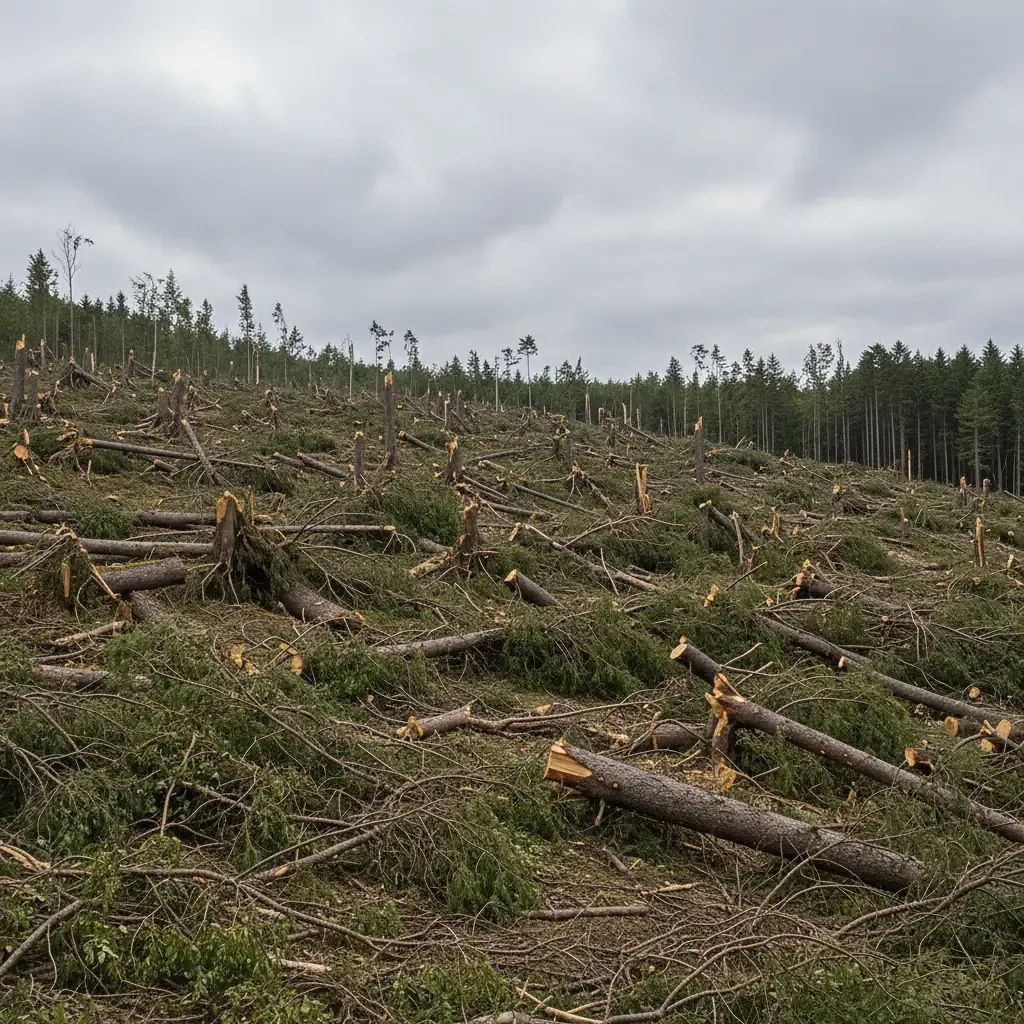
The Portugal Ministry of Environment and Climate Action has committed €8M in overtime pay to 350 forest firefighters tasked with clearing fallen timber and debris left by Storm Kristin, a catastrophic weather event that ravaged central Portugal in late January and continues to pose wildfire risks heading into the summer months.
Why This Matters
• Wildfire prevention: Tens of millions of fallen trees remain on approximately 32,000 hectares, creating extreme fire hazard conditions across Leiria, Coimbra, and Santarém districts.
• Economic recovery: The recovery effort will stretch across multiple months as Portugal addresses widespread destruction from the storm.
• Support for landowners: A separate €40M aid program is helping private landowners clean their properties, with about 15,000 applications already filed.
Storm That Reshaped Central Portugal
Storm Kristin made landfall on January 28, 2026, as an extratropical cyclone with hurricane-force winds topping 200 km/h. The impact was immediate and devastating, affecting thousands of homes and businesses across central Portugal and damaging critical infrastructure. The storm destroyed 20% of Portugal's national resin production and damaged 40% of eucalyptus forests, critical economic assets for rural communities.
Secretary of State for Forests Rui Ladeira announced the overtime payment during a parliamentary debate on July 1, framing it as an essential component of the country's broader recovery strategy. The government declared both national states of calamity and emergency to fast-track relief efforts and unlock emergency funding mechanisms.
The Forest Firefighters' Role
Portugal's sapadores florestais—specialized forest firefighters—have been working extended shifts since February to manually remove fallen timber, clear access roads, and reduce fuel loads in high-risk zones. The €8M overtime package covers work already completed in the first five months following the storm, a period when these crews operated well beyond standard duty hours to prevent summer blazes.
Unlike urban firefighters, sapadores operate year-round in rural forestland, focusing on prevention rather than suppression. Their work involves chainsaw operations, brush clearing, and controlled burns—labor-intensive tasks made more dangerous by the sheer volume of downed wood left by Kristin. The overtime rate reflects both the hazard premium and the urgency of completing cleanup before the traditional fire season peaks in July and August.
What This Means for Landowners
Private property owners in affected zones have access to a €40M support line funded through Portugal's Recovery and Resilience Plan (PRR). Eligible landowners can receive between €1,000 and €1,500 per hectare to cover the cost of clearing fallen trees, removing debris, and restoring access.
To apply for cleanup support: Contact your municipal authority or visit the official PRR portal for your municipality. Applications require proof of land ownership and documentation of Kristin-related damage. Both Portuguese citizens and foreign property owners are eligible if their land is located in declared affected zones.
As of late June, approximately 15,000 applications had been submitted, with the deadline for claims closing at 6 p.m. on June 29.
The distribution of cleanup aid reveals the geographic concentration of damage. Leiria municipality alone accounts for approximately €13M in approved support, followed by Pombal at €6.7M, Ourém at €3.66M, and Sertã at €2.45M. These four municipalities represent the epicenter of Kristin's impact, where entire hillsides were stripped of mature forest in a matter of hours.
Landowners who missed the application window face a difficult choice: pay out-of-pocket for professional clearing services—often costing several thousand euros per hectare—or risk fines and liability if their unkempt land contributes to a wildfire. Portugal's forest fire liability laws hold property owners accountable for inadequate land management, creating a legal incentive to clear debris even without government subsidy.
Comparing Kristin to Past Storms
The financial scale of Kristin's impact significantly exceeds previous weather disasters in Portugal. Storm Leslie, which struck in October 2018, caused total damages exceeding €120M and triggered approximately €5M in direct government support for 24 affected municipalities. Insurers paid out more than €60M in Leslie-related claims, and a €10M credit line for affected businesses saw minimal uptake—just €391,000 drawn by seven companies.
The current recovery effort represents a substantially larger government commitment, reflecting the expanded footprint of Kristin's damage. The €8M overtime payment to sapadores, while substantial in absolute terms, is part of a recovery effort that will stretch 18 to 24 months. The €40M landowner support program—eight times the municipal aid package for Leslie—reflects both the scale of damage and the government's recognition that private land management is critical to preventing secondary disasters.
High-Risk Zones Still Vulnerable
The 22 municipalities affected by Kristin cover a wide swathe of central Portugal, but certain areas remain especially vulnerable. In Ourém municipality, the parish of Espite—and specifically the hamlet of Cumieira—exemplifies the ongoing risk. Local reports describe hillsides still littered with fallen trees and undergrowth, creating a continuous fuel bed that could carry fire across multiple properties in minutes.
Other high-priority zones include Alcobaça, Marinha Grande, Proença-a-Nova, and Pombal, all of which experienced widespread structural damage alongside forest destruction. The concentration of eucalyptus plantations in these areas adds complexity: eucalyptus is both economically valuable and notoriously flammable, with volatile oils that can cause explosive fire behavior.
The Wildfire Calculus
Portugal's civil protection authorities view the cleanup effort as a race against time. The country typically experiences its most severe fire weather between mid-July and early September, when high temperatures, low humidity, and strong winds create ideal conditions for large, fast-moving blazes. In 2017, the Pedrógão Grande fire killed 66 people and burned more than 45,000 hectares, underscoring the deadly potential of unchecked wildfires in rural terrain.
The volume of fuel on the ground following Kristin—tens of millions of trees—represents an unprecedented challenge. Even with 350 sapadores working overtime and thousands of landowners clearing their own parcels, experts acknowledge that not all hazardous material will be removed before peak fire season. The government has indicated that aerial surveillance and rapid-response firefighting resources will be elevated throughout the summer to compensate for residual risk.
Economic Ripple Effects
Beyond the immediate cleanup costs, Kristin's impact on Portugal's forest-based industries will reverberate for years. The destruction of 20% of national resin production affects turpentine and rosin markets, while damage to 40% of eucalyptus forests threatens pulp and paper supply chains. Many of the affected eucalyptus stands were planted in the 1980s and 1990s and were approaching peak productivity, meaning the economic loss compounds over the multi-decade growth cycle required to replace mature trees.
Rural municipalities dependent on forestry revenues face budget shortfalls that will constrain public services and infrastructure investment. Some landowners, particularly elderly residents with limited capital, may choose not to replant, effectively retiring productive forestland and accelerating rural depopulation trends that already challenge Portugal's interior regions.


