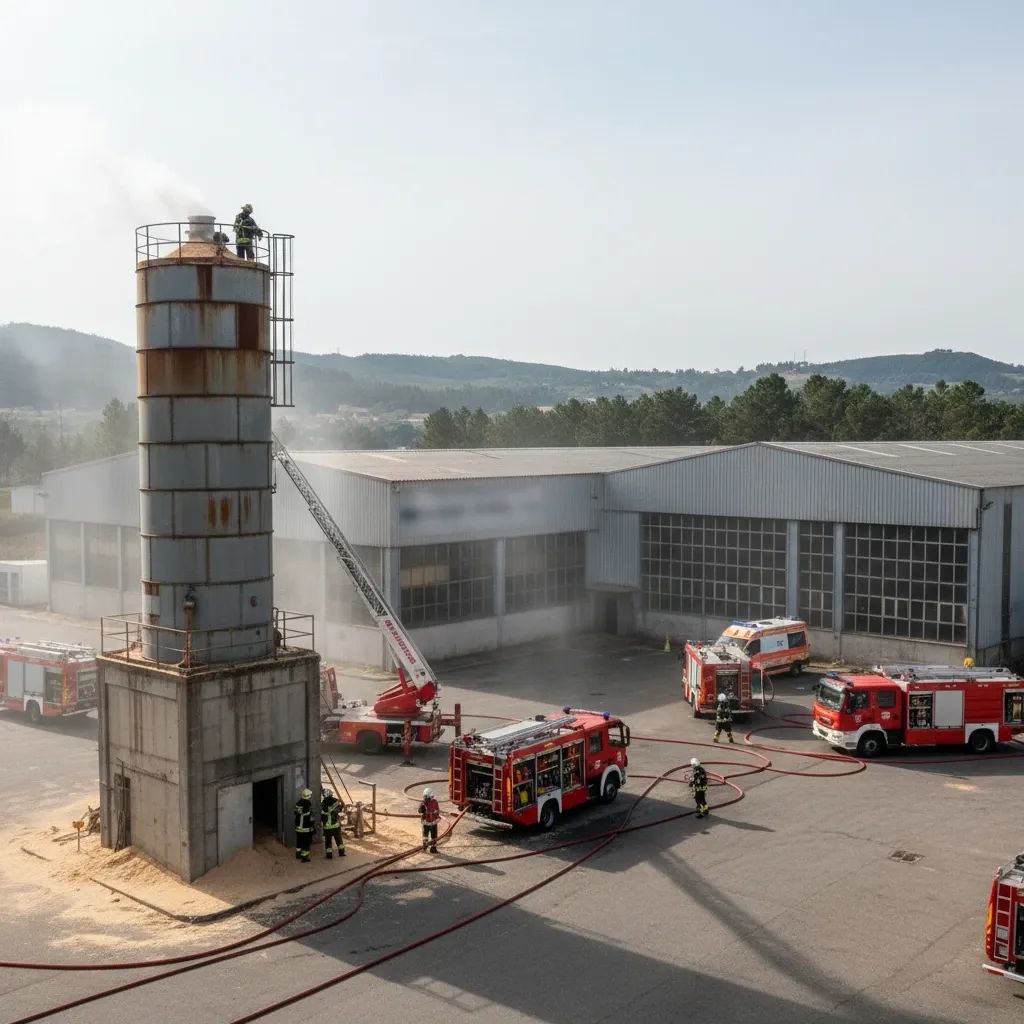
A sawdust silo at a Portugal furniture manufacturer caught fire yesterday evening in Gandra, Paredes, triggering a rapid response from local fire brigades and renewing concerns about industrial fire safety in the country's woodworking sector. The blaze, which engulfed the storage unit at Viriato company premises, was brought under control within an hour, with no injuries reported.
Why This Matters
• Second silo fire in Paredes in three weeks: A similar incident occurred at a factory in Vandoma on April 15, signaling a pattern worth monitoring in the region.
• Sawdust fires are difficult to extinguish: Slow combustion and potential for reignition require days of monitoring, even after visible flames are suppressed.
• Questions about industrial safety practices: Two incidents within weeks raise questions about whether shared supply chain vulnerabilities, aging infrastructure, or safety protocol enforcement may be contributing factors.
The Gandra Incident
Firefighters from Baltar station were alerted at 6:40 PM and deployed 21 personnel with 7 vehicles to the Viriato factory site in Gandra, a parish within Paredes municipality in northern Portugal. According to the Autoridade Nacional de Emergência e Proteção Civil (ANEPC), the fire entered the mopping-up phase by 7:32 PM the same evening, preventing the blaze from spreading to the main production facility.
The silo—a cylindrical structure designed to store sawdust and wood waste from furniture manufacturing—was completely consumed. No workers were injured, and the factory was evacuated as a precautionary measure. The cause of the ignition remains undisclosed by authorities, though such incidents typically stem from spontaneous combustion in stored organic material, mechanical sparks from equipment, or electrical faults.
A Pattern Emerges
This marks the second sawdust silo fire in Paredes within three weeks. On April 15, a similar blaze erupted at a furniture plant in Vandoma, also in Paredes, prompting the evacuation of the entire facility. That incident mobilized 28 firefighters and 11 vehicles from multiple brigades.
The timing and location raise questions about whether shared supply chains, aging infrastructure, or lax enforcement of safety protocols might be contributing factors. Paredes, situated roughly 30 km northeast of Porto, hosts a concentration of small and medium-sized furniture manufacturers, many of which rely on sawdust silos as part of their waste management and biomass energy systems.
What Ignites Sawdust Silos
Sawdust and wood chip storage poses unique fire hazards. Spontaneous combustion is a primary risk: organic material confined in silos can self-heat through internal chemical reactions, particularly when moisture levels are too low or too high. Mechanical failures—friction from high-speed machinery, sparks from presses and sanders, or overheated bearings—also ignite blazes easily. Electrical faults from outdated wiring or control panels provide another common ignition source.
Fine sawdust suspended in air can form a combustible cloud that, given an ignition source and adequate oxygen, poses significant risk. These fires spread quickly and are difficult to extinguish completely.
What This Means If You Live Near a Furniture Factory
If you reside near industrial zones in Paredes or similar municipalities:
• Air quality concerns: Smoke from burning sawdust carries particulates and volatile organic compounds that can affect air quality, particularly concerning for children and those with respiratory conditions. Keep windows closed during active incidents and monitor local air quality updates.
• Notification systems: The ANEPC maintains a framework for emergency alerts. Residents in proximity to industrial facilities should familiarize themselves with local warning systems and ensure their contact information is registered with municipal authorities if industrial incidents occur.
• Checking facility compliance: You have the right to inquire whether nearby facilities comply with Portuguese fire safety regulations (Portaria n.º 1532/2008). Municipal authorities maintain records of industrial inspections and compliance status. Request this information from your local câmara municipal.
• Your rights: If you suspect unsafe industrial practices or inadequate fire prevention measures at a nearby facility, you can file a complaint with the ANEPC or your municipal environmental and safety office. Document concerns in writing for official records.
Regulatory Context and Oversight
Portugal's national building codes require passive fire protection measures for industrial facilities, including fire-resistant compartmentalization and structural stability requirements. The ANEPC conducts inspections and has authority to order facility closures for non-compliance.
Employers must maintain emergency plans, conduct regular evacuation drills, and keep all fire safety systems operational. However, enforcement gaps—particularly among smaller operators with limited resources—remain a concern. Industry associations have acknowledged the sector faces recurring fire incidents, prompting discussions about whether voluntary compliance measures are sufficient or whether stricter enforcement and mandatory third-party audits are necessary.
Looking Forward
The two Paredes incidents add to Portugal's broader industrial fire challenges. While most attention focuses on seasonal forest fires, industrial blazes persist as a recurring issue affecting workers' livelihoods, air quality, and emergency service resources.
For residents in manufacturing zones, these incidents serve as a reminder to stay informed about local industrial safety practices and to exercise your rights to inquire about facility compliance and file concerns with regulatory authorities. For the furniture industry itself, the pattern raises questions about whether current safety practices and oversight are adequate to prevent future incidents.