Portugal's civic space classification remains "open" by European standards, but a comprehensive assessment released this month reveals a measurable contraction of civil liberties throughout 2025—driven by rising xenophobic discourse, real estate pressures on community organizations, and what the report terms "institutional impunity" for hate speech in parliament. For residents and migrant communities, this contraction has direct consequences: shrinking opportunities to organize, participate in civic life, and access community services.
Why This Matters for Portugal's Residents
• Portugal remains among only 12 "open" civic spaces in a 34-country European survey, yet witnessed substantial deterioration in practice during 2025—affecting your ability to organize, protest, and participate in public life.
• Chega now holds significant political power with rhetoric that the report says includes xenophobic, racist, and homophobic messaging, creating a more polarized environment for political participation and debate.
• Civil society groups face a structural funding crisis: 25% of Portugal's social solidarity institutions (IPSS) carry annual budget deficits while demand for services surges—meaning fewer resources for community programs and social support.
• Property speculation is forcing cultural and community associations to close, limiting the spaces where residents can organize, meet, and build community connections.
What "Civic Space Contraction" Means for Your Daily Life
When researchers refer to civic space contraction, they are measuring real changes in your ability to exercise fundamental freedoms. For Portugal's residents, this means: more complex administrative processes for migrants seeking to participate in civic organizations; community centers and cultural associations shuttering due to rising rents; and an environment where advocacy for marginalized groups faces institutional barriers rather than protection.
For immigrant communities specifically, the report identifies growing xenophobic discourse as creating a hostile climate that discourages civic participation and makes navigating bureaucratic systems—already difficult through institutions like AIMA, the immigration agency—even more challenging.
The Contradiction at the Heart of Civic Freedom
The European Civic Forum and Civic Space Observatory, in partnership with Academia Cidadã for the Portugal chapter, assigned the country an "open" civic space rating in their 2026 report—placing it in the top tier alongside 11 other nations. France, Germany, and Italy all dropped to "restricted" status this year, and Serbia fell to "repressed."
Yet the assessment for Portugal documents a significant finding: formal legal protections are increasingly disconnected from lived reality. Throughout 2025, the practical civic space—the ability of people and groups to associate, speak, and organize—contracted according to the document.
The report identifies four converging forces: administrative barriers to migrant participation, real estate speculation, police intimidation of vulnerable communities, and a structural funding crisis for nonprofits. Together, these dynamics create measurable constraints on civic participation.
Xenophobic Rhetoric Enters Institutional Spaces
The normalization of xenophobic narratives, particularly targeting immigrants, is the report's central concern. The Observatory documents that such rhetoric has coincided with a measurable rise in hate crimes and creates barriers to human rights advocacy.
The Chega party, which became Portugal's second-largest political force in the May 2025 legislative elections with 60 seats, receives sustained scrutiny in the document. Its electoral ascent, according to the authors, was accompanied by messaging about immigration and the dissemination of xenophobic, racist, and homophobic discourse online.
What researchers emphasize is not just the content, but its institutional reach. Parliamentary immunity and the invocation of "freedom of expression" by the Assembly President provide what the report describes as an institutional platform for far-right messaging. Chega now commands media attention, shapes parliamentary negotiations, and translates extremist speech into political leverage—transforming rhetoric previously at the margins into an institutionalized political voice with resources and legal protection.
Since 2019, Chega and its leader André Ventura have received significant media coverage, a pattern that persisted through 2025 and 2026. The party's communication strategy emphasizes confrontation and polarization, and even critical coverage amplifies its visibility. Ventura received substantial media attention during the first round of the 2026 presidential elections.
Civic Participation Becomes More Difficult
Freedom of association—the right to organize collectively—faces real constraints from multiple directions. Restrictive migration and nationality reforms, administrative dysfunction (the report specifically mentions AIMA, the immigration agency), and the economic pressures of gentrification are forcing cultural and community organizations to close.
These barriers disproportionately affect migrants, racialized communities, grassroots organizations, and groups serving vulnerable populations.
One documented incident from 2025: a police operation in Loures against an LGBTQI+ community space involved police action without judicial warrants, physical incidents, homophobic language, and the closure of the community premises.
Meanwhile, property prices place many associations under constant threat of closure. The report cites the STOP shopping center in Porto, managed by the municipality, as a model for local government protecting community-managed space. However, such interventions remain exceptions. Portugal's government has not implemented consistent measures to prevent community-run spaces from being forced out through rising rents and property speculation.
The Funding Crisis for Community Services
Portugal's civil society organizations face a structural financial crisis with direct consequences for residents. IPSS—private institutions of social solidarity—are under significant strain: 25% operate with annual budget deficits at a time when more people need their services.
The available funding structure, according to the report, is moving in the opposite direction, reducing support precisely for community organizations closest to residents who need assistance. Bureaucratic barriers to European funding compound the problem, leaving many groups dependent on unstable public financing.
For residents seeking community support, mental health services, addiction assistance, or other social services—these organizations often run by volunteers and nonprofit staff—this funding crisis means reduced hours, closed locations, and longer wait times.
Police Accountability and Security Concerns
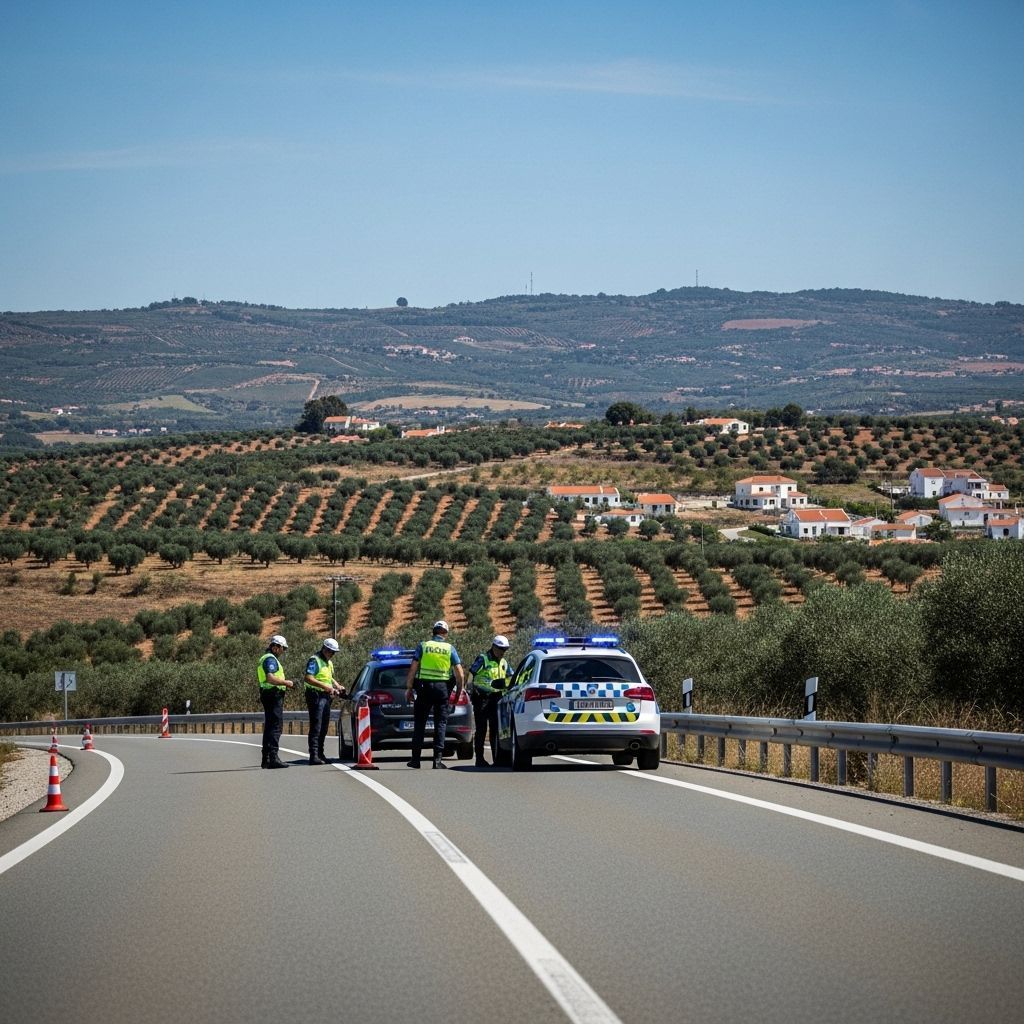
The report documents incidents involving police conduct in 2025, including responses to pro-Palestine demonstrations in August and actions during a general strike in December.
A significant concern raised by the Observatory: the presence of extremist elements within Portugal's security forces, described as requiring institutional attention. The authors call for greater oversight and accountability.
Adding to transparency questions, the Portuguese government removed the chapter on "Extremism and Hybrid Threats" from the 2025 Annual Internal Security Report (RASI)—a deletion the civic space researchers identified as noteworthy.
Media Freedoms and Information Access
Freedom of expression in Portugal remains formally protected, but the report identifies three pressures: an economically fragile and concentrated media ecosystem, working conditions that create vulnerability for journalists, and an environment where disinformation circulates with limited accountability.
Coordinated anti-immigration disinformation campaigns, often originating internationally, spread with minimal oversight. Social media networks amplify content aligned with far-right messaging. Chega has been identified as strategically using social platforms to amplify narratives that gain massive reach—affecting the information environment that residents encounter.
What European Countries Are Doing
Other EU member states have implemented measures that may provide reference points for Portugal. The Digital Services Act (DSA) and EU regulations require platforms to remove terrorist content within one hour of notification. Germany approved an 89-measure plan to combat right-wing extremism, racism, and antisemitism. The European Union Radicalization Awareness Network (RAN), launched in 2015, brings together over 6,000 professionals—teachers, police, social workers—to exchange practices on preventing radicalization.
The Council of Europe developed the "Handbook for Combating Hate Speech Online through Human Rights Education," part of the "No Hate Speech Movement" campaign. Europol's Internet Referral Unit (IRU), created in 2015, detects and investigates extremist content online, supporting member states in removal efforts.
What the Report Recommends
The Observatory's recommendations for Portugal include:
• An independent mechanism to prevent and combat institutional racism and illegal use of force by security agencies.
• A stable base funding regime for civil society organizations, reducing dependence on project-based grants.
• More resources and autonomy for the Commission for Equality and Against Racial Discrimination (CICDR) to combat hate crimes and institutional racism.
• Support for local and community journalism and measures requiring digital platforms to act against incitement to violence.
The Broader European Picture
Across the 34 European countries analyzed, only 12 maintain "open" civic space. Fourteen are classified as "restricted," seven as "obstructed," and one as "repressed." Compared to previous years, four countries saw conditions degrade in 2025, with France, Germany, and Italy moving to the "restricted" category and Serbia falling to "repressed."
In their European-wide conclusions, the authors document that restrictions on civil society are becoming institutionalized across the continent. The criminalization of protest movements is becoming widespread practice throughout Europe, as is the criminalization of solidarity with migrants and refugees—what the report terms a structural trend affecting the region.
The Portugal chapter demonstrates that robust legal frameworks alone cannot sustain civic space if practice diverges from principle. When extremist discourse gains institutional protection rather than accountability, residents face a civic environment that increasingly constrains their participation, regardless of what formal laws promise.