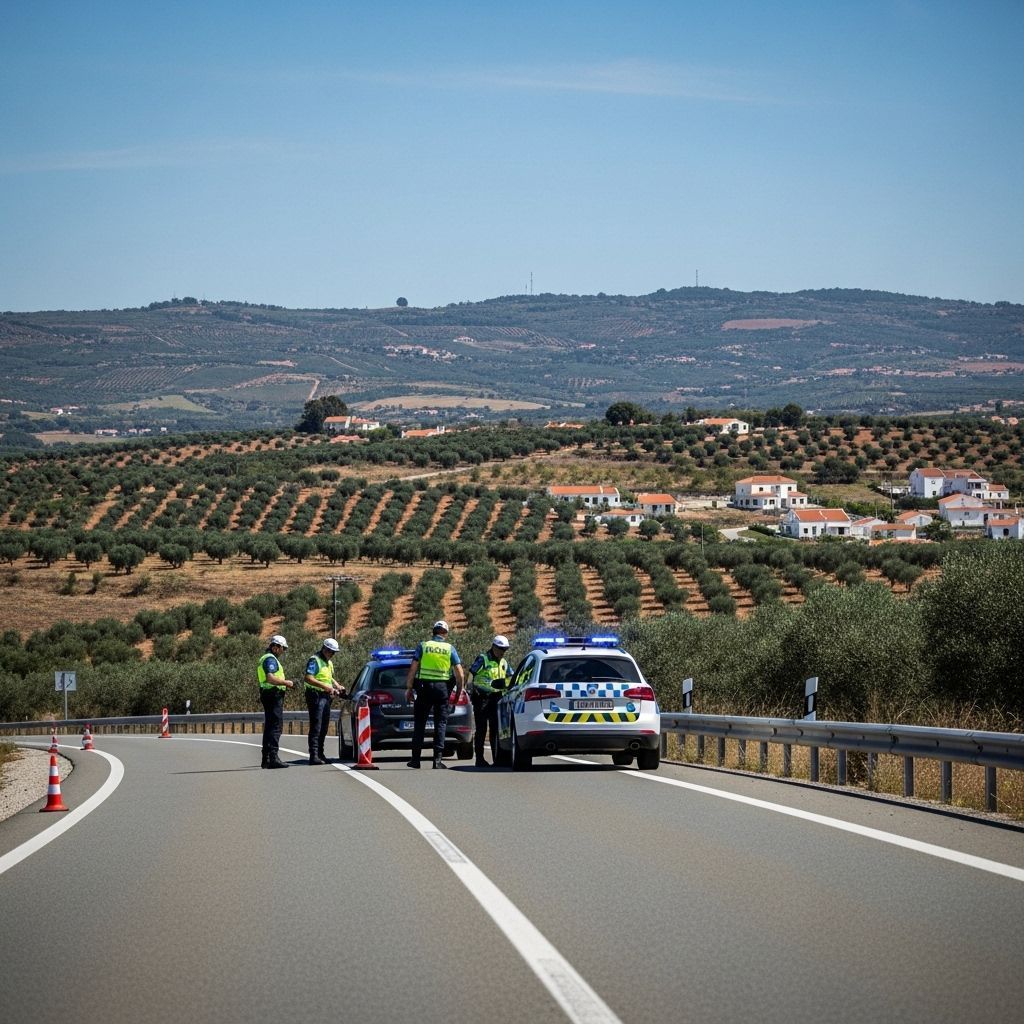
The Portugal Public Security Police (PSP) has opened a criminal and disciplinary investigation against one of its own officers accused of leaking confidential case details to colleagues under investigation for torture, a move that threatens to compromise one of the most serious internal corruption cases in the force's recent history. The leak allegedly allowed suspect officers to prepare for raids, consult lawyers, and in at least one instance, file medical leave the day before scheduled searches.
Why This Matters:
• Judicial security breach: An active PSP officer allegedly violated Portugal's segredo de justiça (judicial secrecy) rules, warning colleagues ahead of arrest operations.
• Escalating torture scandal: The case now involves 24 PSP officers implicated in the investigation across the Rato and Bairro Alto precincts, with 13 currently in preventive custody or suspended from duty.
• Institutional credibility at stake: The PSP initiated the original complaint to prosecutors, yet internal leaks reveal deep fissures in accountability and oversight.
Officer Under Investigation for Tipping Off Suspects
According to a statement sent to the Lusa news agency, the PSP Lisbon Metropolitan Command has formally identified the officer suspected of breaching judicial confidentiality. Commander authorities have ordered his immediate transfer from his current post and launched parallel disciplinary and criminal proceedings. TVI/CNN Portugal first reported over the weekend that the officer transmitted sensitive operational intelligence to at least one suspect, who then circulated warnings through police networks.
The leak reportedly gave targeted officers advance knowledge of which locations would be searched, enabling them to seek legal counsel and coordinate defenses. Prosecutors discovered the breach through forensic analysis of seized mobile phones during the investigation. The officer now faces potential charges under Article 371 of the Portuguese Penal Code, which punishes violations of judicial secrecy with up to two years imprisonment or fines up to 240 days.
While such breaches do not legally invalidate the underlying investigation, they compromise evidence collection and erode public trust in judicial processes, according to legal experts. Portugal's judicial secrecy framework exists specifically to protect investigation integrity and the presumption of innocence, yet enforcement remains historically weak—critics have long dubbed it a "secret of Polichinelle."
Charges Vary Among 24 Officers Implicated
The Central Criminal Investigation Court of Lisbon has ordered that four of the implicated officers will await trial in preventive custody, facing charges of abuse of power and torture. Two additional officers were suspended from duty under investigation for suspected abuse of power and torture-related offenses. Eight officers were released with identity and residency reporting requirements, while others from earlier arrests remain in various legal statuses. All officers with custody restrictions have been ordered to avoid any contact, direct or indirect, with complainants.
It is important to note that not all 24 officers face identical charges. Some face charges of torture, others face charges limited to abuse of power, and involvement levels vary significantly—from those in preventive detention to those suspended to those released pending further investigation. One officer was freed immediately after arrest, and a civilian nightclub security guard detained alongside the group was released after a court accepted his habeas corpus petition on grounds of unlawful detention.
The latest arrests, conducted jointly by the PSP and the Portuguese Public Prosecutor's Office in early May, bring the total number of implicated officers to 24 across three separate operations since July 2025. The first arrests occurred in summer 2025, followed by additional operations in March 2026; nine officers from those earlier phases remain in preventive detention.
What This Means for Residents and Your Rights
For anyone living in or visiting Lisbon, this case raises fundamental questions about street-level policing accountability. The Rato and Bairro Alto precincts serve densely populated central districts frequented by residents, tourists, and nightlife patrons.
Your Rights During Police Encounters:
If you are detained by the PSP, you have fundamental legal protections under Portuguese law:
• Right to legal counsel: You have the right to immediate access to a lawyer from the moment of detention. Request this explicitly and clearly.
• Right to remain silent: You are not obligated to answer police questions without your lawyer present.
• Right to notification: Police must notify your family or someone you designate about your detention.
• Right to medical examination: You can request a medical examination if you believe you've been mistreated.
To file a complaint against police misconduct, you can contact the PSP's Internal Affairs Division or submit a formal complaint to the Public Prosecutor's Office (Ministério Público). Documentation of any incident—including dates, times, names of officers if visible, and witness contact information—strengthens your case.
The UN Committee Against Torture has noted that these protections are not always guaranteed in practice in Portugal, particularly for vulnerable populations including migrants, homeless individuals, and drug users. For expats and foreign residents, knowing these rights and how to exercise them is essential.
Defense Arguments and Legal Proceedings
Outside the Campus da Justiça courthouse, defense attorney Carlos Melo Alves, representing five of the accused, argued that legal classifications matter in these cases. "Officers must fulfill their duties, and sometimes they must use force because there is violence from the other side," he told reporters. Melo Alves contended that while some cases may involve excessive force, the majority do not rise to the legal level of torture—which requires intent to inflict severe pain or humiliation for purposes like extracting confessions or punishment.
He acknowledged that some serious situations exist, particularly linked to earlier arrests, noting his clients are not implicated in those episodes. Melo Alves criticized the Public Prosecutor's Office for what he described as selective evidence presentation, claiming relevant witness statements and other testimony were omitted from pre-trial proceedings. At this procedural stage, defendants have limited ability to mount a full defense, he noted, and he indicated he would likely appeal custody measures imposed on some of his clients.
Institutional Crisis Deepens Amid Morale Collapse
The scandal unfolds as the Association of PSP Professionals (ASPP) met with advisers to Portugal's President to plead for intervention to address what union president Paulo Santos called a "low-cost police force." The ASPP presented documentation detailing staff aging, recruitment failures, pension cuts, and lack of basic labor rights.
"The institution's credibility crisis reflects deeper problems in how the force is resourced and managed," Santos said. He referenced recent statements from political leadership that developments in the security forces were "not on the right path." The union emphasized that officers now handle expanded responsibilities—including immigration enforcement and border control—previously managed by other agencies, yet career advancement and compensation remain stagnant. "We are seeing professionals increasingly demotivated," Santos said.
While not the direct cause of torture allegations, institutional resource and morale problems can contribute to accountability failures and reduced oversight capacity, according to policing experts.
International Scrutiny and Accountability Gaps
Portugal has faced repeated criticism from international human rights bodies over police impunity. The UN Committee Against Torture has called for prompt, thorough, and impartial investigations into all allegations of excessive force and racially motivated misconduct, with proportional punishment for those convicted. The committee has also demanded Portugal compile and publicly release statistical data on complaint outcomes and sanctions—information currently unavailable.
The European Committee for the Prevention of Torture (CPT) has advised Portuguese authorities to maintain vigilance and pursue a "zero tolerance" policy to eradicate police abuse, recommending improved internal reporting mechanisms and enhanced training. Amnesty International has long advocated for an external, independent oversight body capable of investigating such cases, warning that the lack of such a mechanism fuels a pervasive sense of impunity among officers.
The PSP's Lisbon command emphasized in its statement that the investigation began with a formal complaint filed by the PSP itself to the Public Prosecutor, and that the force has cooperated throughout all inquiry phases, including searches and arrests. That self-reporting, however, has not shielded the institution from scrutiny over accountability and oversight mechanisms.
Broader Implications for Policing Reform
The case has ignited debate over structural reforms needed to restore public confidence. Legal experts note that while individual prosecutions address specific misconduct, they do not resolve systemic issues such as inadequate supervision, cultural tolerance of violence, or the absence of robust whistleblower protections. The leak itself—with sensitive case information circulating through police networks—suggests a climate where operational breaches occur relatively easily.
For Portugal's migrant communities and marginalized populations, the revelations compound existing distrust of law enforcement. Advocates emphasize that effective policing depends on cooperation from vulnerable groups—cooperation unlikely to materialize when potential witnesses fear retribution or disbelief. The government's response in the coming months, including whether it implements CPT and UN recommendations, will signal whether Portugal treats this as an isolated scandal or a catalyst for deeper institutional change.
As the judicial process advances, attention will focus on whether prosecutors can secure convictions that withstand appeal, whether leaked information has compromised evidence chains, and whether the PSP can credibly enforce internal discipline. For now, residents of Lisbon's historic center navigate streets patrolled by a force under unprecedented scrutiny—one whose leaders publicly pledge reform while privately grappling with a crisis of legitimacy.