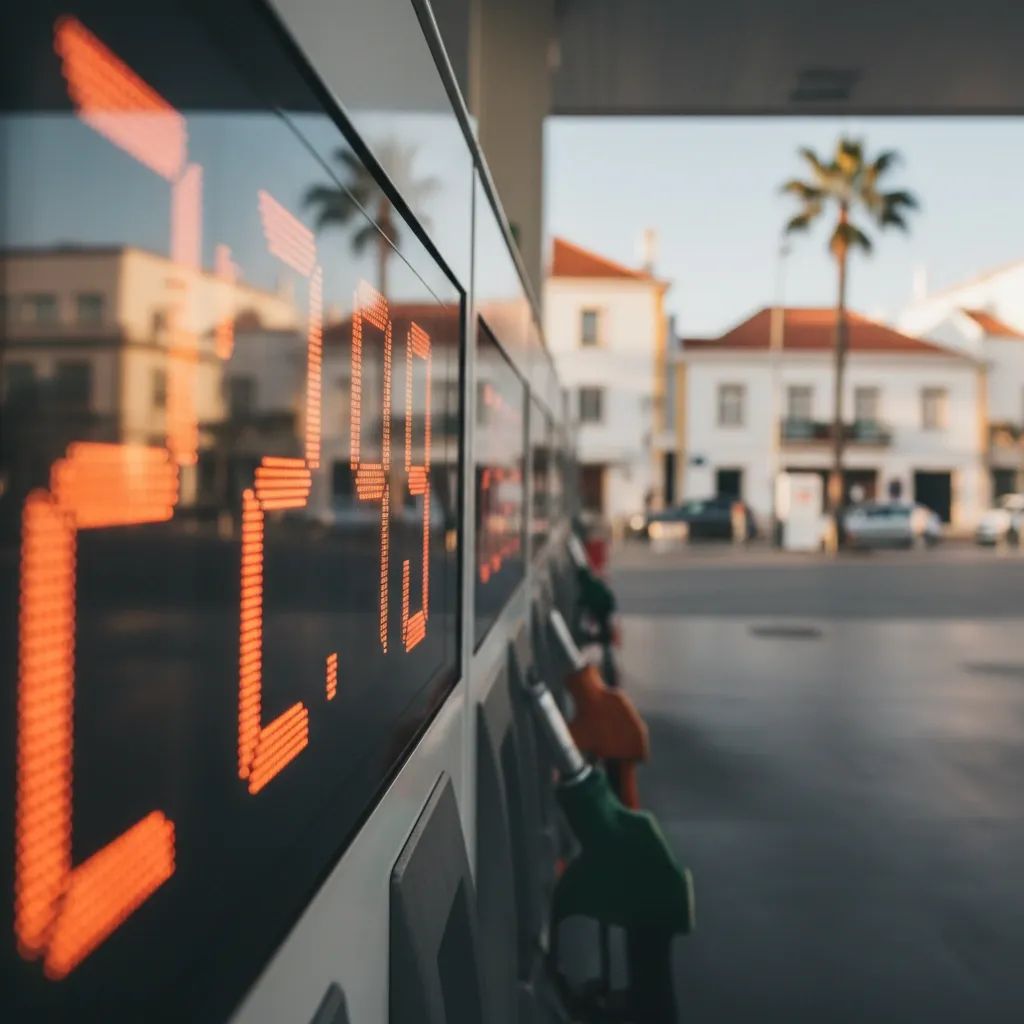
Portugal's PSI index climbed 0.15% while the broader European equity market retreated under pressure from a sharp sell-off in semiconductor stocks and escalating hostilities between the United States and Iran—a divergence that underscores the defensive structure of the Portuguese market and its heavy reliance on utility and consumer staples.
Why This Matters
• Energy windfall: The Portugal-listed Galp Energia rose 0.69% as Brent crude edged toward $84.78 per barrel, its strongest weekly gain since April.
• Defensive portfolio: The PSI's three heavyweights—EDP, Jerónimo Martins, and Galp—accounted for nearly all of the index's positive session, shielding it from the 0.6% drop in the pan-European Stoxx 600.
• Chip panic spreads: The European tech sector tumbled almost 3%, with French chipmaker STMicroelectronics down more than 7% and Dutch equipment supplier ASM International losing 6.2%, mirroring overnight losses in Asia and the U.S.
A Lone Green Dot in a Sea of Red
While Frankfurt, Paris, and Milan posted losses exceeding half a percentage point, Lisbon's benchmark closed the morning session at 9,050.67 points, a modest but symbolically important gain. The PSI's resilience is almost entirely structural: the index is heavily weighted toward utilities and consumer staples—sectors that tend to outperform when growth fears and geopolitical risk converge.
EDP, the state-backed energy giant, advanced 0.73% to lead the index, benefiting from surging electricity demand in the Iberian Peninsula and robust performance in its renewable portfolio. EDP Renováveis, its listed renewables arm, added 0.79%, supported by investor confidence in its renewable assets.
Jerónimo Martins, the Lisbon-based retail operator behind Biedronka in Poland and Pingo Doce at home, gained 0.67%. The group has maintained pricing discipline despite inflationary pressures across the European grocery sector, with its scale and logistics efficiency proving defensive strengths.
Galp Energia rose 0.26%, riding the tailwind of higher oil prices. The integrated energy firm benefits from its international exposure, principally from Brazilian operations and international gas sales. With Brent approaching $85 per barrel and geopolitical risk premium expanding, Galp's international operations provide a hedge against European weakness.
Why European Tech Is Cratering
The immediate catalyst for European equity weakness was a renewed wave of selling in semiconductor names, which began in New York and accelerated overnight in Asia. The Nasdaq 100 fell 1.6% in U.S. trading, while semiconductor-focused indices dropped more than 4%.
The problem is not earnings—it is valuation. Analysts have begun questioning whether the rapid expansion in AI infrastructure spending can continue at the pace required to justify current stock prices.
That skepticism spread to Europe. STMicroelectronics fell 7.2% in Paris. ASM International dropped 6.2% in Amsterdam. The broader European tech sector lost nearly 3%, dragging the Stoxx 600 down with it.
Adding to the pressure: Netflix shares tumbled 9.3% in pre-market U.S. trading after reporting softening revenue growth, reinforcing fears that the investment cycle may be maturing faster than anticipated.
What This Means for Residents
For anyone living in Portugal, the divergence between local and pan-European equity performance highlights a fundamental reality: the PSI is not a tech index. It is a utility and consumer-staples index with energy leverage. That structure insulates it from global tech volatility but also limits upside when growth accelerates.
The more immediate concern is energy. Brent crude is on track for a significant weekly gain, driven by escalating military exchanges between Washington and Tehran. Iran announced fresh attacks on U.S. installations in the Gulf, marking recent hostilities. The U.S. has reimposed a naval blockade on Iranian ports, and Tehran has threatened to use proxies in Yemen to disrupt shipping through critical sea routes.
If the conflict persists, energy prices could come under sustained upward pressure. Diesel and gasoline costs in Portugal have already climbed in recent weeks, with fuel adjustments expected in the coming period. For households and businesses reliant on road transport, the escalation represents a material inflation risk—one that the European Central Bank will struggle to ignore as it debates further rate cuts.
Impact on Expats & Investors
Foreign residents with exposure to European equities should note the defensive characteristics of the Portuguese market. The PSI's 0.15% gain on a day when most European indices lost ground reflects the index's concentration in utilities, which benefit from stable electricity demand and regulatory stability, and in consumer staples, which hold up during periods of risk aversion.
However, the index's defensive tilt also means it underperforms during risk-on rallies and growth-driven rallies when investors favor higher-risk, higher-reward sectors.
For those considering exposure, the key question is whether the current energy premium is sustainable. If tensions ease and energy markets stabilize, the outperformance of energy stocks may reverse. Conversely, if the conflict escalates further, energy stocks could continue to outperform—but at the cost of broader economic growth.
The Broader European Picture
The Stoxx 600 closed the morning session down 0.6%, pressured by a combination of tech sector volatility, Middle East risk, and renewed inflation concerns.
Debt markets offered a modest cushion: German 10-year yields fell, reflecting a flight to safety. Gold, the traditional haven asset, rose 0.45%, hovering near recent highs.
Currency markets were relatively stable. The euro edged up 0.04% against the dollar, supported by expectations that the European Central Bank will proceed cautiously with further rate cuts in light of energy-driven inflation risks.
Natural Gas and the Geopolitical Premium
While oil has captured most of the attention, natural gas is also climbing. Dutch TTF futures, the European benchmark, rose 1.02%, reflecting concerns that prolonged conflict in the Gulf could disrupt energy shipments.
For Portugal, which has increased its reliance on renewable energy in recent years, the exposure to external energy price shocks is gradually diminishing. However, higher gas prices ripple through the broader European economy, affecting industrial costs, power generation, and heating bills.
Energy price pressures could pose challenges for the European Central Bank's policy decisions, potentially affecting its approach to interest rate adjustments.
What Comes Next
The immediate driver for European markets will be the trajectory of the Iran-U.S. conflict. Any escalation that threatens critical shipping routes will send energy prices sharply higher and amplify inflation concerns across the continent.
For Portugal specifically, the PSI's ability to hold up depends on the continued outperformance of its three anchor stocks. EDP faces management priorities around grid flexibility and renewable expansion. Jerónimo Martins must navigate currency volatility in its Polish operations and intense competition at home. Galp's fortunes are tied to energy market developments and its international operations.
Investors should also watch for second-quarter earnings from Portuguese companies and any updates on fiscal or regulatory developments, which could affect consumer spending and corporate profitability.
For now, the Portuguese market remains a defensive pocket in a turbulent European landscape—a positioning that offers stability in uncertain times, but limited upside if risk appetite returns.