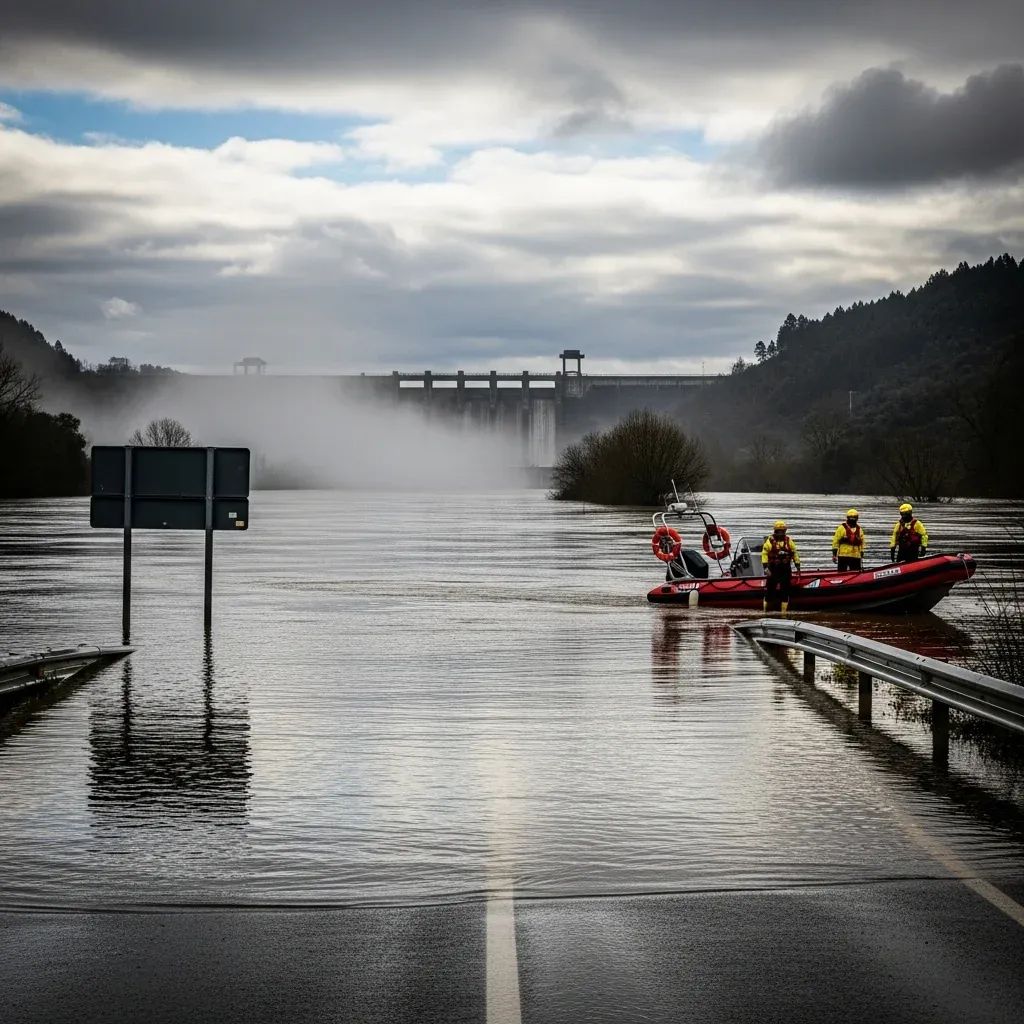
The Portugal Meteorological Institute (IPMA) has issued its extended forecast through June, signaling a warmer-than-usual spring across the country—a shift that could affect everything from energy bills to agricultural yields.
Why This Matters
• Temperature anomalies of up to 1°C above average are expected across Portugal through June, with the North seeing the highest increases.
• Precipitation levels will likely remain near historical norms, offering neither drought relief nor repeat flooding conditions.
• Energy and agriculture sectors face diverging pressures: lower heating costs versus higher irrigation demands and potential crop stress.
• Tourism outlook brightens as drier, warmer weather could extend the outdoor activity season during the spring months.
Regional Temperature Breakdown
The Portugal mainland will experience the most pronounced warming trend. In April, the northern and central-north zones are forecast to see temperature anomalies between 0.25°C and 0.5°C above the 1991-2020 baseline. By May and June, that anomaly intensifies—climbing to 0.5°C to 1.0°C in the North—and expands southward to cover the central and southern regions.
The Azores archipelago follows a similar trajectory: anomalies of 0.25°C to 0.5°C in April and May, jumping to 0.5°C to 1.0°C by June. Meanwhile, Madeira remains the outlier, showing positive anomalies of 0.25°C to 0.5°C only in May and June, with April tracking closer to historical averages.
These figures represent deviations from long-term norms, meaning observed temperatures will consistently run above what residents have come to expect for this time of year. For context, a 1°C anomaly in spring can translate to noticeably warmer afternoons and reduced heating needs—or, conversely, increased air conditioning use in commercial districts.
What This Means for Residents
For households, the warmer spring offers a reduction in heating expenses as April and May typically mark the tail end of Portugal's heating season. However, utilities in southern regions may see a modest uptick in early-season cooling demand, particularly in the Algarve and metropolitan Lisbon.
Agricultural producers face a more nuanced picture. The temperature rise could accelerate the growing cycle for crops like olives, citrus, and grapevines, potentially advancing harvest timelines. Without significant rainfall anomalies forecast for spring, irrigation systems will bear heavier loads, straining water reserves in already vulnerable districts.
Tourism operators stand to benefit from warmer, drier conditions during April and May, which could extend the beach and outdoor recreation season ahead of the traditional summer peak.
The Precipitation Wildcard
The IPMA forecasts no significant anomaly in monthly rainfall totals for Portugal, Madeira, or the Azores through June. In meteorological terms, this means precipitation will hover near historical averages—neither unusually wet nor unusually dry.
This is a neutral outcome: it avoids extreme drought conditions while offering no surplus rainfall to replenish water reserves. As temperatures climb through spring, evaporation rates will rise, placing steady pressure on water supplies in already vulnerable regions.
Early April is expected to bring overcast skies and scattered showers, providing temporary relief from the warming trend.
Climate Context
Portugal has experienced increasingly frequent periods of above-average temperatures in recent years, reflecting broader climate patterns affecting Southern Europe. The warmer spring forecast aligns with this trend, driven by regional atmospheric conditions rather than a single global driver.
Temperature anomalies of this magnitude—while notable—are becoming more frequent. For residents, this underscores the importance of adaptation in areas like water management and agricultural planning.
Sector-Specific Implications
Energy: Lower heating demand in April and May will ease pressure on natural gas imports, though electricity grids may see earlier-than-usual spikes in air conditioning load, particularly in urban centers.
Water Management: The absence of surplus rainfall underscores the need for optimized water storage and distribution infrastructure. Municipalities in the interior Alentejo and Beiras regions should prepare for heightened irrigation demand.
Public Health: Warmer spring temperatures can exacerbate pollen counts, affecting allergy sufferers. Health authorities may also need to prepare for earlier-than-usual vector activity, including mosquitoes, particularly in wetland and coastal zones.
Wine and Olive Sectors: Early bud break and flowering could expose vineyards and olive groves to late-spring frost risk if cooler air masses do penetrate. Growers in higher-elevation zones—such as the Douro and Trás-os-Montes—should monitor forecasts closely.
What Comes Next
The IPMA's detailed forecast is available for public consultation, offering granular breakdowns by region and month. Residents, business owners, and municipal planners are advised to integrate these projections into operational decisions, from irrigation scheduling to event planning.
The spring outlook reflects Portugal's evolving climate patterns. How the country responds—from water policy to agricultural planning—will determine resilience in the seasons ahead.