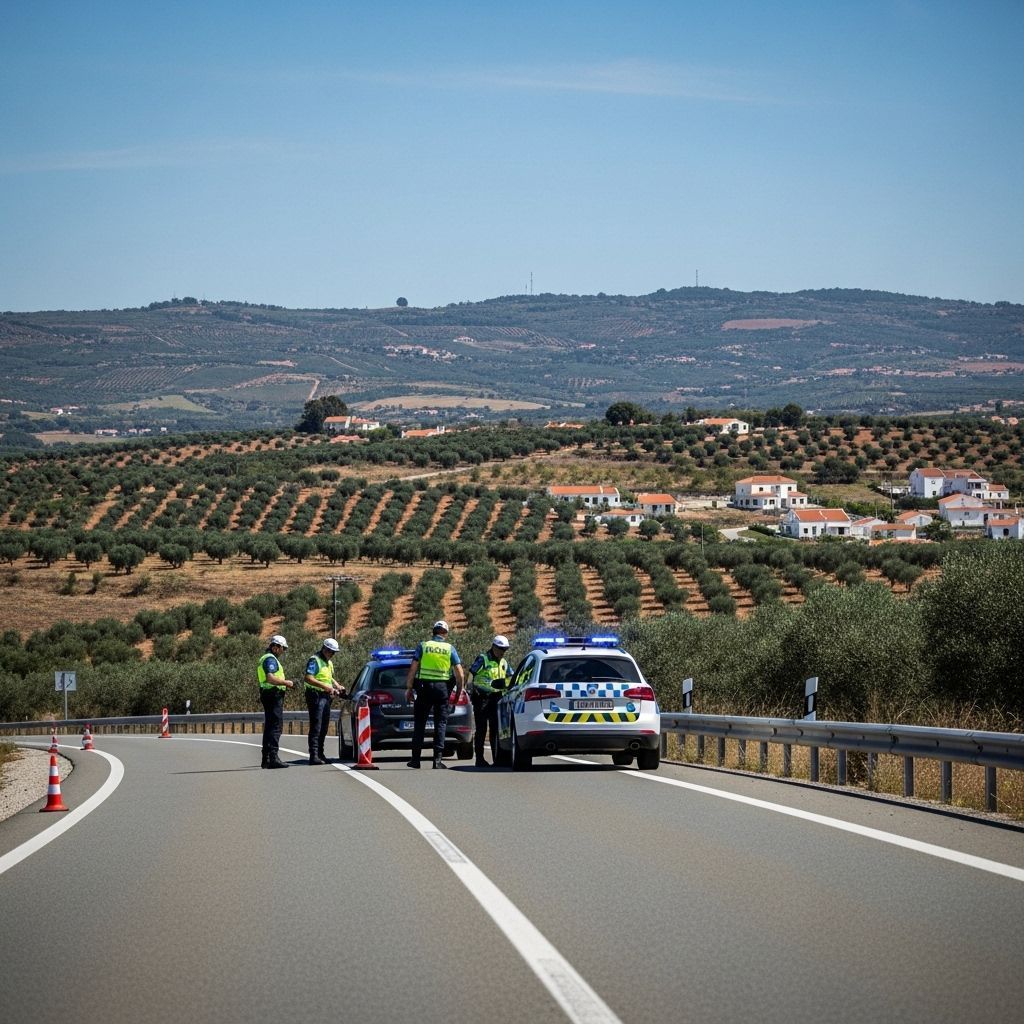
The Portugal Ministry of Internal Affairs (MAI) has removed 44 law enforcement officers from duty in under three months, marking one of the most aggressive disciplinary crackdowns on police misconduct in recent memory. Minister Luís Neves, who assumed office on February 23, has signed expulsion or suspension orders for 30 members of the National Republican Guard (GNR) and 14 officers from the Public Security Police (PSP), targeting crimes ranging from domestic violence to human trafficking.
Why This Matters
• Unprecedented pace: 44 disciplinary actions in 10 weeks far exceeds the annual total under previous ministers—a signal of zero tolerance for police deviance.
• Serious crimes: Convictions include embezzlement, corruption, money laundering, sexual abuse, and involvement in immigrant trafficking networks.
• Public trust at stake: The removals come amid high-profile scandals, including torture allegations at Lisbon police stations and the dismantling of a labor exploitation ring in Alentejo.
The Numbers Behind the Crackdown
Among the 30 GNR personnel disciplined, 12 were permanently expelled through forced separation from service, 2 were discharged, and 16 received preventive suspensions pending further investigation. For the 14 PSP officers, Neves ordered 9 dismissals, 4 compulsory retirements, and 1 suspension.
The offenses triggering these measures include peculato (embezzlement of public funds), domestic violence, fraud, physical assault, sexual abuse of incapacitated persons, money laundering, corruption, influence peddling, human trafficking, kidnapping, and abuse of authority. The catalog of crimes paints a troubling picture of ethical breaches within Portugal's security apparatus.
Context: A Minister Under Pressure
Luís Neves inherited a backlog of pending disciplinary cases when he took office. Speaking in Parliament two weeks ago, he pledged to be "muito firme" (very firm) in addressing deviant behavior, a stance now backed by concrete action. His tenure began amid two major scandals that have dominated Portuguese headlines.
First, the "Safra Justa" operation in late 2024 exposed a criminal network exploiting approximately 500 foreign laborers in Alentejo's agricultural sector. The Judiciary Police arrested 17 individuals, including 10 GNR officers and 1 PSP agent accused of facilitating the operation in exchange for bribes. The MAI suspended all 11 law enforcement members this week, though judicial proceedings have been complicated by procedural issues involving wiretap evidence.
Second, the PSP torture scandal erupted when internal whistleblowers revealed systematic abuse of vulnerable individuals—including drug addicts, homeless people, and foreign nationals—at the Rato and Bairro Alto precincts in Lisbon. 24 officers were arrested, 15 of them just this week, in what prosecutors describe as a pattern of torture and sexual violence against those least able to defend themselves.
Historical Comparison: How Aggressive Is This?
To understand the scale of Neves's actions, consider the numbers under his predecessor. José Luís Carneiro, who served from March 2022 to April 2024, applied 14 disciplinary penalties in 2022 (including 1 dismissal and 7 suspensions) and 11 penalties in 2023 (9 suspensions and 3 dismissals). Those were annual totals. Neves has exceeded both years combined in 74 days.
Data for interim minister Maria Lúcia Amaral, who held the post from June 2025 to February 2026, remains fragmented. However, cumulative figures show that between 2022 and April 2026, 129 officers from both forces were removed, with 88 from PSP and 47 from GNR. The acceleration under Neves accounts for a significant portion of that four-year total.
This pace suggests the new minister prioritized clearing the disciplinary queue as a first-order task, signaling both to the public and to rank-and-file officers that impunity has ended.
What This Means for Residents
For anyone living in Portugal, the immediate impact is twofold. On one hand, these removals should improve accountability and public safety, removing officers who violated the trust placed in them. On the other, the sheer volume raises questions about systemic oversight failures: How did so many officers accused of serious crimes remain in uniform long enough for their cases to pile up?
The Inspectorate-General of Internal Affairs (IGAI), which investigates police misconduct, has faced criticism for delays. In 2023 alone, IGAI opened 45 disciplinary cases against PSP officers, yet only a fraction resulted in ministerial action that year. The backlog Neves inherited suggests either bureaucratic bottlenecks or reluctance by prior leadership to pull the trigger on controversial expulsions.
For expats and foreign residents, the "Safra Justa" case is particularly alarming. The fact that uniformed officers facilitated human trafficking in rural Alentejo—where seasonal agricultural work attracts many immigrants—exposes vulnerabilities in the system meant to protect them. Victims lived in subhuman conditions, worked without contracts, and were threatened into silence. The dismantling of this network is a win, but the involvement of 11 law enforcement members indicates deeper rot.
Broader Trends in Police Misconduct
Portugal's security forces have struggled with corruption and integrity issues for years. A 2023 evaluation by the Council of Europe's Group of States against Corruption (GRECO) criticized the country for inadequate oversight mechanisms and urged stronger investigative capacity within units like the National Anti-Corruption Unit (UNCC) of the Judiciary Police. Portugal has been flagged as having elevated corruption risk in the defense and security sectors.
The most common offenses among disciplined officers mirror those in Neves's recent batch: domestic violence, assault, corruption, and abuse of power. Between 2022 and April 2026, the primary grounds for removal included ethical breaches incompatible with law enforcement duties, such as repeated absences, violence, and misuse of authority.
The Lisbon torture scandal, which involved systematic abuse rather than isolated incidents, has reignited debate over recruitment and vetting standards. Critics argue that Portugal's security forces lack robust psychological screening and that internal complaint mechanisms discourage whistleblowing, allowing abuse to fester.
Legal and Operational Fallout
The suspensions and expulsions carry immediate operational consequences. Removing 44 officers in 10 weeks creates staffing gaps, particularly in rural areas like Alentejo where GNR presence is thin. The MAI has not announced plans to expedite recruitment or redistribute personnel to compensate.
Legally, the distinction between suspension (temporary removal pending investigation) and expulsion (permanent dismissal) matters. The 16 GNR suspensions and 1 PSP suspension indicate ongoing criminal or disciplinary proceedings. If those officers are ultimately cleared, they could return to duty—though reputational damage may make reintegration difficult.
Portugal's civil service law requires that expulsions be justified by final criminal convictions or grave disciplinary violations. The fact that Neves signed 23 expulsion orders (12 GNR separations, 9 PSP dismissals, 2 GNR discharges) suggests those cases involved completed prosecutions, not merely allegations. The 4 compulsory retirements for PSP officers likely involve personnel near pensionable age who were offered early exit as an alternative to dismissal—a face-saving measure that removes problematic officers without lengthy appeals.
Looking Ahead: Can This Pace Continue?
The critical question is whether Neves's "very firm" approach represents a one-time clearing of inherited cases or a sustained policy shift. The minister's public statements suggest the latter. In Parliament, he emphasized that accountability starts at the top and that he would not tolerate "comportamentos desviantes" (deviant behavior) among those sworn to protect the public.
However, sustainable reform requires more than ministerial resolve. It demands institutional changes: faster disciplinary procedures, independent oversight, better whistleblower protection, and rigorous vetting during recruitment. The IGAI's capacity remains a bottleneck. If it cannot process cases faster, future ministers will inherit similar backlogs.
The Lisbon torture scandal, in particular, has exposed gaps in internal accountability. The fact that abuse at two central Lisbon precincts went unreported for months until internal whistleblowers came forward suggests a code of silence that ministerial crackdowns alone cannot break.
For residents, the message is clear: the Portugal security apparatus is undergoing a painful but necessary purge. Whether this translates into lasting reform or merely a temporary housecleaning will depend on the government's willingness to address systemic weaknesses, not just punish individual offenders. In the meantime, the removal of 44 officers in 74 days sends an unmistakable signal—misconduct will no longer be tolerated, and the badge offers no shield from accountability.