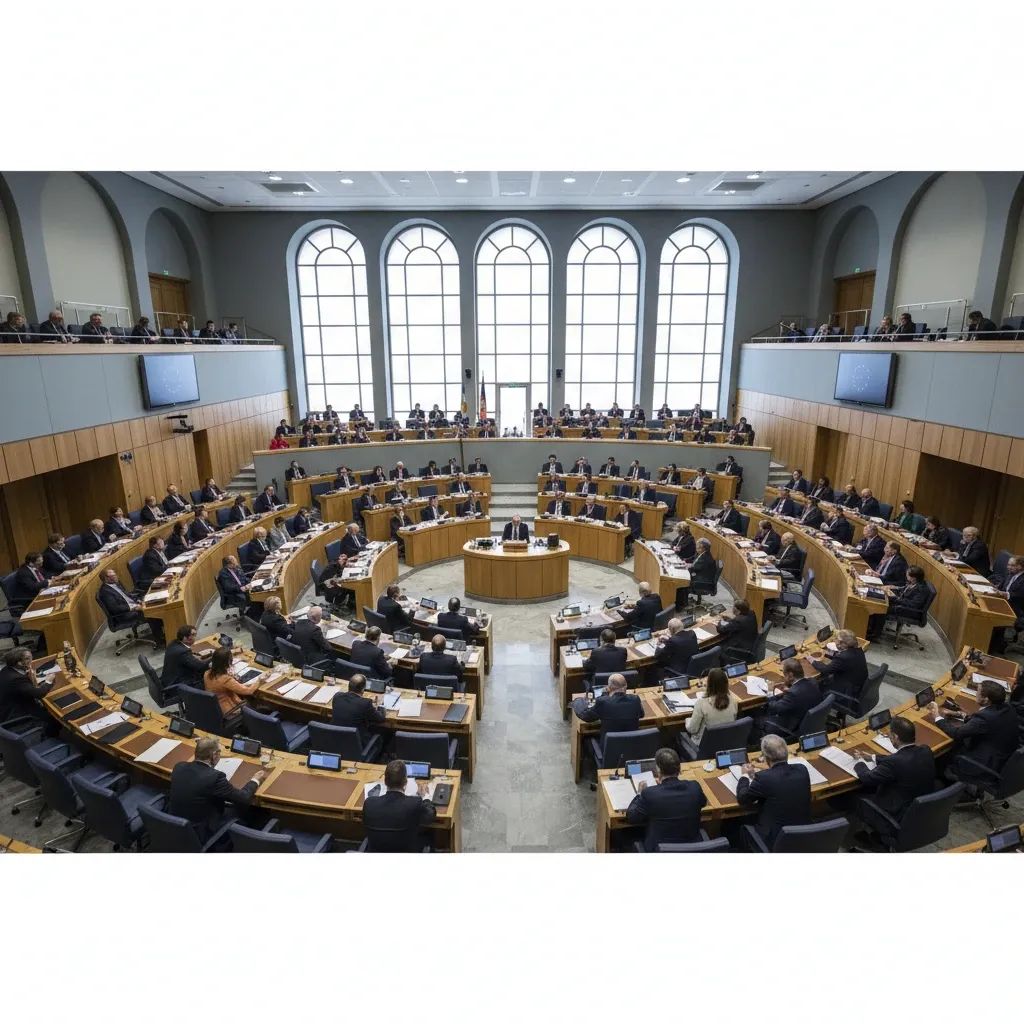
The Portugal Socialist Party has brought forward a legislative package that would substantially expand parliamentary oversight of military spending and deployments, a move that could reshape how the Portuguese Assembly of the Republic monitors billions of euros in defense investments currently flowing outside traditional budget scrutiny.
Why This Matters:
• Multi-billion euro programs like the EU's SAFE instrument (€5.8B proposed for Portugal) would face Assembly review for the first time
• Military missions abroad would require non-binding parliamentary opinions before deployment
• The outdated 2013 Strategic Defense Concept would need Assembly approval, not just debate
• Annual personnel planning laws could finally match infrastructure and equipment programming
Parliament Seeks Control Over EU Defense Funds
The Socialist proposal targets a significant blind spot in Portugal's legislative oversight: major defense investments that bypass the existing Military Programming Law (LPM). While deputies already vote on the LPM's €5.57B allocation through 2034, the Portuguese Government has applied for roughly €5.8B in additional EU funding through the Security Action for Europe (SAFE) program without equivalent parliamentary scrutiny.
Socialist deputy Luís Dias framed the issue as a question of democratic accountability. "We already review and vote on investments foreseen in the Military Programming Law," he told Lusa news agency. "We should also be able to review choices that go beyond this legislation." The PS proposal would require SAFE-funded projects to undergo parliamentary evaluation using the same standards as LPM programs and be listed in an annex to the military budget law.
This matters because Portugal's defense spending is climbing rapidly. The government projects a €772M increase in defense outlays for 2026 alone, and the combined LPM and SAFE programs would represent over €11B in military investment—unprecedented for a country that historically underspent on defense relative to NATO commitments.
Three Core Laws Face Restructuring
The Socialist package rewrites foundational texts: the National Defense Law, the Organic Law on the Organization of the Armed Forces (LOBOFA), and the statute regulating parliamentary monitoring of Portuguese military contingents deployed abroad.
Among the most concrete changes: the Assembly would receive an annual report on missions by National Deployed Forces, supplementing the existing biannual reports. This annual summary would go to plenary debate, giving missions the same visibility as the RASI (Internal Security Annual Report), which already undergoes full parliamentary scrutiny.
The PS also wants the Assembly to issue non-binding opinions on foreign military missions before deployment—a softer mechanism than approval but one that would force public justification of each operation.
Representation in Defense Council Expands
Another structural shift would boost parliamentary presence in the Superior Defense Council, the advisory body to the President of the Portuguese Republic. The number of elected deputies on the council would rise from two to three, and the Assembly President would join the body directly—a symbolic elevation of legislative authority in strategic defense discussions.
The Missing Link: Military Personnel Law
Perhaps the most novel element is the PS call for a dedicated Military Personnel Programming Law. "How is it that we have a Military Infrastructure Law, which essentially corresponds to the skeleton of the Armed Forces, a Military Programming Law that corresponds to the muscles, but then we don't have the heart and brain, which are the military personnel?" Dias asked. He noted that "the vast majority of European countries" maintain such legislation.
This proposal reflects a broader frustration: Portugal programs buildings and weapons but not the people who operate them. With recruitment and retention challenges acute across European militaries, a multi-year staffing plan could anchor reforms aimed at making military careers more attractive—a priority the Portugal Defense Minister described as "pleasing" in recent comments on youth recruitment proposals.
What This Means for Residents
For taxpayers and security stakeholders, the debate signals a potential turning point in transparency. If approved, citizens would gain clearer insight into how billions in defense euros are spent, particularly funds originating from Brussels rather than Lisbon. The requirement for Assembly debate on annual mission reports could also surface operational difficulties or strategic mismatches earlier, reducing the risk of open-ended commitments.
However, the practical impact hinges on political will. The Social Democratic Party (PSD) caucus indicated it is inclined to vote down the Socialist package, according to deputy Bruno Vitorino. The right-wing Chega party remains undecided, with deputy Nuno Simões de Melo confirming the caucus position is still open.
Dias urged the Social Democrats to reconsider, warning that "the failure to implement programs to strengthen the capacities of the Assembly itself is a way of minimizing the breadth of democratic work we do in this house."
Strategic Defense Concept Remains Stalled
The Socialist push comes as the Strategic Defense Concept—Portugal's foundational security policy document—languishes in limbo. The current version dates to 2013, long before hybrid threats, cyber warfare, and renewed great-power competition dominated the security landscape. A revision council delivered draft recommendations in January 2023, but political instability since 2024 has stalled final approval.
Defense Minister Nuno Melo stated in April 2026 that the updated concept should arrive "soon," noting that recent geopolitical shifts (including conflict in Iran and new military leadership appointments) have influenced the revision. He emphasized that approving the new Strategic Defense Concept should precede any debate on revising the Military Programming Law itself.
The Livre party tabled a recommendation in April urging immediate updating of the concept "in light of the current geopolitical reality," citing hybrid threats, international instability, and the need to strengthen Portugal's strategic autonomy and interoperability within the European and NATO framework. The Socialist proposal would go further: it would require the Assembly not just to debate the Strategic Defense Concept but to formally approve it, elevating parliament's role from consultative to authoritative.
Competing Proposals on the Table
The Assembly debate today includes several other initiatives. Chega proposes creating a voluntary reserve composed of citizens with prior military service who would maintain civilian jobs but be available for call-up during emergencies or national disasters. Integration would be voluntary, dependent on staffing needs, and limited to time-bound training or service periods with financial compensation and labor protections.
Separately, the Liberal Initiative (IL) recommends a multi-year strategy to improve recruitment, retention, and career advancement in the armed forces, while Livre calls for updating the Strategic Defense Concept to reflect current geopolitical realities. Chega also wants the government to study creating a joint administrative, human resources, and logistics structure across all service branches.
European Context: Portugal Lags in Parliamentary Oversight
Portugal's current oversight model is relatively weak by European standards. In France, multi-year military programming laws exceeding €400B undergo full parliamentary approval and include explicit budget envelopes and capability targets. The French National Assembly maintains a dedicated Parliamentary Delegation for Intelligence with explicit oversight powers over government intelligence actions.
Germany's Bundestag approved a historic defense investment plan in recent years, exercising direct authority over major spending increases and infrastructure modernization. The UK Parliament uses select committee hearings to scrutinize readiness, acquisition priorities, and alignment with NATO obligations, with the Defense Secretary regularly defending plans before legislators.
By contrast, a comparative study found "wide variation" among European national parliaments in oversight of EU security and defense missions. Some parliaments possess strong prior approval powers and robust budgetary controls, while others have minimal influence over acquisition decisions or even formal rights to obtain information about planned troop deployments. The European Parliament itself has limited control over military operation financing, leaving much authority at the national level—but only if national parliaments choose to exercise it.
The Bottom Line
If the Socialist package advances, Portugal would join the ranks of European democracies with structured, legally mandated parliamentary oversight of defense investments and deployments. The reforms would not prevent military spending or mission approvals, but they would force governments to justify choices publicly and regularly. For a country navigating the largest defense investment cycle in its modern history, that shift from executive discretion to legislative transparency could prove as significant as the weapons systems and personnel plans it aims to scrutinize.