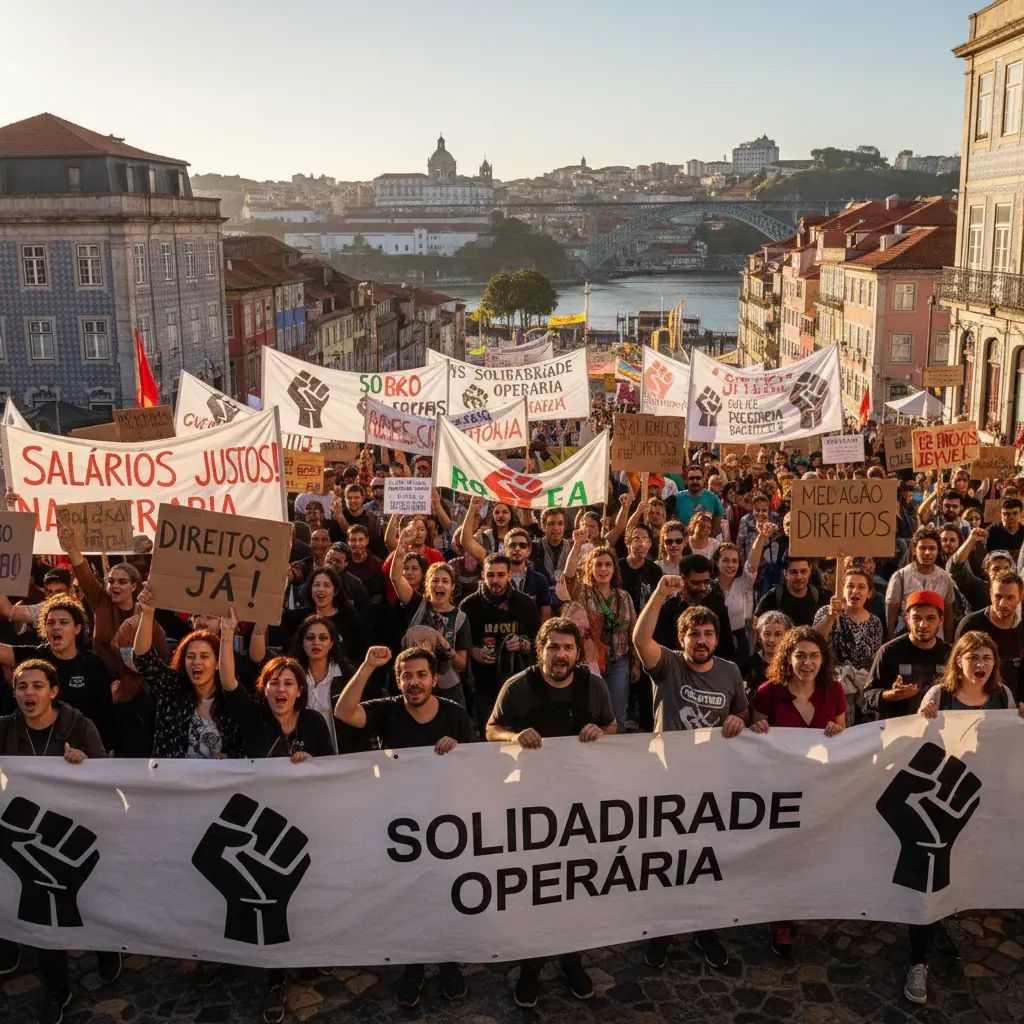
After nine months of negotiations, the Portuguese Government has failed to secure union backing for its labour reform package, setting the stage for a contentious parliamentary showdown that could redefine workplace rights for millions across the country. The Ministry of Labour confirmed the breakdown in social concertation talks and announced plans to submit legislation directly to parliament, bypassing the traditional consensus model that has governed labour law changes for decades.
Why This Matters:
• Workplace flexibility vs. job security: The reform would allow individual "flexi-time" agreements and extend temporary contracts to three years, measures unions say weaken worker protections.
• Dismissal rules under threat: Employers in all company sizes could avoid reinstating workers after unlawful termination, paying compensation instead—currently restricted to micro-firms.
• Parliamentary arithmetic unclear: Without Socialist Party support, the minority Government needs Chega or other opposition votes to pass the bill.
Union Stands Firm as Employers Signal Flexibility
The União Geral de Trabalhadores (UGT), representing one of Portugal's two major union confederations, rejected the final draft presented at the social concertation meeting. Mário Mourão, the UGT's secretary-general, described the proposal as "insufficient" despite acknowledging it was "much better than the July 2025 version." He clarified that the union had no further proposals to table and would now shift focus to lobbying parliamentary groups. Importantly, Mourão stated: "A UGT não exigiu que o Governo retirasse o pacote laboral. Nunca o exigi" (The UGT never demanded the Government withdraw the labour package), underscoring that the union's rejection focused on specific provisions rather than calling for wholesale withdrawal.
The Confederação Empresarial de Portugal (CIP), the country's leading business lobby, had signaled willingness to compromise on key sticking points, including the flexi-time bank and outsourcing restrictions. Labour Minister Maria do Rosário Palma Ramalho, however, blamed the UGT for "absolute intransigence," stating the union "did not concede on a single point" during final negotiations. She confirmed the Government would proceed with a legislative proposal incorporating elements from the original July draft, enriched with select contributions from the nine-month consultation process.
What This Means for Residents
For workers, the proposed changes represent a fundamental shift in employment law. The reintroduction of an individual flexi-time bank—abolished in 2019—would permit employers to negotiate hour adjustments directly with employees, bypassing collective bargaining. Critics argue this creates an imbalance of power, particularly in sectors with low unionization rates. Portugal currently requires flexi-time agreements to be approved by at least 65% of workers in a company referendum or through sector-wide collective contracts.
The reform also extends temporary contracts from two to three years for fixed-term roles, and up to five years for open-ended temporary positions. It broadens the legal grounds for using such contracts, including blanket permission for any firm in its first two years of operation, regardless of size. This extension of temporary arrangements raises concerns about employment precarity for younger workers in the labour market.
Perhaps most contentious is the provision allowing employers in all company sizes to oppose court-ordered reinstatement after wrongful dismissal. Under current law, this option is limited to micro-enterprises with fewer than 10 employees or senior management roles. The Government's proposal would let any employer claim "serious disruption" to business operations as grounds to substitute reinstatement with financial compensation.
Parliamentary Battle Lines Drawn
The Socialist Party (PS), the largest opposition force, labeled the collapse of talks a "defeat for Prime Minister Luís Montenegro." Miguel Cabrita, a PS deputy, accused the Government of mismanaging the process from start to finish and presenting proposals "never mentioned in the electoral program." He stopped short of announcing the party's vote, saying socialists would await the final text but pledged to block any measures that "worsen people's lives."
Chega, the populist-right party that has provided occasional support to the minority Government, expressed skepticism. Leader André Ventura said his party would vote against the reform as currently drafted unless it includes a reduction in the retirement age to 65 and enhanced compensation for shift workers. PSD, the Government's lead party, accused the PS of lacking "independent will" and being "instrumentalized" by the UGT, noting that the socialists passed labour reforms without social concertation consensus during their own majority government term from 2022 to 2024.
Left-wing parties went further. Bloco de Esquerda coordinator José Manuel Pureza called the failed negotiations an "enormous defeat" for the Government and urged immediate withdrawal of the package, describing it as "condemned to be defeated in Portuguese society." PCP parliamentary leader Paula Santos said the proposal "should not even reach parliament—that would be a favor the Government could do for workers and the country." Livre deputy Isabel Mendes Lopes echoed the call, describing the Government as "intransigent and arrogant."
Iniciativa Liberal (IL) broke from the left-right consensus, arguing the reform should proceed to parliament for "serious discussion." Party president Mariana Leitão criticized the social concertation model itself, noting that union membership covers only a small fraction of the workforce and that centrals are "stuck in a 20th-century model." She also faulted the Government for poor communication, saying it failed to explain how the changes would improve living standards, wages, or economic growth.
Strikes and Social Mobilization
A general strike is scheduled for June 3, organized by the CGTP, Portugal's second major union confederation, which has rejected the reform from the outset. The UGT has not yet committed to joining the strike, with Mourão stating the union is "not at that stage" and will first engage with parliamentary groups. A previous general strike on March 27 drew significant participation in public transport, healthcare, and local government sectors, though private-sector adherence was patchy.
Public opinion on the reforms reflects worker concerns about employment protections. The Minister acknowledged a general strike is "serious in terms of its impacts" while maintaining the Government "must fulfill its program" and uphold its "commitment to the Portuguese people."
What Comes Next
The Government will submit its legislative proposal to the Assembleia da República within days. The text is expected to resemble the July 2025 draft with select modifications drawn from concertation feedback. Parliamentary debate will likely stretch into June, with committee hearings, amendment rounds, and plenary votes. The minority Government controls 80 seats in the 230-seat chamber and requires support from Chega (50 seats), IL (8 seats), or a faction of the PS (78 seats) to pass the bill.
If the package clears parliament, President Marcelo Rebelo de Sousa could exercise his constitutional veto. During the 2024 presidential campaign, Rebelo de Sousa suggested he would block labour reforms lacking union consent, though he has not commented publicly on the current proposal. A presidential veto would return the bill to parliament, where a simple majority could override it.
For residents navigating employment contracts, the immediate impact depends on parliamentary timing. If passed before summer recess, new rules on temporary contracts and flexi-time could take effect as early as August, with dismissal provisions requiring regulatory implementation by the Autoridade para as Condições do Trabalho (ACT). Employers in sectors with low collective bargaining coverage—retail, hospitality, and logistics—would gain the most flexibility, while workers in unionized industries such as manufacturing and public services would retain stronger protections through existing collective agreements.
The political cost for the PSD-CDS coalition Government remains uncertain. Opinion polling has shown the administration's approval rating hovering near 40%, with labor policy emerging as a key vulnerability. The outcome of the June general strike, combined with parliamentary arithmetic, will determine whether the "Trabalho XXI" agenda becomes law or joins a growing list of stalled reforms in a fragmented legislature.