

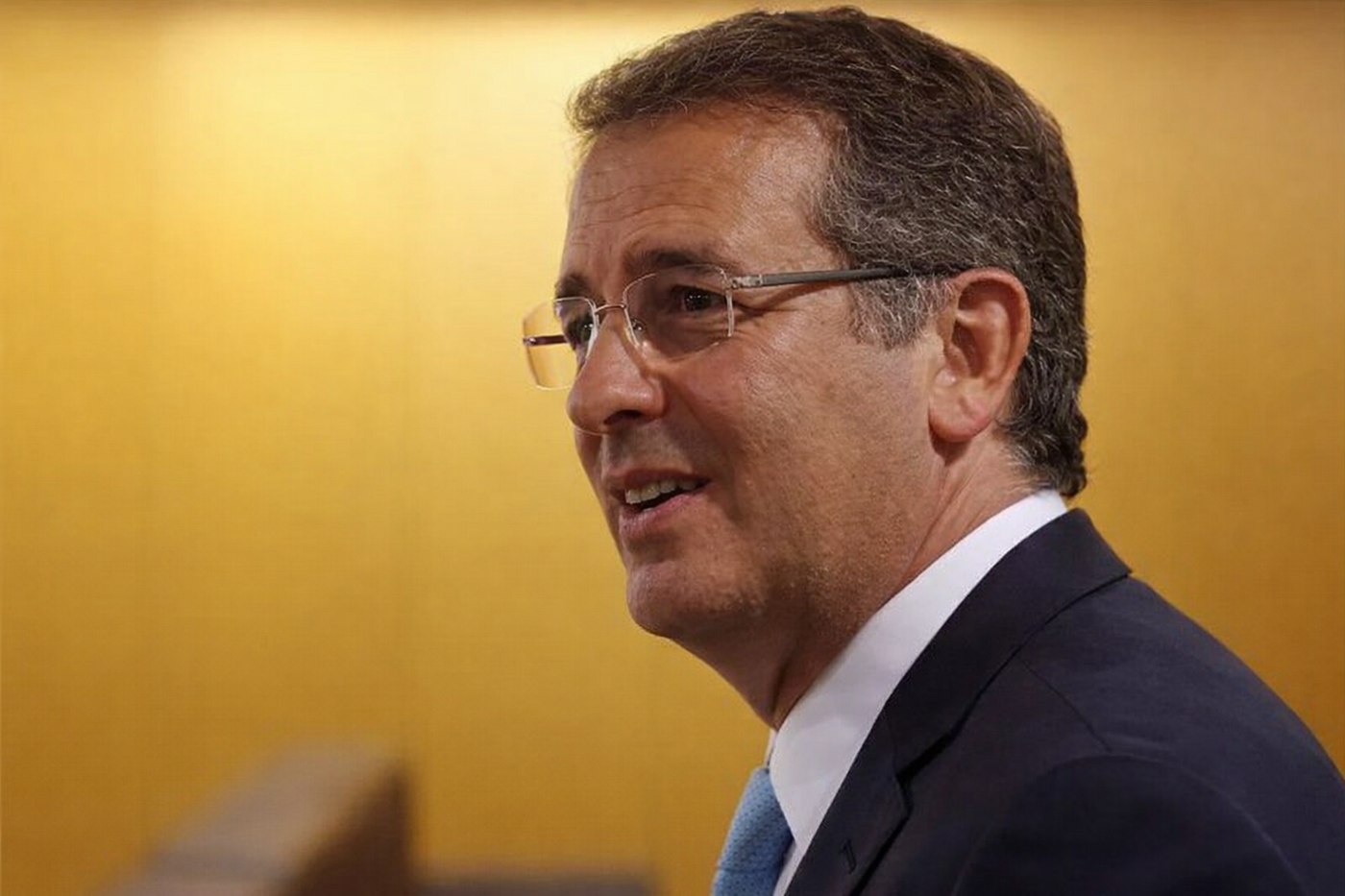
The Portugal Cabinet is navigating a delicate balancing act on energy costs, acknowledging that while much work remains to lower prices, many of the charges embedded in electricity bills are intrinsic to the system itself. This clarification came as Secretary of State Jean Barroca presented the 2026 Energy Policy Review conducted by the International Energy Agency (IEA), which called for structural reforms to how Portugal funds its energy infrastructure.
Why This Matters
• Portugal carries a €1,000M tariff debt that residents effectively repay through their monthly bills, with interest.
• The IEA recommends removing non-energy charges from electricity invoices and shifting them to the state budget—a move that could reshape household and business energy costs.
• New battery storage auctions and hydroelectric capacity are poised to replace expensive gas-fired backup power, potentially lowering system-wide costs within two years.
The €1,000M Debt No One Talks About
Portugal's electricity system is burdened by a tariff deficit of roughly €1,000M—a legacy of two decades of political decisions to shield consumers from the true cost of power. Since 2006, successive governments capped tariff increases to avoid sticker shock, deferring the gap between real costs and billed prices into an accumulating debt. By the end of 2026, projections indicate this figure will reach €1,081M.
Consumers are repaying this debt incrementally, often with interest. The Portugal Energy Services Regulatory Authority (ERSE) has proposed a 1% increase in regulated low-voltage tariffs for 2026, translating to less than €0.40 extra per month for most households. While modest, it underscores the ongoing burden of historical political compromises.
"These are bills we have to pay," Barroca stated bluntly during the IEA presentation.
Costs Baked Into the System
Beyond the tariff debt, Portugal's energy bills include Costs of General Economic Interest (CIEG), a catch-all category totaling more than €1,100M annually. Barroca detailed the breakdown:
• €600M in guarantee payments tied to long-term power purchase agreements.
• €200M for tariff convergence with the Azores and Madeira, ensuring the archipelagos pay rates comparable to the mainland despite higher generation costs.
• €315M in municipal rents from low-voltage concessions, a revenue stream municipalities rely on for local budgets.
"All of these are system costs," Barroca emphasized. "We can call them political choices, but they generate energy for the system. I'm not certain we can consider them costs that aren't part of the system."
This defense directly counters the IEA's central recommendation: that charges unrelated to energy generation or grid operation should be removed from electricity bills and absorbed by the Portugal State Budget through clear multi-year commitments. The agency argues that bundling these costs into power tariffs artificially inflates prices and discourages electrification—a key pillar of decarbonization.
The IEA's review identifies several charges ripe for removal, including legacy subsidies, energy efficiency contributions, social tariff financing, extraordinary energy sector levies, and even audiovisual fees.
What This Means for Residents
For those living in Portugal, the debate is more than academic. Energy prices in Portugal remain among the highest in Europe. As of March 2026, natural gas in Lisbon cost 13.8 cents per kWh, compared to an EU average of 10.6 cents—the fourth most expensive rate on the continent. Electricity prices, while more competitive due to high renewable penetration, still carry the weight of the tariff debt and CIEG charges.
If the IEA's recommendations are adopted, the shift could mean:
• Lower electricity bills as non-energy charges migrate to general taxation.
• Greater transparency in what households actually pay for energy versus policy obligations.
• Increased incentive for electrification of heating, transport, and industrial processes, as the relative cost of electricity versus fossil fuels improves.
However, the trade-off is clear: what leaves the energy bill enters the tax bill. Whether this results in net savings for residents depends on how the Portugal Ministry of Finance structures the transition and whether broader fiscal reforms accompany the shift.
Gas, Batteries, and the Path to Lower System Costs
Barroca acknowledged that regulatory charges—distinct from CIEG—are driven by the need to keep combined-cycle gas plants operational, even when they're not selling power. These plants provide critical grid services like frequency regulation and rapid response capacity, ensuring stability when solar and wind output dips.
"The regulatory charges in Portugal are mainly due to the need to have natural gas plants operating to provide services to the system, even if they're not selling energy," he explained.
But this cost driver is set to diminish. Portugal plans to auction 750 MVA of battery storage capacity before January 2026—a dramatic leap from the less than 20 MW currently online. Coupled with expanded hydroelectric pumped storage, including the doubling of "black start" capacity at facilities like Alqueva, these technologies can replace gas for daily grid balancing.
"This decarbonization of total system costs is something much more immediate that we are working on," Barroca said.
Still, he cautioned against abandoning gas entirely. Portugal's renewable electricity share exceeded 80% in January 2026, but prolonged low-wind or low-sun periods still require backup. Gas remains the bridge fuel for security of supply, particularly during winter demand peaks or extended droughts that reduce hydroelectric output.
The Capacity Mechanism on the Horizon
Portugal is finalizing a 2026 supply security monitoring report in collaboration with the grid operator (REN), ERSE, and the Directorate-General for Energy and Geology. Once complete, the government will submit a state aid request to the European Commission to establish a capacity mechanism—a framework that pays gas plants to remain on standby, ready to generate if needed, rather than compensating them for actual generation.
"You pay them to be ready to work, but much less," Barroca clarified.
This model mirrors capacity markets in other EU states and aims to lower costs while maintaining reliability. It represents a middle path: reducing reliance on fossil fuels without sacrificing grid security.
Renewable Gas and Future-Proofing the Network
Portugal is hedging its bets on gas by rapidly scaling up biometano production. The country has the technical capacity to replace up to 60% of natural gas consumption with domestically produced biomethane from agricultural and organic waste. More than 200 connection requests for biomethane projects have been filed with the grid, with roughly 18 contracts already signed and several plants expected online in 2026.
Biomethane is chemically identical to natural gas and fully compatible with existing pipelines, making it a drop-in replacement that requires no infrastructure overhaul. Portugal's modern gas distribution network is also being prepared to integrate hydrogen, though some experts caution against blending hydrogen with fossil gas due to efficiency losses.
The April 2026 Decree-Law 94/2026 establishes planning for the National Gas Transport Network and LNG Terminals, creating a cost-sharing mechanism for renewable gas producers and embedding energy efficiency principles into network planning and tariff-setting.
Strategic Reserves and Infrastructure Resilience
Portugal entered March 2026 with gas reserves at 82.37% of capacity—well above the EU average of under 30%. This cushion, combined with diversified LNG supply from the United States, Brazil, Nigeria, and Algeria via the strategic Sines terminal, insulates Portugal from supply shocks, if not price volatility.
Two new underground gas caverns are under construction at Carriço (Pombal), set to add over 1.2 TWh of storage capacity between 2027 and 2028, further bolstering resilience.
IEA's Broader Vision for Portugal
The IEA's 2026 Energy Policy Review includes 10 recommendations beyond tariff restructuring. Among them:
• Support for used electric vehicle purchases by low-income families, aimed at accelerating transport electrification without straining household budgets.
• Proactive grid planning to anticipate renewable capacity growth and avoid bottlenecks that delay projects or require costly retrofits.
These measures align with Portugal's National Energy and Climate Plan 2030 (PNEC 2030), which targets 1.5 GW of battery storage and continued expansion of wind and solar capacity.
The Political Calculus
Barroca's defense of CIEG charges as "system costs" reflects the political tightrope the government walks. Shifting these charges to the state budget would clarify energy pricing but also expose the fiscal cost of policy choices—municipal rents, island subsidies, and legacy contracts—that enjoy broad political support.
For residents, the question is whether the government prioritizes price transparency and competitiveness over the status quo. The IEA has laid out a roadmap; implementation is now a matter of political will and negotiation with Brussels on state aid rules.
As Portugal accelerates its energy transition, the interplay between tariff structure, renewable deployment, and fiscal policy will determine whether the country can deliver on its promise of affordable, clean, and reliable power.


