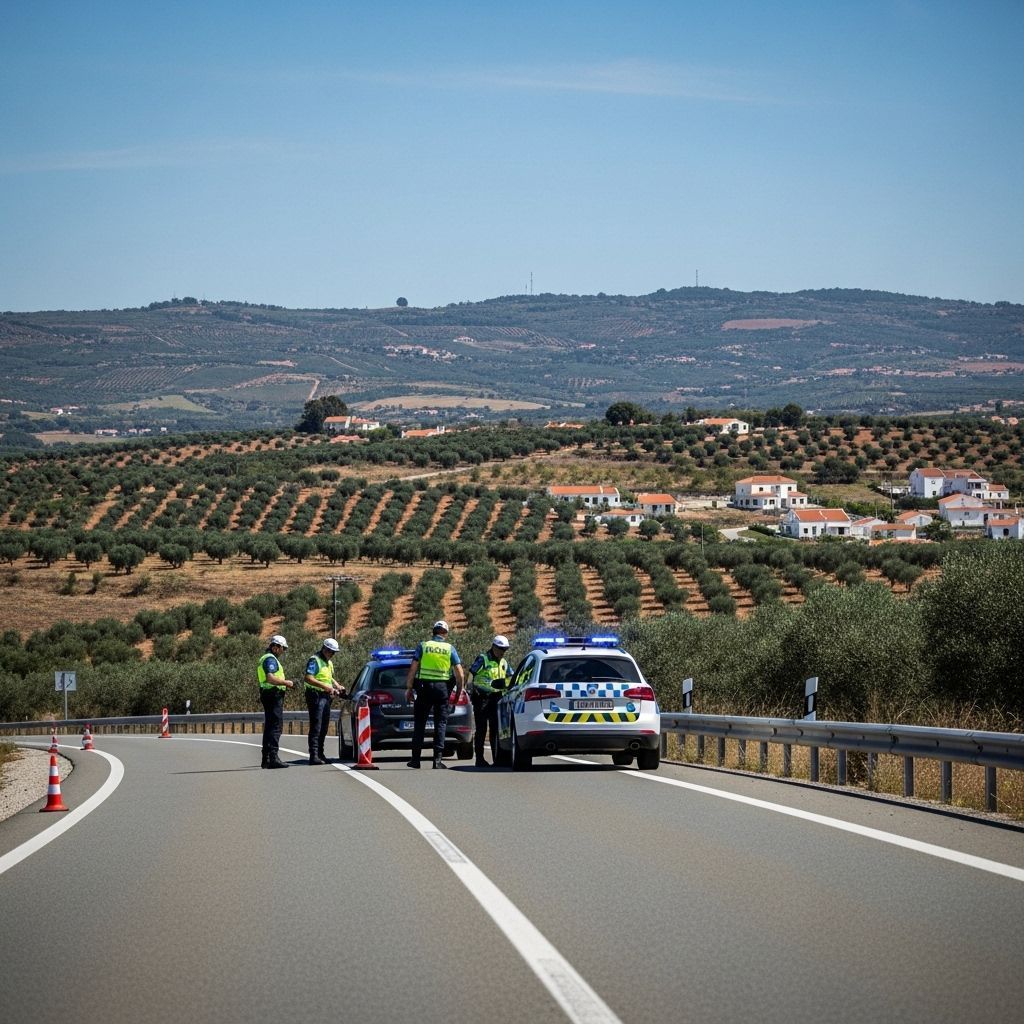
The Portugal National Emergency and Security Network (SIRESP) remains plagued by technical failures and allegations of management irregularities, prompting opposition lawmakers to demand transparency and emergency communications workers to announce a strike ahead of the critical wildfire season. The country's emergency services backbone—vital for coordinating firefighters, police, and civil protection—has repeatedly collapsed during major incidents, leaving first responders without communications when they need them most.
Why This Matters:
• Strike planned for late June: Emergency telecoms operators will walk off the job for one week, potentially disrupting administrative coordination during early summer fire risk.
• €36M upgrade underway: Four new mobile base stations will be activated in July, with TETRA radios being distributed to municipalities to bypass commercial network failures.
• Audit controversy: A Finance Inspectorate report on SIRESP S.A.'s management from 2022–2024 has become a political flashpoint, with opposition parties demanding full public disclosure.
• Decade-long overhaul proposed: A hybrid model is now official policy, but full modernization could take over 10 years.
Technical Failures Expose Critical Vulnerability
SIRESP's reliability crisis stems from systemic weaknesses that have been documented across multiple emergency events. During the prolonged power outage of April 2025, which lasted over 8 hours, 15% of base stations went completely offline after 8.5 hours, exceeding the capacity of their aging batteries. In the Algarve, emergency medical services lost all communication capability. The Kristin storm in early 2026 triggered 21 simultaneous power failures, confirming that the network's energy autonomy—designed for 6-hour outages—is inadequate for extended disasters.
The system's terrestrial fiber-optic backbone has proven vulnerable to physical damage. During the Pedrógão Grande fires of 2017 and the Monchique blazes of 2018, flames destroyed transmission lines and towers, severing communication links. At the peak of the 2025 outage, 75% of the antenna network lost transmission capacity. Even the satellite redundancy system, operated by NOS Comunicações, failed precisely when it was most needed.
Energy infrastructure has been a persistent Achilles' heel. While a modernization plan aimed to equip stations with batteries offering 10–22 hours of autonomy, only 27% had received the upgrade by the time of the 2025 blackout. A generator malfunction in northern Portugal knocked out 108 stations for 70 minutes in 2025, exposing gaps in emergency power systems. Security audits in 2022 identified "very high risks" including the possibility that external actors could track the location of field personnel and that technicians with system access could listen to operational communications undetected.
Management Scandal Deepens Political Crisis
The resignation of António Pombeiro, Deputy Secretary-General of the Portugal Ministry of Internal Administration (MAI), has turned SIRESP into a political battleground. In an email dated April 28, Pombeiro justified his departure by citing irregularities during the tenure of General Paulo Viegas Nunes as president of SIRESP S.A. from 2022 to 2024. He resigned again on a Friday in May, repeating his allegations.
The claimed irregularities include favoritism, conflicts of interest, irregular public procurement procedures, and contracts awarded through questionable direct-award processes—including over €94,000 to the consultancy Euritex. Other allegations involve excessive payments to board members, company vehicles for personal use without proper regulation, unauthorized accumulation of roles, and attempts to transfer operational control of the network to military authority.
Minister of Internal Administration Luís Neves has expressed "absolute confidence" in Viegas Nunes, referencing a Finance Inspectorate (IGF) audit that found no illegalities and confirmed that procedural irregularities were fully corrected. Viegas Nunes returned to the presidency of SIRESP S.A. this week. However, opposition parties—including Chega, Liberal Initiative (IL), Livre, and the Left Bloc—are demanding full parliamentary access to the IGF report.
André Ventura, president of Chega, claims to possess email evidence showing that Valentina Marcelino, an adjunct in the Interior Minister's office, requested "some adaptations for the public version" of a SIRESP working group report, which he characterized as an attempt to "hide information" and "condition what was in the report." Ventura plans to raise corruption and collusion concerns directly with the President of the Republic during a meeting scheduled at Belém Palace this week.
Neves defended his office's actions, explaining that the email in question related to simplifying an excessively technical presentation for public consumption, not suppressing findings. Rui Tavares of Livre stated his party supports parliamentary hearings but wants to see the full IGF audit "before any parliamentary hearing." José Manuel Pureza, coordinator of the Left Bloc, dismissed what he called "a blame game" and demanded the government focus on delivering "a functioning emergency communications system" rather than relitigating past management disputes.
What This Means for Residents
The immediate consequence is a planned one-week strike by emergency telecommunications operators at the end of June, organized by the Independent Union of Forest, Environment, and Civil Protection Workers (SinFAP). Union president Alexandre Carvalho emphasized that "rescue operations will be guaranteed," but administrative tasks—including issuing readiness alerts and routine communications—will be suspended. The timing coincides with the onset of wildfire season, raising concerns about coordination gaps during a high-risk period.
For residents in fire-prone zones or areas vulnerable to severe weather, the ongoing SIRESP weaknesses mean communication blackouts remain a real possibility during major incidents. The €36M investment from the Recovery and Resilience Plan (PRR) and Council of Ministers Resolution 17-A/2026 is delivering tangible short-term improvements: four additional mobile base stations will be activated from July onward, deployable to critical zones during operations. TETRA radios are being distributed to municipal authorities, allowing them to bypass commercial networks and maintain direct links with civil protection, security forces, and emergency services even when commercial infrastructure fails.
The long-term strategy adopts a hybrid model that allows the Portugal government to retain control over critical network infrastructure while leveraging existing territorial coverage. This approach is seen as a cost-effective compromise compared to building an entirely new sovereign network. However, a working group has proposed a national critical communications system with a transition period extending beyond 10 years. Minister Neves indicated that a decision on whether to build a completely new system will be a future political choice—for now, the focus is on transforming the current system into a more resilient, sovereign network without creating a new entity.
European Context and Alternatives
Other European Union countries have moved decisively toward more robust models. The Netherlands operates C2000, a TETRA-based digital system with over 95% national coverage and high operational resilience. France is deploying the "Réseau Radio du Futur" (RRF), a next-generation network based on 4G/5G technology that supports high data throughput, video transmission, and real-time situational awareness. Germany uses BOS Digitalfunk, also TETRA-based, and is exploring complementary broadband solutions.
The European Union's Civil Protection Mechanism (EUCPM) and its Emergency Response Coordination Centre (ERCC) coordinate cross-border disaster response through the Common Emergency Communication and Information System (CECIS), facilitating real-time information exchange. The EU Electronic Communications Code Directive mandates public warning systems—such as Cell Broadcast (EU-Alert)—in all member states, with countries like France, Germany, Spain, and Italy deploying national variants. Portugal lags behind in adopting these complementary alert platforms, which use broadcast messages to mobile devices during large-scale emergencies, bypassing the need for dedicated radio infrastructure.
Interoperability and resilience are European priorities. Portugal's reliance on a fragmented contract model—spanning NOS, MEO, and Altice—has complicated emergency coordination. By contrast, Denmark migrated to a unified national TETRA network through its SINE Agency, centralizing control and simplifying accountability.
Path Forward Remains Uncertain
The government faces mounting pressure from multiple directions. SinFAP is demanding the creation of a formal career pathway for emergency telecoms operators and a reorganization of the National Authority for Emergency and Civil Protection (ANEPC), including the restoration of District Commands for Relief Operations, which were replaced by 24 Sub-Regional Commands in 2023. Workers argue they are the "backbone of any civil protection system" but remain "forgotten" in policy debates.
Politically, the SIRESP scandal has united an unusual coalition of opposition parties demanding accountability. Pureza argued that "every time SIRESP has to function, it doesn't," pointing to a pattern stretching across successive governments. He also criticized the role of private operators, stating they have avoided responsibility despite repeated system failures. Tavares of Livre emphasized that "whenever there are allegations about proper management of public funds, contract awards, and procurement decisions—especially on something as important as SIRESP—everything is important, everything is concerning, and must be investigated to the end."
Minister Neves has defended Viegas Nunes and the ministry's handling of both the technical modernization and the political controversy. Whether that defense holds will depend on the content of the IGF audit, which remains partially withheld from public and parliamentary scrutiny. For now, the €36M upgrade and the planned hybrid model represent incremental steps toward a more reliable system—but full transformation remains, by the government's own admission, a decade away.
Residents, first responders, and local authorities will continue to operate within a system that has repeatedly failed them during the moments of greatest need. The strike at the end of June will test whether the government's promises of "resilience" and "sovereignty" translate into real operational continuity—or whether SIRESP remains, as critics charge, a network that "doesn't function when it has to function."