

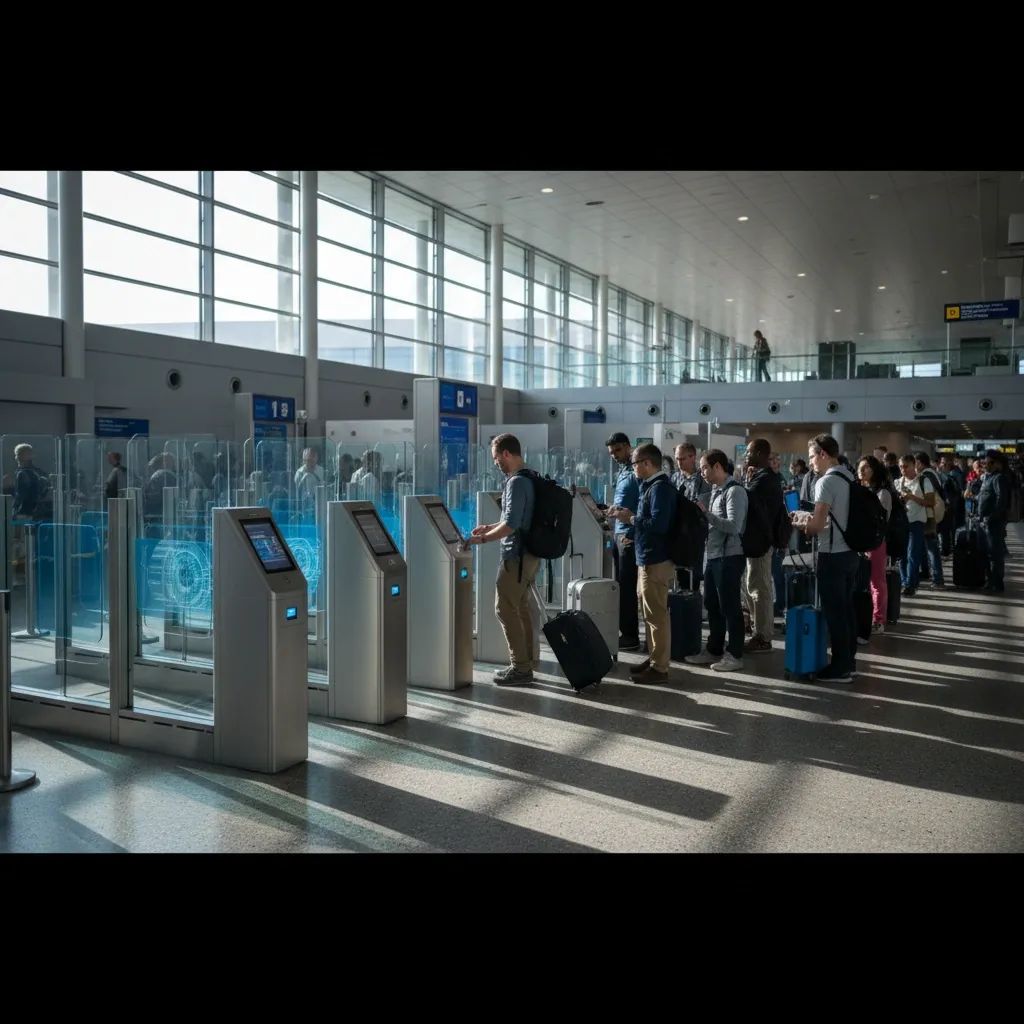
The Portugal Cabinet has signaled its willingness to temporarily suspend the European Union's Entry/Exit System (EES) at airports during peak travel hours, a move designed to avoid severe operational disruption at Lisbon's Humberto Delgado Airport and other major entry points. Prime Minister Luís Montenegro told parliament that safeguarding the economy and national reputation will take precedence over strict compliance if border congestion escalates.
Why This Matters:
• Travel disruption mitigation: If you're flying into or out of Portugal soon, authorities may revert to manual passport stamping during congestion spikes to cut wait times.
• Tourism industry relief: The hospitality sector, already concerned about operational pressure warnings from trade groups like AHRESP, could see relief if suspensions prevent further delays.
• Legal flexibility confirmed: EU regulations permit temporary exemptions from biometric data collection when passenger flow exceeds processing capacity—Portugal now says it will use that option.
A System Designed to Fail Under Pressure
The EES, which fully activated across all Portuguese borders on April 10, 2026, replaced the traditional passport stamp with a digital registry capturing fingerprints and facial images from non-EU travelers entering the Schengen zone for short stays. The goal was tighter security and streamlined data management. The reality has been three-hour check-in advisories and mounting frustration among passengers and airlines alike.
Lisbon's airport became the flashpoint in December 2025, when the Portugal Ministry of Internal Administration suspended EES operations for three months. The system was gradually reintroduced in March, but bottlenecks persist. Montenegro acknowledged that "we are not satisfied" with the system's performance, particularly when arrival peaks strain capacity. Yet he also pointed a finger at the previous Socialist government, blaming the October 2023 dismantling of the Serviço de Estrangeiros e Fronteiras (SEF) for fragmenting border control among multiple agencies and eroding institutional memory.
The Portugal Public Security Police (PSP) now manages airport checks via its National Unit for Foreigners and Borders (UNEF), while the National Republican Guard (GNR) oversees land and sea crossings, and the Judicial Police (PJ) tackles trafficking and organized immigration crime. Critics, including the Observatory for Internal Security, warned as early as 2022 that splitting SEF's responsibilities risked coordination failures and uneven enforcement. Those fears materialized: former SEF officials report "difficulties in management and operability" and a loss of the integrated oversight that once characterized Portuguese border control.
The Political Calculus Behind Suspension
Montenegro's statement during the fortnightly parliamentary debate was carefully worded but unambiguous: "If we need to suspend a procedure to ensure security and protect the economy—whether reputationally or concretely—we exclude nothing at this stage." He framed the decision as a pragmatic use of EU flexibilities, which permit member states to waive biometric collection for up to six hours at overwhelmed crossing points under "exceptional circumstances."
The European Commission has confirmed that such dispensations are permissible when passenger volumes exceed processing limits. The EES regulation itself, while mandating the digital system, grants member states leeway to prevent "unacceptable queues and missed connections." During those periods, border officers can revert to manual stamps, though the central database remains active. Portugal had already exercised this option once; repeating it during the summer travel season—when Faro and Porto airports see inbound volumes spike—appears increasingly likely.
Industry bodies have amplified the pressure. Airlines for Europe and ACI EUROPE both called for greater flexibility or outright suspension after the April rollout, citing chaos at multiple hubs. In Portugal, the Algarve Tourism Board expressed alarm over reputational damage, while AHRESP warned that prolonged disruption could deter repeat visitors and tarnish the country's standing as a top European destination.
Technology and Manpower: The Dual Challenge
The government insists help is on the way. By the end of June 2026, more than 300 additional police officers are scheduled to join border operations, supplementing the existing PSP and GNR contingent. Authorities have also rolled out self-service kiosks and e-gates for travelers holding biometric passports, and a new mobile app—"Travel to Europe"—allows non-EU passengers to pre-register passport and biometric data up to 72 hours before arrival, theoretically reducing processing time at the counter. You can download the app on iOS and Android platforms before your trip.
Yet the underlying structural weaknesses remain. The PSP lacks the depth of institutional expertise that SEF accumulated over decades. Equipment shortages, outdated IT infrastructure, and insufficient training have all been cited as contributing factors. The European Commission has acknowledged member-state struggles and offered technical support, but concrete assistance has yet to materialize at scale.
What This Means for Residents
For anyone living in Portugal—especially those working in tourism, hospitality, or transport—the border system's instability poses direct economic risk. Summer is traditionally peak season, and prolonged queues translate to missed flights, cancellations, and negative reviews that ripple through booking platforms. If you operate accommodations or services targeting international visitors, monitor government announcements on the official SEF successor website and airport updates: a suspension could ease congestion but may also signal deeper systemic dysfunction.
If you're traveling abroad yourself, factor in the uncertainty. The official advice remains to arrive at least three hours before departure, and that buffer is no longer a suggestion. Download the "Travel to Europe" app—available now on both iOS and Android—if you're returning from a non-Schengen destination; pre-registration could shave 10-15 minutes off your re-entry process. Families with children under 12 can request assisted lanes to reduce stress and wait times. The expected wait-time improvements should materialize by late June when the 300 additional officers reach full deployment.
Infrastructure Challenges: The Broader Context
The border crisis reflects wider institutional strain in Portugal's security apparatus. During the same parliamentary session, Prime Minister Montenegro addressed broader challenges facing the country's critical infrastructure, including communications systems. These pressures underscore a systemic need for modernization across multiple government sectors. The government has committed to addressing both the immediate border bottlenecks and the underlying infrastructure gaps over the coming months.
The Accountability Question
Montenegro emphasized that "the focus is correcting what failed in the past," but opposition parties have pressed him to address the present. The Portugal Socialist Party (PS), now in opposition, argues that the government's repeated invocation of past mistakes deflects from its own responsibility to deliver solutions. Interior Minister Luís Neves has pledged to appear before parliament to explain border delays and coordinate wider security improvements, though no specific date has been set.
For residents, the takeaway is straightforward: Portugal's border infrastructure is under strain, and the fixes will unfold over the coming months. The government has legal room to suspend EES during crunch periods, which may prevent the worst congestion. But longer-term confidence depends on whether the reinforcements—both human and technological—arrive on schedule and function as promised.
The summer of 2026 will serve as a stress test. If the additional 300 officers arriving by June and the pre-registration app succeed in smoothing the flow, suspensions may prove unnecessary. If not, travelers and businesses alike should prepare for an extended period of adjustment at Portugal's borders.


