

Portugal's Airports Face a Staffing Reset as Summer Travel Season Looms
The Portugal Ministry of Internal Affairs is mounting a two-phase emergency deployment to unclog its most critical infrastructure chokepoint: international passenger processing at the nation's three primary aviation hubs. Starting this Friday, 48 additional PSP officers arrive at Lisbon's Humberto Delgado Airport for immediate crowd management, followed by a far larger 360-officer contingent beginning July 3 once their specialized border training concludes. The action signals tacit acknowledgment that the European Union's new Entry/Exit System (EES), live since October 2025, has overwhelmed aging terminal infrastructure and exposed chronic staffing deficits the government can no longer ignore.
Why This Matters
• This week's deployment: 48 PSP agents provide temporary relief but won't fundamentally reshape queue dynamics; the real operational shift occurs in July.
• Summer staffing plan: 150 new border officers land in Lisbon alone by early July, complemented by 90 in Porto, 70 in Faro, plus Azores and Madeira postings.
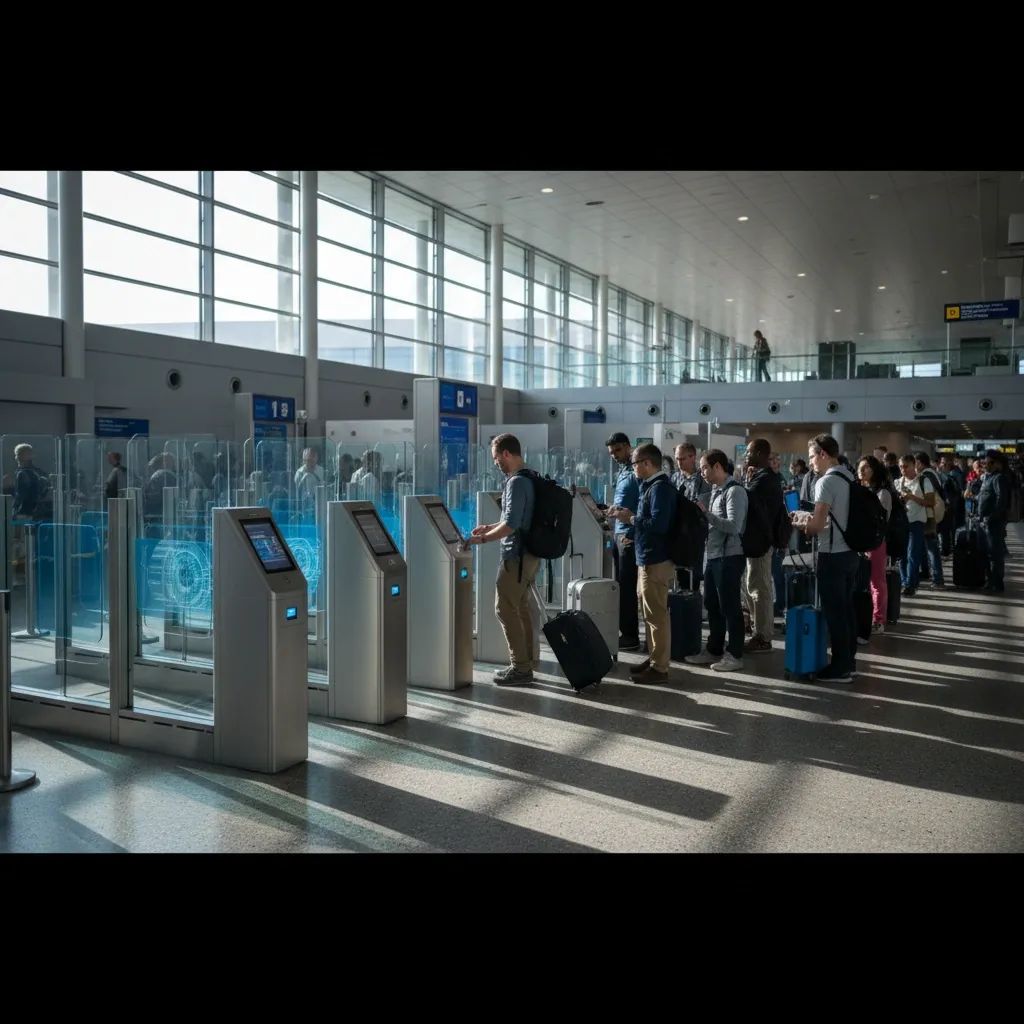
• Physical expansion: Lisbon airport adds 14 new manual passport control booths and 14 automated e-gates for arrivals, with parallel upgrades at Porto and Faro in June-July.
• The deeper issue: Infrastructure was designed for 1990s-era passenger volume; travel demand has climbed 65% over the past decade while terminal capacity remained static.
The Infrastructure Mismatch Nobody Wants to Say Out Loud
Travel through a Schengen entry airport in spring 2026 and the dysfunction becomes visceral. Non-EU travelers face protracted waits at passport control—sometimes stretching to 90 minutes during flight banks—a jarring experience that ripples through tourism perception. The root cause isn't the EES system itself, which functions technically. The bottleneck is structural: Lisbon's main terminal, built decades ago, lacks sufficient booth capacity, and staffing levels assumed a smaller traveler population than currently arrives.
When the Portugal PSP Training School in Torres Novas graduated 570 recruits this week, 360 were earmarked exclusively for UNEF (the Unidade Nacional de Estrangeiros e Fronteiras), responsible for aviation border control nationwide. These officers face a four-week specialist course starting immediately and will be operational by July 3. A parallel group of 210 graduates remains in the Lisbon Metropolitan Command for general policing. PSP Director Luís Carrilho framed the intake as a "significant operational reinforcement," yet also admitted the force operates under a persistent staffing shortfall accumulated over years of underinvestment.
Rebalancing retirement outflows against new hires, Interior Minister Luís Neves said, will require "two, three, or four years" of successive recruitment cycles. The government has now committed to conducting two formal training courses annually—a frequency abandoned over 15 years ago. The next cohort of 683 recruits begins in June, underscoring the scale of the deficit.
Where the New Officers Go—And Why That Matters
The 360 newly graduated officers will distribute across Portugal's aviation infrastructure as follows:
• 150 officers → Lisbon (the pressure point)
• 90 officers → Porto (second-busiest hub)
• 70 officers → Faro (Algarve gateway)
• 30 officers → Azores airports
• 20 officers → Madeira
This allocation reflects passenger volume hierarchy but also exposes a calculation: even with the surge, Lisbon remains significantly understaffed relative to contemporary flight traffic. The 48 officers arriving this week are a holding measure—a gesture of motion rather than a game changer. Summer 2026 will likely remain operationally challenged, albeit marginally better than spring.
What Terminal Upgrades Actually Mean
Beyond personnel, the Ministry of Internal Affairs is pushing through physical infrastructure improvements. Lisbon airport is adding 14 new passport control booths to its arrivals zone, raising capacity from 20 to 34. Departures gain 4 additional booths, bringing that sector from 14 to 18. On the automated side, 14 new e-gates (self-service facial recognition portals) deploy in arrivals, nearly doubling capacity from 17 to 31, with 4 more in departures for a total of 18.
Porto and Faro receive comparable upgrades throughout June and July, though the government hasn't released granular specifics. The Portugal government allocated €7.5 million between 2026 and 2028 for e-gate procurement, software, and maintenance across all border control infrastructure—part of the broader EU "Smart Borders" initiative.
These e-gates function via facial recognition technology, matching a traveler's face against passport chip data. Once a third-country national has been processed through EES, they can use e-gates on subsequent trips (valid typically for three years). The mechanism itself is sound; the problem remains supply and demand equilibrium.
The Biometric Reality: What Travelers Actually Experience
Portugal implemented the EES on October 12, 2025, replacing traditional passport stamps with digital biometric records (facial imagery and fingerprints) for non-EU travelers. By December 10, 2025, biometric collection began operational deployment. The system captures data for all non-Schengen citizens entering for stays under 90 days within any 180-day window.
In April 2026, the strain became acute. Portugal temporarily suspended biometric collection at departure gates in Lisbon, Porto, and Faro after passenger wait times climbed past acceptable operational limits. Departing travelers faced multi-hour delays, and airlines began logging missed connections. Tourism operators and ground staff confirmed what official statistics downplayed: the congestion was genuine, sustained, and economically damaging.
Prime Minister Luís Montenegro publicly acknowledged the dysfunction, suggesting the government might temporarily disable the biometric collection during peak travel periods—essentially reverting to manual processing when the system became a liability. The proposal reveals the tension between EU regulatory ambition and Portuguese operational capacity.
Why Pre-Registration Matters—But Won't Solve Everything
Frontex, the European border agency, created the "Travel to Europe" mobile application, permitting non-EU travelers to upload passport details and a facial photograph up to 72 hours before arrival or departure. The tool is voluntary, not mandatory. For users, processing time typically shortens by 10 to 15 minutes, though biometric capture at the border remains obligatory.
Portugal has recommended the app to travelers, but adoption varies. Travel agencies report that fewer than 30% of non-EU passengers preregister, leaving the majority dependent on real-time border processing. Airlines and tour operators, frustrated by accumulating delays, have begun rerouting some intercontinental connections away from Lisbon hubs toward hubs with lighter traffic or superior infrastructure—a quiet exodus affecting Portugal's competitive position in long-haul tourism markets.
The Portuguese Association of Travel and Tourism has sent warnings to the government that sustained border delays risk Portugal's reputation in non-Schengen markets (the Americas, South Africa, India, Southeast Asia)—precisely where tourism revenue concentrates. "We're hearing from clients that they're now considering alternatives," one association spokesperson noted in May.
The Political Dimension: Image versus Reality
Minister Luís Neves has adopted a combative posture regarding media coverage of airport congestion. He accused news outlets of "image manipulation," claiming that footage showing hours-long queues misrepresented actual conditions. "We went to do our work, and in the moments that were broadcast, it didn't even reach one hour," he stated, implying that peak waits he personally observed fell short of the dramatized versions circulating online.
However, ground-truth accounts from passengers, airline crews, and tourism professionals paint a different picture. Congestion is genuine, variable but frequently substantial, and reshaping travel planning for thousands weekly. The government has scheduled a negotiation session with PSP and GNR (National Republican Guard) labor unions for early June to address wages and working conditions. Recruitment struggles in a "full employment" Portuguese labor market, where competing private-sector opportunities are abundant. "We need to make the PSP attractive again," Neves acknowledged, expressing what he labeled "deep optimism" about stabilizing force capacity over the medium term—a statement that, in context, registers as aspirational rather than grounded.
ETIAS: The Next Layer of Complexity
Compounding current pressures is the European Travel Information and Authorization System (ETIAS), slated to launch in the final quarter of 2026 following a six-month transition window. ETIAS functions as a pre-departure travel authorization for non-visa-required third-country nationals—essentially a digital counterpart to the U.S. ESTA system. Travelers will submit online applications; once approved, authorizations remain valid for three years.
The underlying logic is reasonable: pre-screening for security risks should theoretically accelerate border processing. Yet layering ETIAS atop an already strained EES infrastructure raises unaddressed operational questions. If Portuguese airports struggle with EES implementation now, their capacity to absorb an additional procedural gate without amplifying delays remains unclear. The Ministry of Internal Affairs has not publicly articulated a contingency plan should ETIAS onboarding occur before EES stabilizes.
The Staffing Reality: A Multi-Year Correction Path
The government's acknowledgment of systemic understaffing is significant. PSP Director Luís Carrilho and Minister Neves both conceded that the force operates under chronic resource constraints. Balancing retirements against new hires, Neves estimated, will require "two, three, or four years" of consecutive training cycles at maximum throughput. Currently, the force aims to graduate two cohorts annually—a frequency not sustained in over 15 years.
The June cohort of 683 recruits will begin formal training shortly, with 85 of this week's 570 graduates being women, representing gradual progress on force diversification. Yet recruitment remains competitive; a full employment labor market means police work competes unfavorably against private sector salaries and conditions. The government's June negotiation with unions signals an intent to improve compensation and workplace conditions—tacit admission that retention and recruitment require structural, not cosmetic, adjustments.
Practical Guidance for Summer Travel
For residents, expatriates, and frequent travelers, the operational message is straightforward: buffer time, plan ahead, and use available tools. The 48 officers deployed this Friday provide incremental relief but won't eliminate congestion. The meaningful improvement window opens in early July when the 360-officer cohort activates and infrastructure upgrades go live.
Until July, travelers from outside Schengen should:
• Arrive at the airport 45 minutes earlier than normal for international departures.
• Download the "Travel to Europe" app and pre-register if non-EU; processing time reduction is modest but real.
• Use e-gates where available for departures; biometric re-enrollment is faster than manual booth processing.
• Travel during off-peak flight times if flexibility exists; morning and late-afternoon flight banks concentrate congestion.
• Check real-time airport advisories before travel; occasional system outages or surge hours may warrant rescheduling if possible.
Airlines have communicated extended boarding windows to accommodate border delays. However, connecting passengers face heightened risk of missing onward flights; the 48 officers this week and subsequent July reinforcements reduce but don't eliminate this risk for summer 2026.
The Fundamental Constraint: Infrastructure Hasn't Kept Pace
What crystallizes from this multi-month unfolding is a systems mismatch rather than a crisis of management competence. The EES system works technically. Officer recruitment and training, while delayed, are now accelerating. Terminal improvements are genuinely underway. Yet all these measures address symptoms, not the root architectural problem: Lisbon's primary airport terminal was engineered for a different volume of international traffic.
Passenger arrivals have surged 65% over the past decade. Terminal footprint and internal design have remained essentially static. Manual booth capacity and e-gate infrastructure, while expanding, still lag the scale required for contemporary peak-hour demand. The only structural fix—comprehensive terminal redesign or expansion—requires years of planning and billions in capital investment. Neither is imminent.
For summer 2026, travelers and residents must adapt expectations. The government is acting tangibly: officers are deploying, booths are being installed, technology is being upgraded. Whether these tactical measures sufficiently narrow the gap between policy ambition and operational reality—enough to prevent tourism reputation damage—remains the season's most consequential unresolved question. The July cohort arrival will provide the first meaningful test.


