

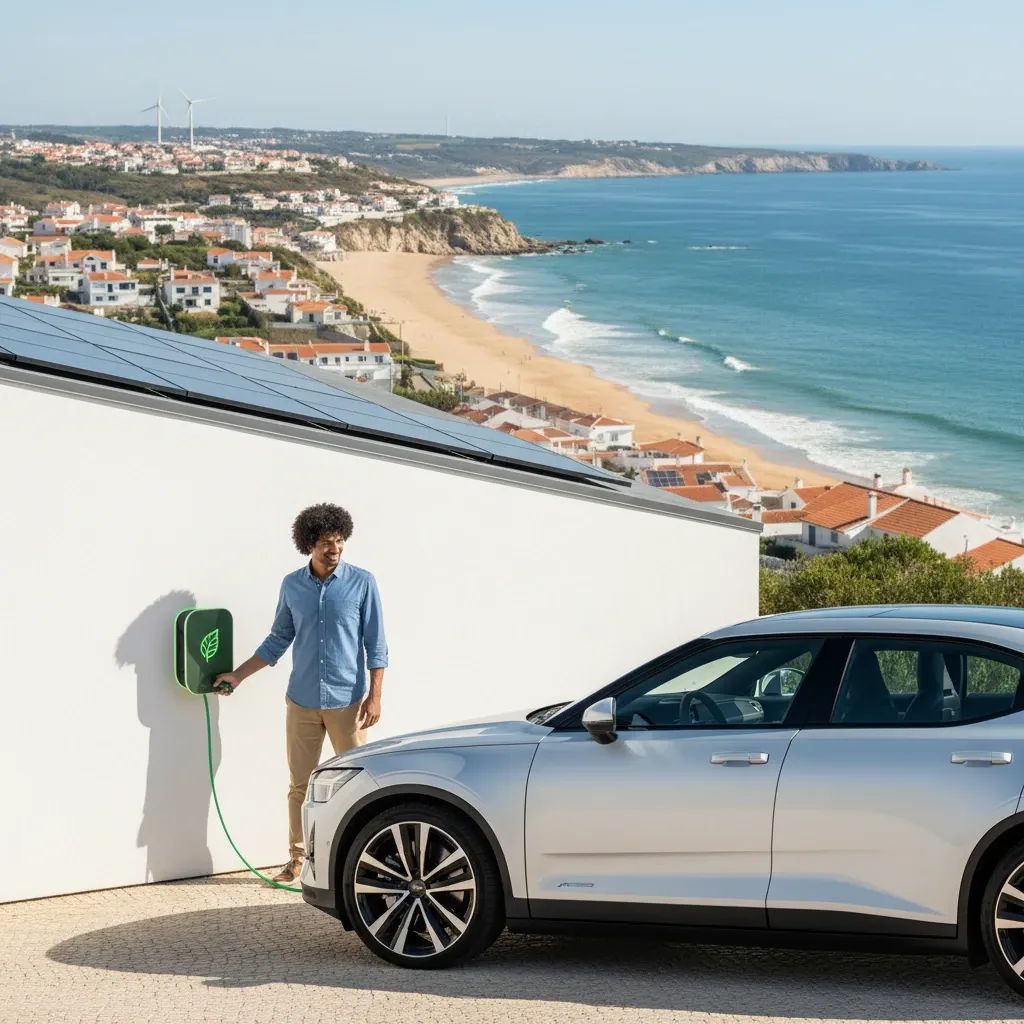
The Portugal Ministry of Environment and Energy has opened a €10M subsidy window for zero-emission vehicle purchases, with applications accepted through the Environmental Fund platform starting today and running until July 27 at 5:59 PM (Lisbon time) or until funds are depleted—whichever comes first. This marks the latest round of the Green Mobility Package, and it includes retroactive eligibility for vehicles purchased since January 1, 2025, provided buyers were not covered by earlier program phases.
Why This Matters:
• Retroactive relief: If you bought an electric car in early 2025 but missed out on subsidies due to depleted funding, you can now apply.
• First-come, first-served: Applications are processed by submission order, not lottery—speed matters.
• Generous multi-category support: Beyond cars, the program covers e-bikes, cargo bikes, motorcycles, and home charging infrastructure.
Who Gets What: Breaking Down the Subsidy Tiers
Individual buyers qualify for €4,000 toward a new fully electric passenger car, while social solidarity institutions (IPSS), transport authorities, and municipalities receive €5,000 per vehicle. The program caps eligible vehicle prices at €38,500 including VAT and associated costs for cars seating up to five passengers, or €55,000 for larger models.
Electric bicycles attract 50% reimbursement up to €750, while conventional pedal bikes are covered at 50% up to €500. Cargo e-bikes can claim as much as €1,500, and non-electric cargo models qualify for €1,000. Electric motorcycles, mopeds, tricycles, and quadricycles are eligible for subsidies up to €1,500.
Battery charger installations also receive funding, though the Ministry has not published specific caps in this announcement. Earlier program iterations offered up to 80% coverage for condominium charging posts, capped at €800 per unit, plus €1,000 toward electrical installation per parking space.
The Bigger Picture: Portugal's Place in Europe's EV Race
Against the backdrop of European subsidy programs, Portugal's €4,000 direct incentive sits in the middle tier. Spain's Plan Auto+ offers up to €4,500 plus a mandatory €1,000 dealer discount, while Germany's relaunched Umweltbonus provides €3,000 to €4,000 depending on household income, with additional bonuses for low-income families and children. France's bonus écologique ranges from €2,000 to €4,000 based on income brackets, but introduces a weight tax from mid-2026 onward.
What sets Portugal apart is the stacking of fiscal benefits: full exemption from the Vehicle Tax (ISV) and Annual Circulation Tax (IUC) for 100% electric vehicles, combined with corporate tax advantages including VAT deductibility and exemption from autonomous taxation. This dual-layer structure—direct subsidy plus tax relief—makes the effective saving considerably higher than the headline figure suggests.
Norway and the Netherlands, once Europe's EV incentive leaders, are phasing out subsidies as adoption climbs. According to recent industry reports, Norway reduced its VAT exemption threshold in early 2026, while the Netherlands has significantly reduced its circulation tax discount.
Infrastructure Reality Check: Can the Grid Keep Up?
Portugal's public charging network has expanded substantially in recent years, with the Mobi.E platform recording strong growth in charging sessions. The country already meets international benchmarks for charging infrastructure coverage relative to registered electric vehicles.
Yet regional disparities remain stark. As of recent assessments, some municipalities in northern and interior zones lack rapid charging stations due to lower utilization rates and weaker commercial incentives for private operators. Southern regions, buoyed by tourism demand, enjoy denser coverage.
Grid modernization remains ongoing, with industry observers noting that ultra-fast charger rollouts face some bottlenecks—a constraint described as potentially affecting adoption momentum. Public charging costs vary across networks, which can impact the running-cost advantage that makes electric vehicles attractive. The Legal Framework for Electric Mobility (RJME), which took effect in August 2025, aims to increase transparency and competition, but consumer advocates continue to monitor pricing developments.
How to Apply and What to Watch
Applications must be submitted through the Environmental Fund's online portal (fundoambiental.pt). The Ministry processes claims in chronological order until the €10M allocation is exhausted or the July 27 at 5:59 PM deadline arrives. Given that previous rounds depleted funds within weeks, prospective buyers should not delay.
Key eligibility rules: Vehicles purchased from January 1, 2025 onward qualify, provided the buyer was not covered by prior program phases and meets regulatory criteria.
Required documentation: When applying, prepare the following documents:
• Proof of vehicle purchase (invoice or purchase contract)
• Vehicle registration documents
• Proof of Portuguese residency
• Fiscal Identification Number (NIF)
• Valid bank account details for fund transfer
• Any additional documents specified on the Environmental Fund portal
Special note on vehicle abatement: Clarify with the Environmental Fund whether the abatement of a fossil-fuel vehicle older than 10 years remains mandatory, as this requirement varied in earlier program phases.
Minister Maria da Graça Carvalho framed the subsidy as part of Portugal's broader decarbonization strategy. "We are reinforcing support for those opting for more sustainable mobility solutions," she stated, emphasizing the program's role in reducing fossil fuel dependence and accelerating the country's energy transition.
What Residents Should Consider
For households contemplating an electric vehicle purchase, the subsidy arithmetic extends beyond the €4,000 grant. Factor in ISV and IUC exemptions, which can save several thousand euros over a vehicle's lifetime, and the total incentive package becomes competitive with Southern Europe's most aggressive programs. However, the €38,500 price ceiling excludes many mid-range models once optional features and delivery fees are included, channeling buyers toward entry-level trims or smaller vehicles.
Charging infrastructure remains the wild card. Urban residents with home charging access face manageable costs; those relying on public networks encounter per-kilowatt-hour rates that narrow the gap with conventional fuel. The government's focus on smart charging and battery integration to leverage Portugal's renewable energy surplus suggests long-term solutions are in motion, but immediate bottlenecks persist.
Electric vehicle adoption in Portugal continues to grow, with industry projections suggesting significant fleet expansion over the coming years. Whether the charging grid and subsidy budgets can sustain that trajectory without major investment remains the central question for policymakers—and for residents weighing whether to make the switch now or wait for infrastructure to catch up.


