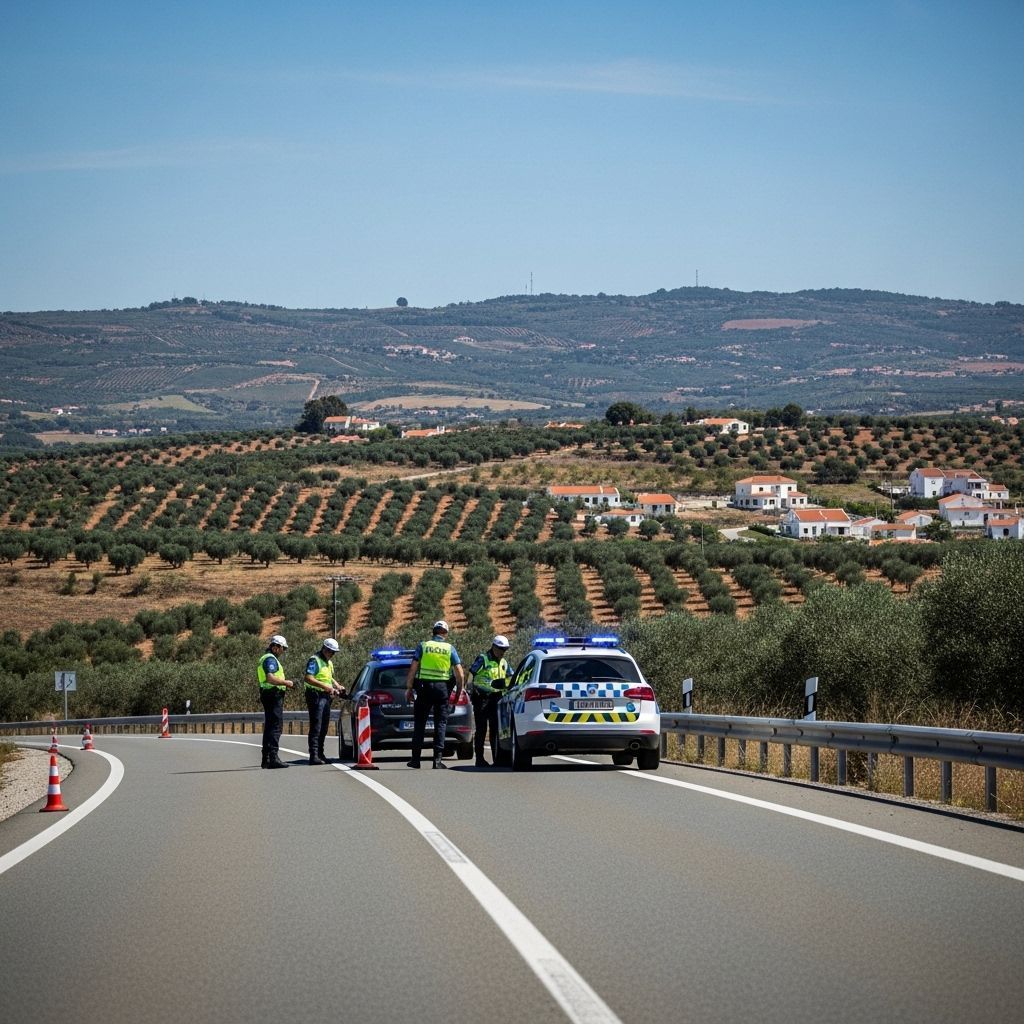

A surge in fatal road crashes across Portugal this week has left three people dead and multiple others injured, reflecting a troubling 36% spike in road deaths reported by the Portugal National Road Safety Authority (ANSR) for early 2026 compared to the same period last year. The latest incidents on the EN13 and EN256 corridors underscore the continuing dangers on Portugal's national road network.
Why This Matters for Residents
• Road deaths are accelerating: Through April 2026, 133 people have died on Portuguese roads — a stark reversal after modest progress in 2025.
• National roads remain deadliest: The EN13 and EN256 corridors, both implicated in this week's crashes, are part of a network where most fatalities occur outside controlled motorways.
• Traffic disruptions affect daily commutes: Major routes in Porto metro area and Alentejo have faced hours-long closures, affecting commutes and freight movement.
• Enforcement gaps persist: A newly released ANSR report flags a 28.3% surge in unlicensed driving offences, suggesting enforcement gaps in rural and peri-urban areas where police patrols are sparse.
Fatal Four-Vehicle Crash Shuts Down EN13 in Maia
The Portugal Royal Police (PSP) and Voluntary Fire Services responded to a catastrophic collision on the EN13 highway in Maia, just north of Porto, that killed one person and injured four others on the morning of May 13. The crash, involving four passenger vehicles, took place around 8:20 a.m. on Avenida Dom Mendo and forced a complete shutdown of the four-lane artery—two lanes in each direction—for more than 90 minutes during morning rush hour.
Firefighters from the Pedrouços and Moreira da Maia brigades, supported by Portugal Emergency Medical Institute (INEM) paramedics, treated three victims at the scene. A fourth person, whose injuries were classified as minor, was transported to a nearby hospital. Fifteen emergency personnel and six vehicles remained on-site as of 9:45 a.m. to clear debris and investigate the sequence of impacts. The PSP has not yet disclosed the identity of the deceased or whether speed, distraction, or adverse weather contributed to the pileup.
The EN13 is a major thoroughfare linking residential suburbs to Porto's industrial zones, and the closure created ripple-effect delays across the metropolitan area. Local commuters reported detours adding up to 40 minutes to their journeys, while freight haulers complained of missed delivery windows—a recurring frustration as national road infrastructure struggles with aging design and rising traffic volumes.
Évora Collision Leaves Driver Trapped for Hours
Further south, emergency crews spent hours extricating a 65-year-old driver from a crumpled cargo van after a head-on collision with a heavy goods vehicle on the EN256 near Vendinha, in the Évora district, on May 14. The crash occurred at kilometre 10, close to a traffic-light junction within the village limits, and was reported to authorities at 3:59 p.m.
The Alentejo Central Emergency and Civil Protection Sub-Regional Command dispatched 19 responders and eight vehicles, including teams from the GNR (National Republican Guard), Infraestruturas de Portugal, and INEM's advanced VMER (Medical Emergency and Resuscitation Vehicle) unit from Évora Hospital. The victim, whose gender was not immediately confirmed, sustained life-threatening injuries and was airlifted to Évora Hospital after being freed from the wreckage.
Both directions of the EN256 remained closed until 5:25 p.m., snarling agricultural and tourist traffic in a region that depends heavily on seasonal movement. The GNR confirmed the carriageway was not reopened until after vehicle removal and fuel-spill cleanup were complete. Investigators have not determined fault, though locals told reporters that the intersection has been a known hazard since a November 2025 accident that killed a 22-year-old driver and a one-year-old infant.
National Road Toll Reverses Years of Progress
The back-to-back fatalities on the EN13 and EN256 fit a disturbing national pattern. Provisional ANSR data through April 2026 recorded 41,045 road accidents, resulting in 133 deaths—a 36% increase over the first four months of 2025. The Porto, Lisboa, and Aveiro districts account for the highest share of crashes, with national and municipal roads—rather than motorways—claiming the majority of lives.
Investigators cite three persistent factors: speeding, alcohol-impaired driving, and distracted driving, particularly smartphone use. Portugal's 2025 road death rate of 55 per million inhabitants—down 5% from 2024—was hailed as progress, but the 2026 reversal has alarmed public health officials who warn that the country risks backsliding toward 2010-era fatality levels.
Road Safety Initiatives and Enforcement Gaps
The Maio Amarelo (Yellow May) awareness campaign, launched by road safety advocates and municipal governments, has deployed billboards and social media messaging urging drivers to slow down and stay alert. Yet behavioural change has been slow across Portugal's national road network.
Infraestruturas de Portugal, the state infrastructure agency, has pledged audits of high-risk national road segments, but budget constraints and bureaucratic delays have slowed rollout. The GNR, which patrols rural highways, operates with ageing vehicle fleets and personnel shortages, limiting its ability to enforce speed limits outside urban centres.
For residents navigating daily commutes, the statistics are concerning: Portugal's national roads are becoming more dangerous, with the EN13 and EN256 corridors among the deadliest. Safety advocates urge drivers to reduce speed, avoid distractions, and remain vigilant—particularly during morning and evening commute hours when traffic volumes peak.