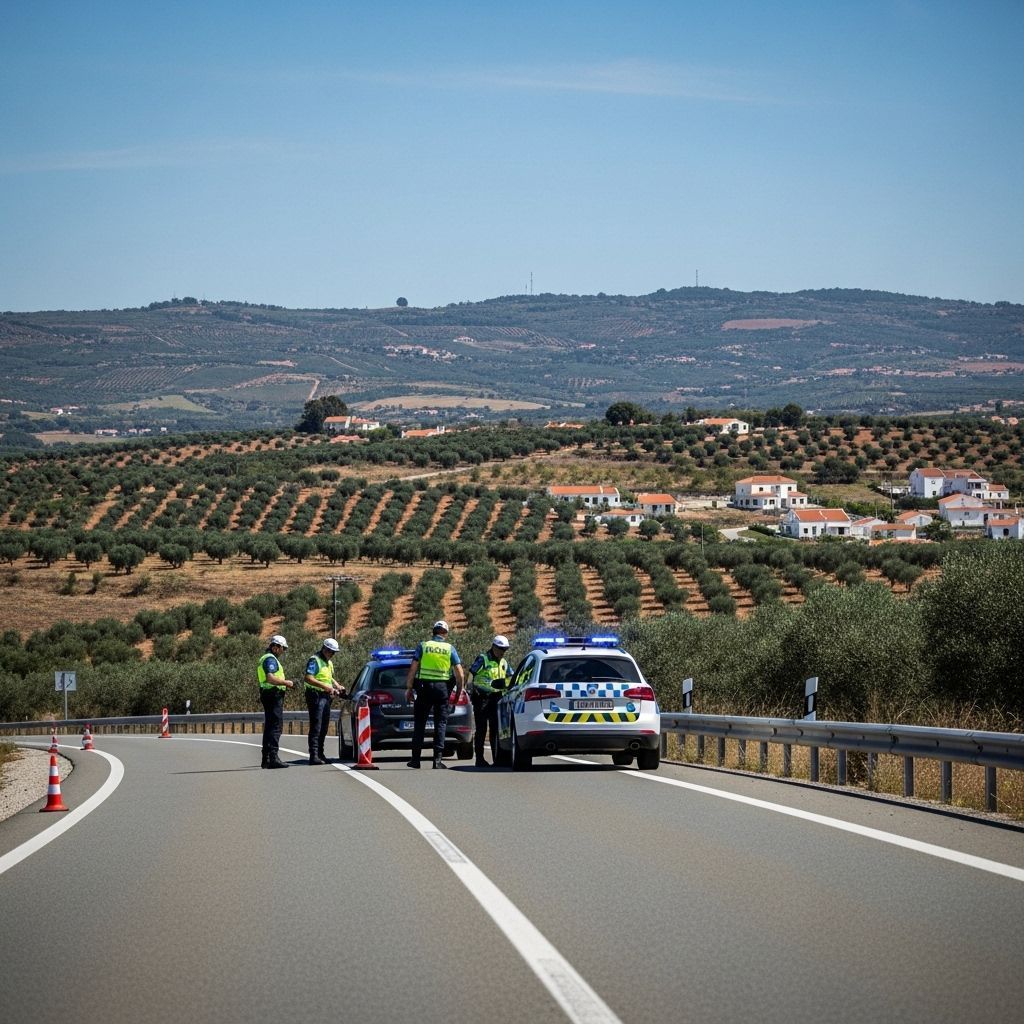
The Portugal Maritime Police and National Republican Guard (GNR) have intensified their crackdown on maritime drug trafficking networks this week. Multiple high-speed vessels have been seized and suspects apprehended in coordinated operations spanning from the Tagus estuary to the Algarve coast. This escalation reflects new legislation that criminalizes possession of unregistered speedboats, marking a significant shift in Portugal's enforcement strategy against international narcotics smuggling.
Why This Matters
• New law in effect: As of May 2026, owning or operating an unregistered high-speed boat carries 1–4 years in prison, even without proof of drug involvement.
• Fuel as evidence: Authorities can now prosecute based on excessive fuel capacity alone, treating logistics support as a trafficking crime.
• Your waters, their battleground: Over 200 speedboats seized since 2020, with 11 captured in the first quarter of this year — the Atlantic corridor between the Azores, Madeira, and mainland Portugal has become a primary transit route for South American cocaine.
Maritime Seizures Signal Broader Enforcement Strategy
In the early hours of a recent Friday, the Portugal Maritime Police Tactical Action Group intercepted a high-velocity vessel racing toward the exit of Lisbon's harbor. The chase ended with the detention of four Spanish nationals and the seizure of more than 6.5 tonnes of diesel fuel, along with provisions for extended sea operations and sophisticated navigation equipment. The National Maritime Authority described the craft as a "narcolancha" — a floating logistics hub designed to refuel and resupply drug-running speedboats hundreds of miles offshore, far from coastal patrols.
"These boats function as 'hubs' for narcotics trafficking on the high seas," the National Maritime Authority stated in its operational bulletin. The perishable goods found aboard were donated to a local charity, while the four detainees face charges of disobedience and association with organized crime.
Days earlier in Olhão, a coastal town in the Algarve district of Faro, a joint operation by the Maritime Police and Public Security Police (PSP) netted 7.8 thousand liters of gasoline stored in 311 jerry cans, along with two cargo vehicles. Authorities believe the fuel was destined for high-speed boats used to ferry hashish from North Africa or to support cocaine transfers in the Atlantic corridor. The operation targeted what investigators call "logistics networks" — the land-based infrastructure that keeps maritime smuggling operations running.
Legislation Tightens Around Speedboat Ownership
The crackdown comes as Portugal implements some of Europe's strictest regulations on high-speed watercraft. The new legal regime, which took effect in May 2026, mandates that all owners of Embarcações de Alta Velocidade (EAV) — vessels capable of exceeding 30 knots — must register their craft, install communication equipment monitored by authorities, and display visible "EAV" markings.
Violations carry serious consequences: €25,000 fines for individuals, rising to €100,000 for companies, and prison sentences for those who conceal identification, transport excessive fuel, or use radar-jamming technology. Since May 17, 2026, operating these boats between 9 p.m. and 7 a.m. without prior authorization is banned outright.
Artur Vaz, director of the Portugal Criminal Police (PJ), told the daily Público that high-speed boats represent "the principal threat that Portugal, Spain, and Europe are confronting right now" in narcotics enforcement. He described them as capable of "brutal speed" and extreme maneuverability, making pursuit by conventional patrol vessels nearly impossible.
What Boat Owners Need to Do Now
If you own or operate a high-speed vessel in Portugal, the new May 2026 regulations require immediate action:
Registration Requirements:
• All boats capable of exceeding 30 knots must be registered with Portugal Maritime Authority
• Registration includes mandatory installation of communication equipment for real-time authority monitoring
• Visible "EAV" markings must be displayed on the vessel
Where and When:
• Register through your local Maritime Police office or the National Maritime Authority (Autoridade Marítima Nacional)
• No official deadline has been published, but compliance is effective immediately as of May 17, 2026
Penalties for Non-Compliance:
• Criminal prosecution (1-4 years prison) for operating unregistered vessels
• €25,000 fines for individuals; €100,000 for companies
• Confiscation of the boat
• Criminal charges for concealing identification or using radar-jamming technology
Operating Restrictions:
• All high-speed boats are prohibited from operating between 9 p.m. and 7 a.m. without prior authorization from maritime authorities
• Excessive fuel storage (beyond normal operational needs) can trigger trafficking investigations
Recreational boaters are not exempt. Even if you use your vessel for leisure, registration and compliance are mandatory. Contact your local Maritime Police station for specific guidance on your registration process.
What This Means for Residents
For anyone living in Portugal — particularly along the coast or islands — this enforcement wave carries direct implications. The new speedboat laws apply to all owners, including recreational boaters who may have purchased high-performance craft without realizing registration is now mandatory. Failure to comply risks criminal prosecution, not just administrative fines.
Beyond boating regulations, the uptick in trafficking activity carries broader security and economic consequences. The Portugal Public Prosecutor's Office froze €875,689 in bank accounts linked to a suspected drug money laundering network this month, following an investigation into three Brazilian nationals who allegedly created a shell company to move €899,412 through the national banking system. One defendant had been convicted in Brazil for a 2020 trafficking operation that saw 2,724 kg of cocaine hidden in corn cargo destined for Europe. Prosecutors are seeking permanent forfeiture of the full amount.
The economic scale is significant: authorities estimate that cocaine smuggled through Portuguese waters over the past decade could have generated €6 billion in criminal profits, according to assessments by the Portugal Criminal Police based on seizure volumes and known market prices. In 2025 alone, police seized €7.73 million in cash tied to narcotics operations, nearly double the €4.16 million recovered the year before.
Cocaine Surges, Hashish Doubles
Recent data from the Portugal Criminal Police shows cocaine seizures jumped 20.6% in 2025, totaling 25.63 tonnes across 1,984 operations. Hashish seizures more than doubled, rising 102.6% to nearly 15 tonnes. The Azores and Madeira recorded the highest volumes — 8.8 tonnes and 7.5 tonnes respectively — confirming these Atlantic archipelagos as critical waypoints in transatlantic smuggling routes. Mainland hubs like Porto (3.1 tonnes) and Lisboa (3 tonnes) also feature prominently.
What This Means for Your Region: If you live in the Azores or Madeira, increased maritime trafficking activity brings heightened enforcement presence but also security concerns. Residents should report suspicious boat activity to local Maritime Police. Mainland coastal areas, particularly around Porto and Lisbon, have seen corresponding increases in organized crime activity related to offloading and distribution. The Atlantic corridor — stretching from the archipelagos to the mainland — now accounts for 95% of all cocaine entries into Portugal, with most shipments originating in Brazil. Hashish typically arrives from Morocco and other North African sources, often using the same high-speed logistics infrastructure.
Organized Crime Adapts as Enforcement Tightens
Authorities describe an escalating competition between enforcement and criminal adaptation. The Brazilian criminal organization Primeiro Comando da Capital (PCC) has established operational cells in Portugal, leveraging the country's geographic position and EU access to facilitate cocaine distribution across the continent. Investigators report increased violence, corruption infiltration at ports and airports, and sophisticated money laundering through real estate, shell companies, and even football clubs.
In response, Portugal has joined multinational enforcement efforts. Between April 13–26, the Criminal Police participated in Operation Alpha Lima, a coordinated Atlantic patrol involving multiple European and American agencies. The operation netted 11 tonnes of cocaine and 8.5 tonnes of hashish across participating nations, with Portugal contributing 2.196 tonnes of cocaine seized with support from the Air Force, Maritime Police, and GNR.
Between May 8–14, the GNR detained 554 individuals nationwide, including 43 for drug trafficking, seizing over 12,000 doses of cocaine and 9,500 doses of hashish. On May 15, a separate GNR operation on Deserta Island in the Ria Formosa uncovered four tonnes of hashish and three boats, leading to the identification of three suspects aged 22 to 46.
Prison Attempts and Repeat Offenders
Enforcement extends beyond coastlines. The Portugal Criminal Police detained a 26-year-old woman at Coimbra Prison after guards discovered 165 doses of cocaine concealed on her body during a visitor screening. She had been barred from prison visits following an earlier trafficking attempt, making this her second offense. She now faces enhanced charges for repeat trafficking and will be held in pretrial detention.
In Ponta Delgada, Azores, a man caught smuggling hashish into the local correctional facility was also placed in preventive detention after a judge deemed him likely to reoffend. The PSP Regional Command emphasized the ruling reflects "the gravity of conduct susceptible to persist."
Meanwhile, the GNR arrested a 56-year-old man in Vila Real for smuggling over one million untaxed cigarettes, valued at €310,000. The contraband lacked mandatory tax stamps, representing an estimated €226,000 loss to the Portugal Revenue Department in excise taxes.
Impact on Expats & Investors
Foreign residents and business owners should note that Portugal's anti-money laundering framework is tightening in parallel with narcotics enforcement. A new law governing cryptocurrency service providers takes effect July 1, 2026, placing them under Bank of Portugal supervision and subjecting them to the same anti-laundering protocols as traditional banks. This follows European Regulation 2023/1113 and aims to close loopholes exploited by trafficking networks to move illicit proceeds digitally.
What This Means for Crypto Users: If you use cryptocurrency services in Portugal or operate a crypto business, expect enhanced identification verification, transaction monitoring, and reporting requirements. Exchanges and wallet services must now comply with strict anti-money laundering standards previously applied only to banks.
Prosecutors are increasingly scrutinizing business structures. The case involving the Brazilian shell company demonstrates that authorities will freeze accounts and pursue full asset forfeiture even when the alleged trafficking occurred abroad, provided the money moved through Portugal's banking system.
Legal and Social Costs Continue to Mount
Portugal's prison population reflects the enforcement surge. At the end of 2024, 1,919 individuals were incarcerated under the Drug Law, the highest figure in seven years. In 2025, police identified 5,961 suspects and detained 2,949, with 91% male and 84% over age 21. Portuguese nationals accounted for 73% of arrests, followed by Brazilians, Cape Verdeans, Guineans, and Spaniards.
The human cost is equally stark. The 2025 European Drug Report found that in Portugal, cocaine contributed to 65% of overdose deaths, with heroin involved in 34%. Public health officials note rising cocaine consumption trends, even as Portugal maintains its decriminalized personal use model.
Offshore Enforcement Remains Core Challenge
Despite intensified coastal patrols, the vastness of Portugal's maritime jurisdiction — stretching from the Azores to the Madeira archipelago and covering critical Atlantic shipping lanes — presents enduring logistical challenges. High-speed boats can outrun most patrol vessels, achieving speeds that create dangerous wakes and enable rapid escapes. The Maritime Authority and Navy have prioritized intelligence-led operations, relying on aerial surveillance and international coordination to identify suspicious vessels before they reach territorial waters.
The April 13–26 Operation Alpha Lima exemplifies this approach, using satellite tracking and joint patrols across international waters to intercept vessels before they offload cargo. Yet authorities acknowledge that maritime smuggling operations continue to test enforcement capacity, particularly as criminal networks acquire faster boats and more sophisticated evasion technology.
Government Doubles Down on Coordination
The Portugal Ministry of Internal Administration and judicial authorities have pledged continued investment in multi-agency task forces. The GNR, PSP, Maritime Police, and Criminal Police now operate under unified operational frameworks for major trafficking investigations, sharing intelligence in real time and pooling specialist resources like tactical units and forensic labs.
Regional commands in the Azores and Madeira have been reinforced with additional patrol craft and personnel, reflecting the strategic importance of these island territories in Atlantic interdiction. The Air Force contributes surveillance flights, while the Navy provides offshore interception capability.
In a statement following the Tagus estuary seizure, the National Maritime Authority reaffirmed its "commitment and determination to maintain maritime surveillance and patrol operations, continuing the firm fight against organized crime networks that use maritime space under national sovereignty for illicit activities, in close coordination with judicial authorities and other police entities."
For residents, the message is clear: Portugal's geographic position has made it a critical theater in transatlantic narcotics enforcement, and authorities are prepared to deploy significant resources — and new legal tools — to prevent the country from becoming a permanent gateway for South American cocaine and North African hashish into European markets.