

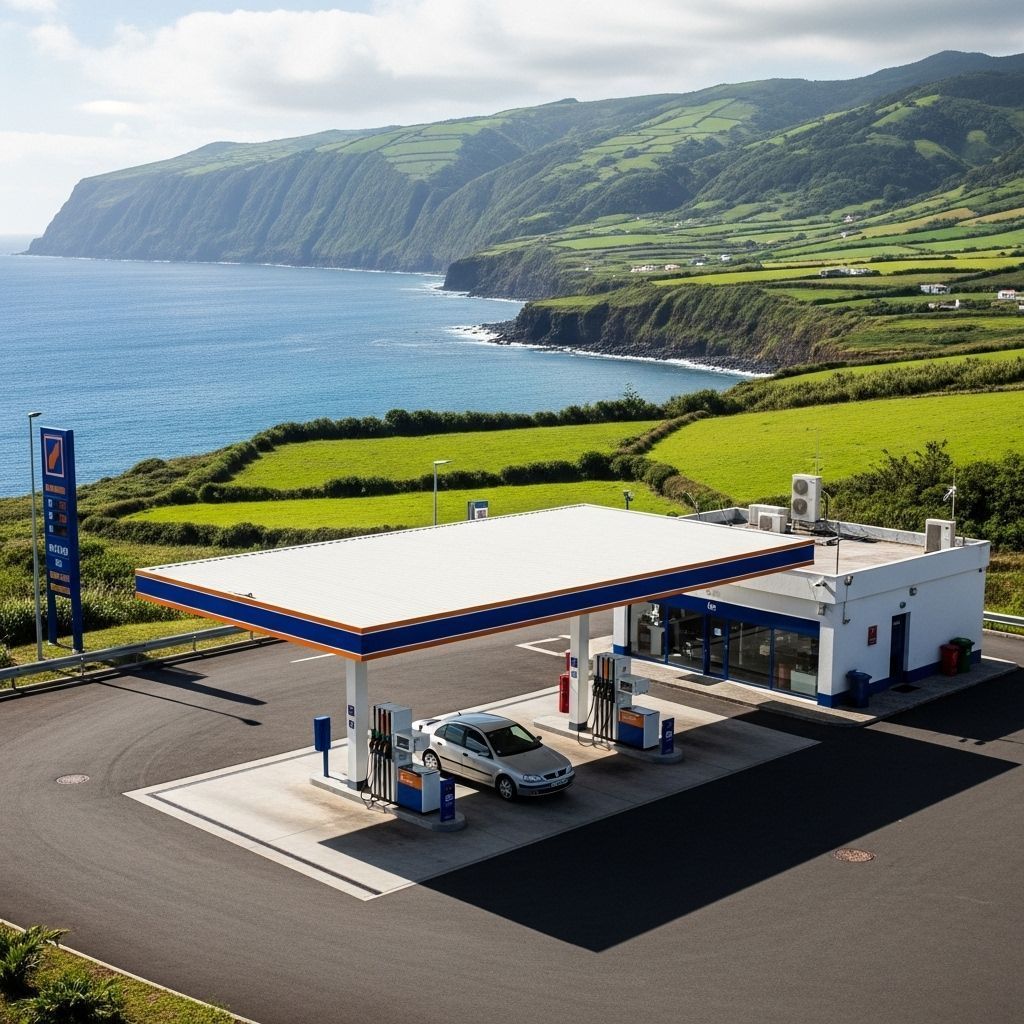
July 14, 2026 – The Portugal government has confirmed that fuel prices will climb sharply at pumps nationwide starting Monday, July 14, with diesel expected to rise by €0.07 per liter and standard unleaded gasoline by roughly €0.03 per liter. The increases, driven by escalating tensions in the Middle East and volatility in international oil markets, will push average costs from the current €1.793 for diesel and €1.893 for gasoline to approximately €1.86 for diesel and €1.92 for gasoline, marking one of the steepest single-week jumps this year.
Why This Matters
• Immediate cost impact: A full 50-liter diesel tank will cost an additional €3.50 starting Monday, equivalent to a meal for two at many cafés.
• Inflation ripple: Transportation and food distribution costs are set to climb, feeding into broader price increases across the economy. Inflation hit 3.4% in April 2026, according to the Portugal National Statistics Institute (INE), with fuel prices cited as the primary driver.
• Government relief in place: Lisbon has already increased the temporary ISP (Imposto sobre os Produtos Petrolíferos—Portugal's fuel excise tax) discount for the week of July 6–12, adding €0.03 per liter on diesel and €0.04 per liter on gasoline, though not enough to offset the coming surge.
• Political pressure mounting: Opposition party Chega is preparing legislation to mandate that retail fuel prices fall proportionally when international crude prices drop, a mechanism currently absent from Portuguese law.
• Practical advice for residents: If possible, consider filling up before Monday to avoid the increase. Those relying on public transport should note that CP (Comboios de Portugal) train monthly passes remain stable despite earlier ticket increases, making them a cost-effective alternative during this surge.
What's Behind the Surge
International crude markets have been whipsawing between geopolitical shocks and investor anxiety over demand slowdowns. The Brent crude benchmark for September delivery closed Thursday at $76.30 per barrel, down 2.2% on the day but still elevated compared to early June levels. The recent volatility stems from renewed military activity in the Persian Gulf, particularly around the Strait of Ormuz, a chokepoint through which roughly 20% of the world's oil passes. Intermittent closures and heightened naval tensions have sent shipping insurance premiums soaring and prompted refiners to build in risk premiums.
Despite temporary dips in crude futures—driven by concerns over weakening demand in Asia and persistent inflation in Western economies—the upward pressure on refined products like diesel and gasoline has remained stubborn. Portugal imports the majority of its petroleum products, leaving domestic prices acutely sensitive to international swings and euro-dollar exchange rates.
Impact on Residents and Businesses
For households and businesses in Portugal, the fuel hike compounds an already strained cost-of-living environment. Core inflation, which strips out volatile food and energy items, also ticked higher in 2026, signaling that price pressures are becoming more entrenched across the economy.
Transportation costs directly affect daily life: commuters who drive face higher bills, while those relying on CP (Comboios de Portugal) trains benefit from stable monthly passes despite occasional ticket price adjustments. Freight and logistics companies, meanwhile, are already passing higher diesel costs onto consumers, driving up the price of groceries, construction materials, and retail goods.
Agriculture is another casualty. Diesel powers tractors and irrigation pumps, and the production of synthetic fertilizers—heavily reliant on natural gas—has also become costlier. The cumulative effect is higher prices at supermarket checkouts, eroding household purchasing power even as wage growth lags.
Government Response and Fiscal Flexibility
Finance Minister Joaquim Miranda Sarmento acknowledged the strain in remarks to Portuguese journalists in Brussels on Friday, saying the government views the Middle East escalation "with concern" and is monitoring its impact on fuel prices and broader economic stability. "We all hoped a few weeks ago, when an agreement was reached, that the conflict would end and passage through the Strait of Ormuz would return to normal," he said. "The situation is highly uncertain and very volatile, and if we see renewed conflict and a spike in oil prices, that naturally has negative consequences for the economy."
Miranda Sarmento confirmed that the government is prepared to act, noting that Portugal's better-than-expected 2025 fiscal performance has provided "a bit of room for maneuver." He stopped short of detailing specific measures but indicated that Lisbon is evaluating options "depending on how circumstances evolve in the coming weeks."
Portugal has already taken advantage of relaxed EU budget rules proposed by the European Commission to accommodate energy-related expenditures. The flexibility allows member states to boost public investment in energy security and infrastructure without breaching deficit and debt ceilings, a crucial lifeline for governments navigating volatile fuel markets.
For the week of July 6–12, Lisbon increased the extraordinary ISP discount from €0.0248 to €0.0303 per liter for diesel, and from €0.0312 to €0.0351 per liter for gasoline. However, industry sources warn that these interventions are only partially offsetting international price swings and may need to be recalibrated if crude remains elevated.
Political Pushback and Structural Reform
Opposition parties are seizing on public frustration. Chega party leader André Ventura announced Friday that his caucus will table legislation mandating that retail fuel prices decline in proportion to international crude price drops. "When the international market dictates a fall in oil prices, diesel and gasoline must fall proportionally—not what happens today, where they rise in proportion but never fall in proportion, enriching governments further in the context of instability," Ventura said at a press conference in Lisbon.
The Chega proposal would establish an indexation mechanism, potentially requiring the government to adjust ISP rates automatically or compel refiners and retailers to pass savings directly to consumers. Ventura framed the measure as essential for economic survival, warning that "if we allow fuel, the basis of essential business activity, to continue rising uncontrollably in the market, we will only generate more poverty, more inflation, and a brutal increase in the cost of living."
However, economists caution that automatic indexation mechanisms face practical challenges: refiners and retailers operate on thin margins and face international competition that may prevent proportional price reductions, and such mandates could discourage strategic investment in fuel storage and supply resilience. Additionally, Portugal already ranks among the highest-taxed fuel markets in the EU, with excise duties and VAT accounting for roughly 50% of the pump price. Any structural reform would need to balance consumer relief with fiscal sustainability, particularly as the government seeks to maintain progress on deficit reduction.
European Coordination and Long-Term Outlook
The European Commission has urged member states to coordinate their responses to energy price volatility, emphasizing the need to avoid fragmented national measures that distort the single market. Brussels has proposed the AccelerateEU plan, which combines short-term consumer relief with structural reforms aimed at reducing dependence on fossil fuels. Key elements include joint management of strategic gas and oil reserves, real-time monitoring through a new Fuel Observatory, and accelerated electrification of transport and heating.
Some EU neighbors have adopted more aggressive interventions. Hungary imposed retail price caps on fuel (later restricted to Hungarian-registered vehicles), while Croatia set biweekly maximum prices for non-highway stations. Spain and Poland have slashed excise duties temporarily. The European Commission has recommended cutting excise taxes rather than VAT as the preferred lever for relief, arguing that lower VAT rates on fossil fuels send the wrong signal for decarbonization.
Portugal's approach has been more measured, favoring flexible ISP discounts that can be scaled up or down based on market conditions. This strategy aims to cushion consumers without derailing the country's climate commitments or blowing a hole in public finances.
Looking ahead, the key variable remains the Middle East. If tensions around the Strait of Ormuz escalate further or supply disruptions persist, Portugal could face sustained upward pressure on fuel costs through late summer. Conversely, any diplomatic breakthrough or easing of shipping bottlenecks could trigger a rapid reversal, though the asymmetry Ventura described—prices rising faster than they fall—remains a structural feature of the market.
For now, drivers filling up at Portuguese service stations should brace for the Monday, July 14 increase and keep a close watch on both Brussels and the Persian Gulf.


