

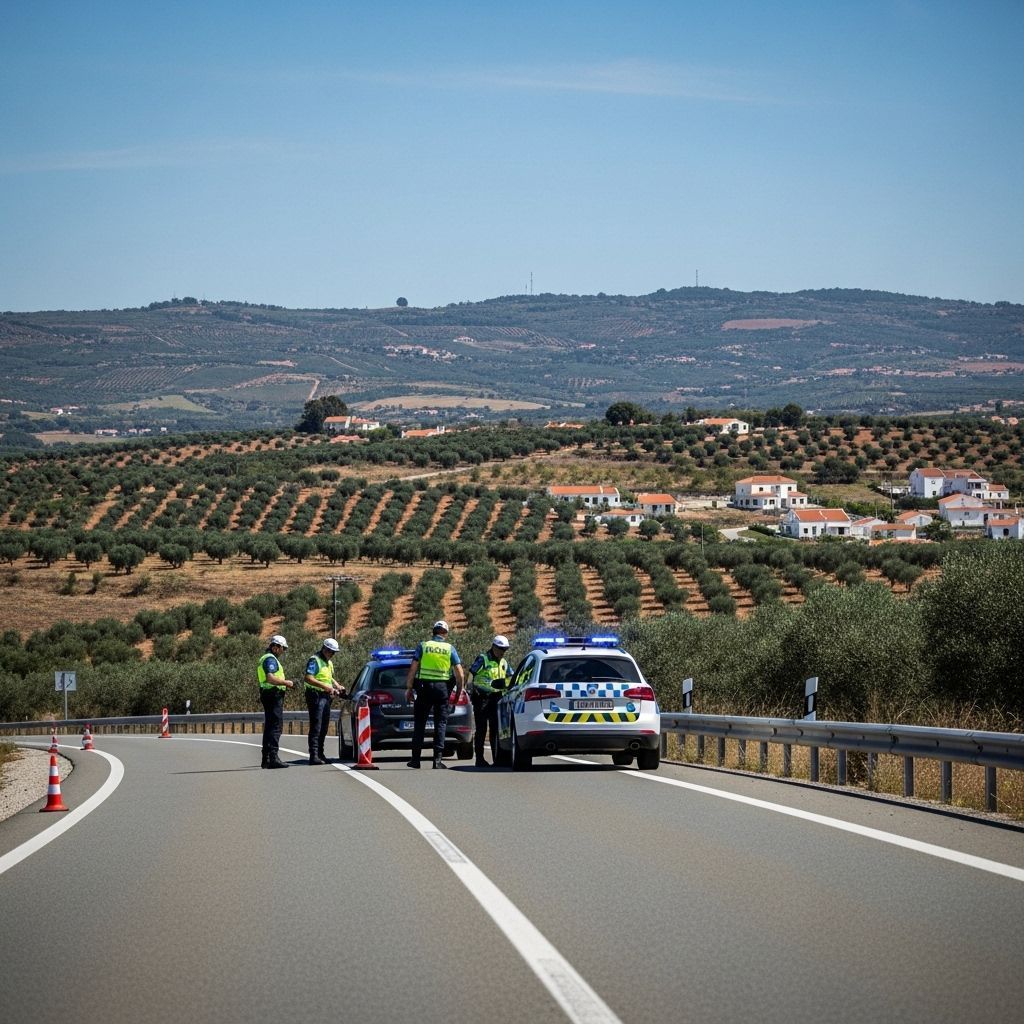
The Portugal National Guard (GNR) pulled 290 drunk drivers off the roads during a four-hour enforcement blitz following Porto's 2026 São João festival, with 71 individuals detained on criminal charges for blood-alcohol levels exceeding the legal threshold. The operation, which mobilized 140 officers across key motorways in the Porto Metropolitan Area, screened over 4,000 drivers between 03:30 and 07:30 on June 24, 2026.
Why This Matters
• Criminal threshold: Drivers with ≥1.2 g/L blood-alcohol face criminal prosecution in Portugal, not just a fine.
• Immediate suspension: All flagged drivers were barred from driving for a minimum of 12 hours, reducing immediate crash risk.
• Beyond booze: Five additional arrests were made—four for driving without a valid license, one for illegal weapon possession.
• 263 traffic citations were issued for other road infractions during the same sweep.
Targeted Enforcement at High-Risk Hours
The GNR National Traffic Unit designed the operation around data-driven risk analysis, concentrating resources on stretches of the A28, A20, A43, A4, and A3 motorways—arteries that channel post-festival traffic out of Porto's city center. These locations were selected based on historical crash data and traffic intensity during peak exodus hours after the city's largest annual celebration.
The timing was deliberate: the early-morning window captures the tail end of the festival, when fatigue, alcohol consumption, and highway speeds combine to produce the deadliest conditions. Portugal's road safety authorities have long identified the 03:00–07:00 slot as a critical enforcement window during major public holidays, when the proportion of intoxicated drivers spikes.
What This Means for Residents
If you live in or around Porto, this operation underscores the heightened enforcement posture during festival periods. The 12-hour driving ban applies on the spot, meaning officers can confiscate keys and mandate alternative transport, even if formal charges are pending. For residents unfamiliar with Portugal's alcohol limits, the criminal threshold is lower than in many countries: 0.5 g/L is a contravenção (administrative offense), but 1.2 g/L triggers criminal liability, with potential jail time, hefty fines, and license suspension.
Practically, this means that if you attend any major festival—Santo António in Lisbon, Festas do Mar in Cascais, or Romaria de São Torcato in Guimarães—expect checkpoint saturation on exit routes in the hours after midnight. The GNR's approach is no longer random: they use operational intelligence to pinpoint where and when inebriated driving clusters.
A Persistent, Structural Problem
Portugal's relationship with drunk driving remains troublingly resilient. Between 2019 and 2024, the proportion of drivers caught in the most severe alcohol category—≥1.2 g/L—grew by 72.3%, according to data from the Portugal National Road Safety Authority (ANSR). In 2024 alone, 58.1% of drivers flagged in routine stops were already in the criminal zone, not the administrative tier. That shift signals a normalization of extreme intoxication behind the wheel.
More alarming: 36.5% of road fatality victims tested positive for alcohol in 2024, up from 28.7% the prior year. This suggests that while the total volume of drunk-driving incidents may ebb and flow, the lethality profile is worsening. Road safety researchers point to this as evidence that enforcement alone—absent a coordinated national strategy—struggles to shift ingrained behavior.
Portugal's 60.8 road deaths per million inhabitants in 2023 placed the country 33.1% above the EU average, ranking it 22nd among the 27 member states. Alcohol is implicated in roughly one in five fatalities, despite representing a much smaller fraction of total crashes.
Why Enforcement Alone Isn't Enough
Experts from Prevenção Rodoviária Portuguesa (PRP) and the ANSR acknowledge that operations like the São João sweep are necessary but insufficient. The absence of an approved national road safety strategy since 2022 has fragmented inter-agency coordination, limiting the systemic impact of high-visibility crackdowns. Without a unifying framework, enforcement becomes reactive rather than preventive.
Moreover, the 1.1 M alcohol tests conducted nationwide in 2024 represented a 5.8% decline compared to 2023, even as the infraction rate remained stubbornly high at 1.5%. This suggests that officers are finding fewer drivers overall but that those who do drink and drive are doing so at more dangerous levels.
Behavioral change requires more than checkpoints. Continuous public education campaigns, stricter penalty enforcement, and workplace interventions—especially in sectors with high vehicle usage—are cited as complementary measures. Yet funding and policy momentum have lagged.
The Festival Factor
São João is Porto's signature event, drawing hundreds of thousands into the streets for grilled sardines, plastic hammer battles, and fireworks over the Douro. The festivities officially peak on the night of June 23 into the early hours of June 24, creating a predictable surge in impaired driving as revelers disperse to suburbs and satellite towns.
The GNR's coordinated deployment—using both dedicated highway patrols and regional traffic units—is calibrated to this rhythm. Officers set up dynamic checkpoints rather than fixed posts, allowing them to adapt to real-time traffic flows and avoid bottleneck gridlock. This method also deters tip-offs via social media, a persistent cat-and-mouse game between enforcement and the driving public.
Historically, São João has been one of the highest-risk weekends on Portugal's road calendar, alongside New Year's Eve and the August holiday exodus. The 2026 operation's total detentions—76 individuals—of which 71 were for drunk driving and 5 for other offenses, ranks among the largest single-night hauls for a regional enforcement action in recent years.
Legal Consequences and Enforcement Powers
Under Portuguese traffic law, a blood-alcohol reading of 0.5–0.8 g/L triggers a €250–€1,250 fine and possible license suspension. Anything above 0.8 g/L escalates penalties, and at ≥1.2 g/L, the matter becomes criminal, prosecuted under Article 292 of the Penal Code. Convictions can result in up to one year in prison, a €120-day fine, and a 3-month to 3-year driving ban.
The 12-hour roadside suspension is an administrative safeguard distinct from judicial penalties. It allows officers to remove dangerous drivers immediately, bypassing lengthy court processes. This power was expanded in recent legislative updates to road safety enforcement and is widely supported by public health advocates.
What Happens Next
The 76 individuals detained will face formal charges and preliminary hearings in the coming weeks. The 263 traffic citations will be processed through Portugal's contraordenação system, with fines and penalty points assessed according to the severity of the offense.
For the broader public, the São João operation serves as a high-visibility reminder that zero-tolerance enforcement extends beyond holiday weekends. The GNR and Portugal Public Security Police (PSP) maintain year-round alcohol testing programs, and the use of mobile breathalyzer units has increased across the country.
Residents planning to attend future festivals should budget for taxi fares, Uber/Bolt rides, or designated drivers. Ride-hailing apps typically surge-price during major events, so advance arrangements are advisable. Alternatively, Porto's Metro system extends operating hours during São João, offering a safer, cheaper alternative to driving.
The Broader Context
Portugal's drunk-driving problem is not unique in Southern Europe, but it is more acute than in Northern EU states with stricter social norms around alcohol and driving. Cultural attitudes—viewing moderate drinking as compatible with short drives—persist despite decades of public awareness campaigns.
The 72.3% increase in the most severe alcohol category over five years suggests that the hardest cases are becoming more entrenched, even as casual or borderline offenders may be declining. This polarization complicates enforcement strategy: it's easier to deter a driver at 0.6 g/L than one at 2.0 g/L, who may be habitually reckless or alcohol-dependent.
International comparisons show that countries with mandatory ignition interlock devices for repeat offenders—such as Sweden and the Netherlands—have seen sharper declines in recidivism. Portugal has piloted such programs but has not yet rolled them out nationally.
The road ahead requires a blend of enforcement rigor, legislative reform, and cultural shift. Until then, operations like the São João sweep will remain a necessary, if incomplete, tool in reducing the toll of alcohol-fueled crashes on Portugal's roads.


