
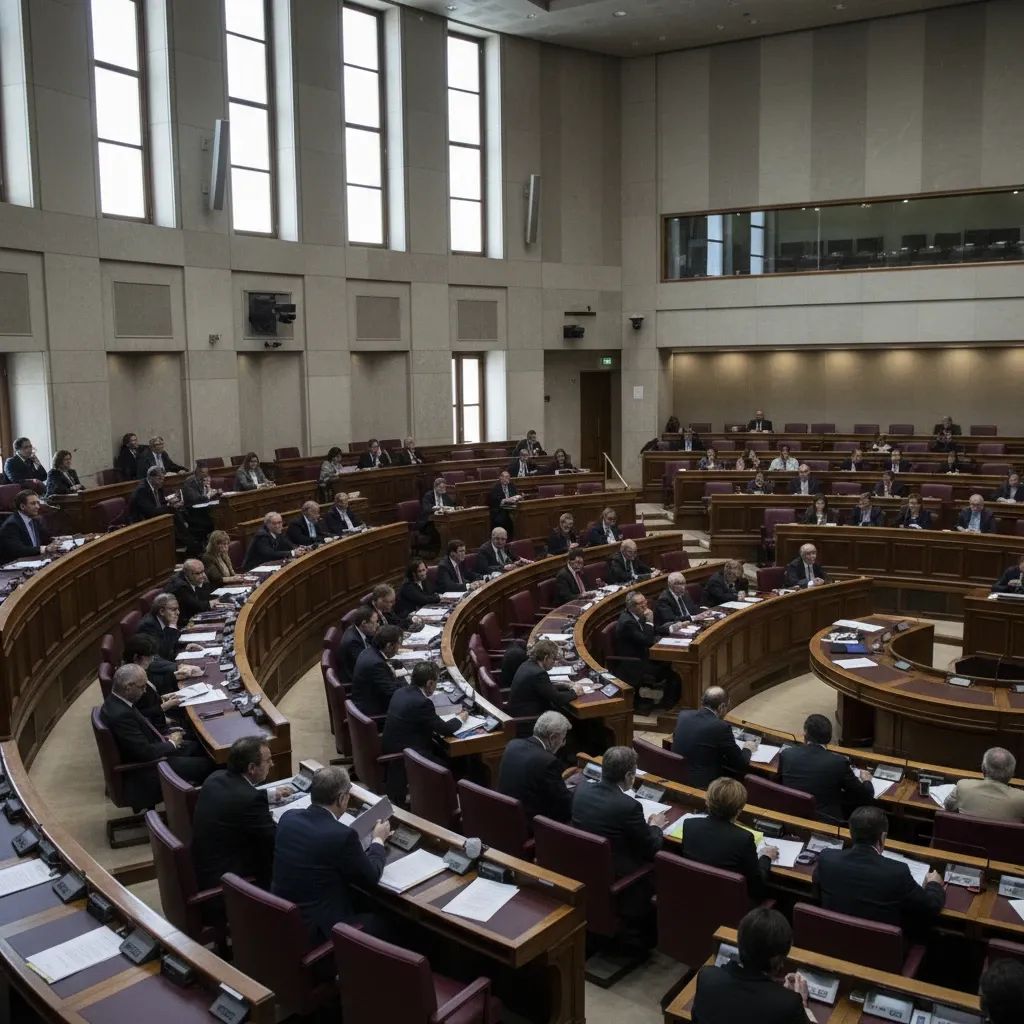
Portugal's Parliament is set to elect four Constitutional Court judges on June 12, rather than three, in a decision that has isolated the Chega party as the sole dissenting voice. The move hinges on a controversial legal interpretation of a resignation-with-delayed-effect submitted by the Constitutional Court President José João Abrantes, who announced his departure but will only step down once his successor is sworn in.
Why This Matters
• Judicial Appointment Timing: The Portugal Assembly can now fill a seat before it's technically vacant, setting a procedural precedent.
• Political Distribution: The fourth seat allows PSD, PS, and Chega to each secure a judge, defusing what could have been a three-way standoff.
• Candidate Deadline: Parties must submit their lists by May 29, just eight days away.
• Chega's Isolation: The right-wing party's objection was overruled by all other parliamentary groups, underlining its limited coalition-building power on institutional matters.
The Legal Wrinkle Behind the Fourth Seat
At the heart of the dispute lies Abrantes's resignation letter, published in the official gazette with a clause stating his departure takes effect only upon his replacement's inauguration. Chega leader André Ventura argued this makes the seat a "future vacancy" rather than a current one, and therefore ineligible for immediate election. He has publicly suggested the resignation was orchestrated under PS pressure to engineer an extra seat for the Socialist party—a claim Abrantes categorically denied, citing "personal and institutional reasons" for his exit.
Assembly President José Pedro Aguiar-Branco countered with a 12-page legal opinion presented to the Conference of Parliamentary Leaders on Wednesday. His memo invokes a 2002 precedent involving former Constitutional Court judge José Cardoso da Costa, who used the identical resignation mechanism: stepping down in writing but remaining in post until a successor was confirmed. That arrangement was accepted without controversy and even practiced by the Constitutional Court itself.
"The judge has resigned, that resignation is definitive and public; what is deferred is only the moment the mandate's extinctive effects are produced," the opinion states. The memo concludes that Portugal's constitutional framework recognizes "future certain vacancies" as legally relevant for the purposes of counting seats to be filled.
Chega Stands Alone in Opposition
During the Wednesday leadership meeting, Ventura pressed his case that only three seats—those of outgoing judges Gonçalo Almeida Ribeiro, José Teles Pereira, and Joana Fernandes Costa—should be filled now. He argued that electing a fourth judge while Abrantes remains in office violates the principle that "a seat is only vacant when it is vacant."
Every other parliamentary group sided with Aguiar-Branco's interpretation. The PSD and PS, which together command a supermajority, had already struck a tacit deal to divide the nominations, and the fourth seat conveniently allows all three major forces to claim one judge each without triggering a zero-sum fight. For Chega, which has sought to position itself as a kingmaker in institutional appointments, the episode underscores the limits of its influence when establishment parties align.
Ventura has also voiced concern about the "partisanization" of the Constitutional Court, insisting no judge should be perceived as "the Chega judge" or "the PS judge." Yet his own rhetoric has framed the Abrantes resignation as a "political maneuver," reinforcing the perception that judicial appointments remain deeply entwined with party calculations.
What This Means for Residents
The Constitutional Court has the final say on whether legislation passed by the Assembleia da República violates the Constitution. With four seats being filled at once—nearly one-third of the full bench—the Court's ideological balance could shift noticeably. Recent rulings have touched issues directly affecting residents, including digital surveillance laws, pandemic measures, housing regulations, and labor protections.
While judges are nominally independent, their appointment by political parties inevitably shapes their interpretative leanings on questions of economic policy and administrative discretion. A Court perceived as overly partisan risks eroding public trust in its rulings.
The Countdown to June 12
With candidate lists due by May 29, parties are finalizing their picks. The PSD, as the lead government partner, is expected to nominate a jurist with center-right credentials; the PS will likely field a legal scholar aligned with social-democratic values; and Chega has floated names from the conservative legal academy.
All nominees must meet statutory requirements: legal qualifications, a minimum age, and professional standing. The Assembleia's Constitutional Affairs Committee will vet the candidates, though rejections are rare—by the time names reach the floor, political deals are already locked.
The vote itself will be by secret ballot, but the outcome is all but certain given the pre-arranged quotas. What remains uncertain is how the new judges will navigate the Court's caseload, which includes pending challenges to housing regulation reforms, labor flexibility measures, and the government's digital identity framework.
For now, the June 12 ballot will be watched closely by legal scholars, opposition watchdogs, and anyone concerned with the health of Portugal's constitutional order.



